
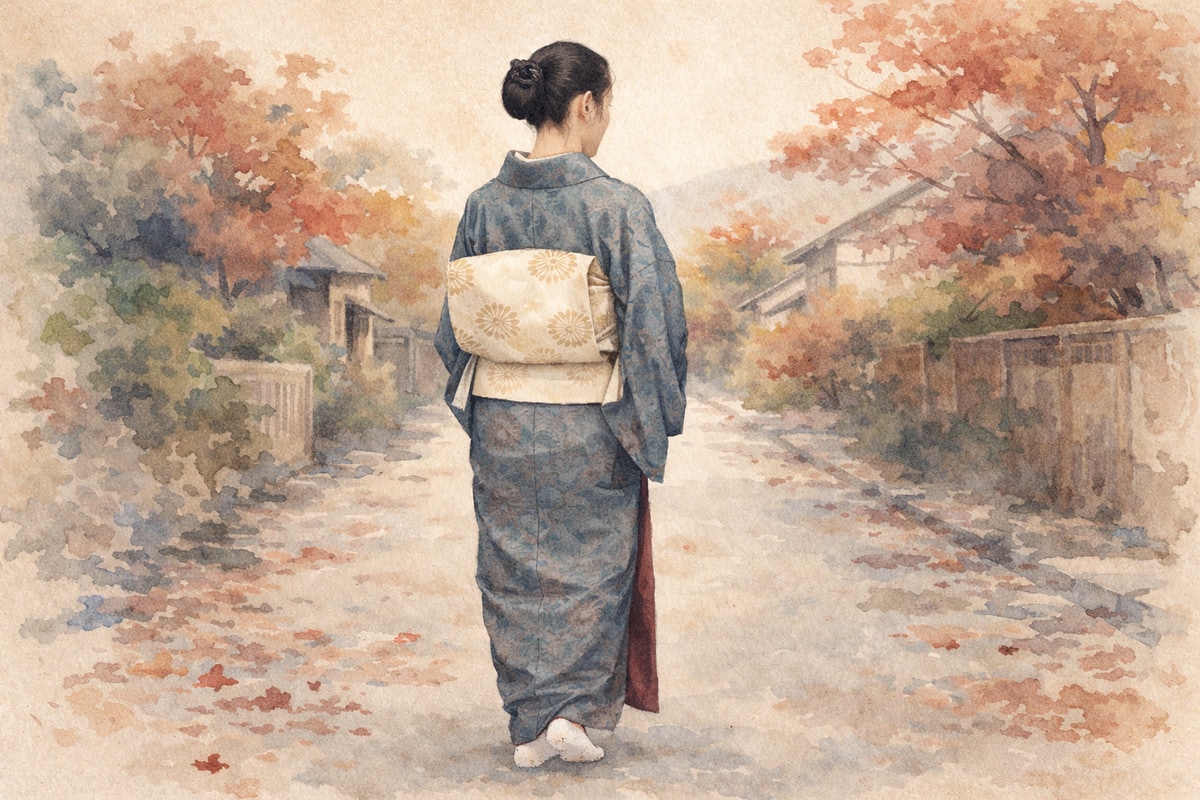
Yuki or Oshima — if you could only own one tsumugi (a textured, hand-woven silk), the names come to mind easily enough, but deciding between them is another matter. Both are lightweight kimono that have long been cherished as everyday wear. Yet once you actually put them on, you notice real differences in warmth and texture. Rather than starting from where each is made, let’s dig into the choice between Yuki tsumugi and Oshima tsumugi as autumn-winter wear by looking at how each feels to wear. This article is for anyone hoping to add their first tsumugi to their wardrobe.
Same Word, Different Feel: What Your Hands Tell You
Yuki tsumugi is a silk textile woven around Yuki City in Ibaraki Prefecture and the nearby Oyama City in Tochigi Prefecture. The thread is hand-spun from silk floss that has been stretched out by hand from cocoons, then woven into cloth. This hand-spun floss thread is the essence of what makes Yuki tsumugi special, producing a soft, fluffy feel and a comfort that conforms to the body. It’s said to develop more character the more it’s worn, making it a kimono that grows more comfortable the longer you wear it.
Oshima tsumugi, on the other hand, is a 100% silk tsumugi woven on Amami Oshima island and around Kagoshima City in Kagoshima Prefecture, as well as in Miyakonojo in Miyazaki Prefecture. It’s thin and light yet sturdy, with a smooth, sleek texture and an elegant sheen. Its fine kasuri patterning and the distinctive coloring produced by a mud-dyeing process are also hallmarks unique to Oshima tsumugi. Floss-spun Yuki, mud-dyed Oshima — both carry the word tsumugi, yet their textures couldn’t be more different. The more you learn, the more interesting each region’s character becomes.
The Warmth Difference: Fluffy Yuki, Sleek Oshima
When it comes to warmth, Yuki tsumugi has a clear advantage. Its hand-spun floss thread traps air easily, making it light yet warm. This combination of lightness and warmth is best suited to the colder months from autumn into winter, the season for wearing awase (lined kimono). Put it on during a bone-chilling day and you’ll truly feel the fluffy warmth of the silk floss.
Oshima tsumugi, by contrast, is thin and light, resists wrinkling, and is prized for its sturdy, sleek texture. As a lined kimono it can be worn from October through May, so the range of wearable months isn’t all that different from Yuki tsumugi. Still, if you want to be wrapped up snugly against the deep chill of midwinter, fluffy, floss-filled Yuki tsumugi wins out. Think of Oshima tsumugi as suited to days when you want to enjoy a light, breezy feel along with its sheen, and the choice becomes easier. For general cold-weather strategies for autumn and winter, we also cover the approach of layering from the neckline, to the sleeve openings, to the feet in this article.
Choosing by Occasion: Dinners, Theater, Seasonal Events
In terms of formality, both Yuki tsumugi and Oshima tsumugi fall into the category of pre-dyed-thread tsumugi, making them suited to everyday wear and casual occasions. As is true of tsumugi in general, they’re wonderful for casual settings like a dinner out or a party, but not suited to formal occasions. Unfortunately, neither is appropriate for formal events such as weddings.
That said, Oshima tsumugi is well known as a versatile “stylish everyday kimono” suited to a wide range of casual occasions — dinners, the theater, travel, seasonal events, and more. Yuki tsumugi likewise belongs in the realm of everyday wear, suited to casual outings. When you’re torn between the two, it helps to think not about formality but about what kind of time you want to spend that day. If you’d like to learn more about when to wear Oshima tsumugi, this article is a useful reference.
Which Is Better for Your First Piece?
If softness of feel is your priority, Yuki tsumugi is the natural candidate. The fluffy warmth unique to hand-spun floss thread, and the way its texture grows more comfortable with wear, give it real appeal for anyone hoping to build a long relationship with their kimono.
Oshima tsumugi, meanwhile, has its own advantages in ease of care. It resists wrinkling, and because iron particles are absorbed into the thread during the dyeing process, it’s said to be less prone to the kimono coming loose (kizukure) or to insect damage. Not having to worry too much if it gets crumpled while you’re out is a welcome trait for everyday use. Soft comfort with Yuki, or easy care with Oshima — this distinction turns out to matter quite a bit when choosing your first piece. If you’d like to understand the differences across tsumugi more broadly, including Yuki tsumugi, Oshima tsumugi, and Ushikubi tsumugi as well, we’ve put it all together in our introductory guide to tsumugi.
In Summary: Warmth with Yuki, Lightness and Sheen with Oshima
As the single-layer kimono season passes and the breeze starts calling for lined kimono, here’s something worth remembering if you’re torn between Yuki tsumugi and Oshima tsumugi: choose Yuki tsumugi if you want to be wrapped in fluffy warmth against the depths of winter’s chill, and Oshima tsumugi if you want to step out lightly while enjoying its lightness and sheen. Neither is formal wear — both are kimono to be worn and loved as everyday clothing. Choosing based not on occasion but on how you want to spend the day — that may be the truest way to choose a tsumugi. Let today’s outfit carry a small story of its own.