
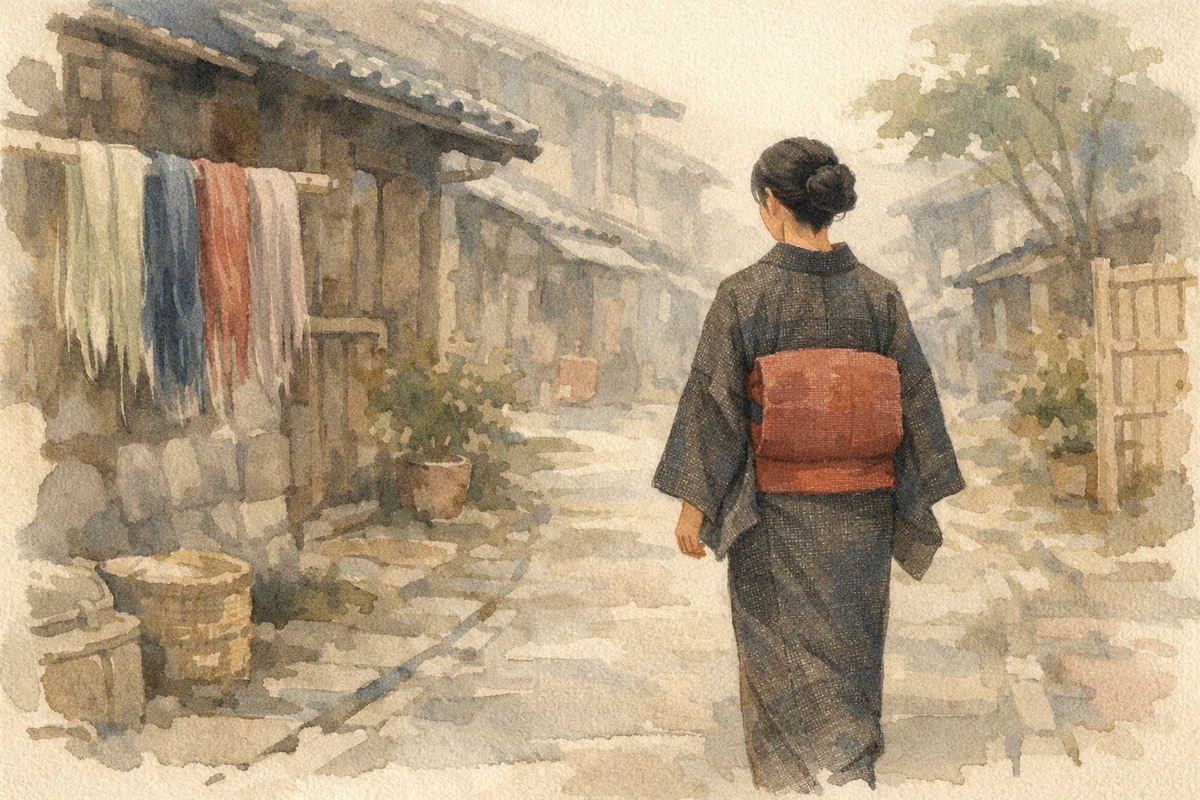
“I was given an Oshima tsumugi (a textured, hand-woven silk), but I have no idea when I’m supposed to wear it” — this is actually a comment we hear often. Because it’s such a fine, high-quality kimono, many people brace themselves, thinking, “Surely this can only be worn somewhere formal.” But in fact, the thinking here runs a little backwards. Read this article and you’ll be able to judge confidently which occasions suit Oshima tsumugi, and what to check when renting one.
What kind of kimono is Oshima tsumugi? Why it’s loved as chic everyday wear
Oshima tsumugi is a woven textile that has long been produced in the Amami Islands of Kagoshima Prefecture. It’s a plain-weave silk fabric made by dyeing hand-spun silk threads with mud and finishing them by hand-weaving, and it’s counted among the world’s three great textiles alongside French Gobelin tapestry and Persian rugs from Iran. In 1975 it was also designated a national Traditional Craft, with conditions specifying, among other things, that it must be hand-woven from 100% silk thread that has been dyed before weaving.
Its comfortable wearability is another charm unique to Oshima tsumugi. It’s supple and lightweight, resists wrinkling, and because iron is absorbed into the thread during the dyeing process, it’s also resistant to the kimono coming loose (kizukure) and to insect damage. Production areas extend beyond Amami Oshima to Kagoshima City and Miyakonojo City in Miyazaki Prefecture, and there’s a rich variety including mud-dyed Oshima, white Oshima, and colored Oshima. The manufacturing process involves as many as 30 to 40 steps, and it’s this accumulation of steps that produces the fine kasuri patterning and distinctive luster. All those painstaking steps stacked together are exactly what give it that refined sheen.
In Amami, there’s a tradition that tsumugi weaving predates the Nara period, and plant dyeing using the wild-growing sharinbai (also called teechigi) shrub has been practiced since ancient times. One theory holds that mud dyeing, the technique at the heart of Oshima tsumugi, actually emerged during the era when the Satsuma domain banned the wearing of tsumugi. If a ban is really what gave rise to this distinctive dyeing method, doesn’t that make kimono history feel all the more fascinating? You might also enjoy reading An Introduction to Tsumugi: How Do Yuki Tsumugi, Oshima Tsumugi, and Ushikubi Tsumugi Differ?, which helps sort out the differences between these types of tsumugi even further.
Occasions where tsumugi fits in, and occasions where it doesn’t
Here’s the key point to keep in mind: even though Oshima tsumugi is expensive, in terms of formality it’s classified as chic, casual wear. The interesting thing about the world of kimono is that price and formality are two separate things, and Oshima tsumugi is no exception to this rule. It’s not suited to strictly formal occasions like a wedding reception, and no matter how much care you put into choosing an obi (the wide sash tied around a kimono) or accessories, it’s generally considered safest to avoid wearing it as a guest at such events. However carefully a piece has been tailored, it still doesn’t count as formal dress.
On the other hand, in casual settings without strict formality requirements, Oshima tsumugi truly gets to shine. It’s a perfect choice for everyday outings like meals with friends, museum visits, or watching a theater performance. For more ideas, Kimono for the Theater, Dining Out, and Tea Gatherings: How to Think About Each Occasion is a helpful reference that makes it much easier to picture what styling suits each setting.
In short, Oshima tsumugi isn’t suited to occasions demanding formal dress, such as weddings, but is well suited to occasions for enjoying everyday style. Once you remember this simple distinction, you’ll have far less trouble deciding when to wear it.
Points to check before renting
Some of you may want to try wearing Oshima tsumugi once through a rental. To make the most of that opportunity, here’s what’s worth checking before you rent.
Check 1: Size and yuki
Tsumugi is a kimono whose fit can vary quite a bit depending on how it was tailored. If the yuki (the sleeve length from center-back to wrist) — the length from wrist to sleeve opening — doesn’t match you, your hands may stick out too far from the sleeves every time you move, or conversely the sleeves may feel too tight. It’s reassuring to choose a shop that allows try-ons, or to share your height, yuki, and body width in advance so they can confirm the fit.
Check 2: Whether the obi and accessories can be rented too
Since Oshima tsumugi is chic, casual wear, it’s paired not with a formal fukuro obi but with everyday options such as a Nagoya obi. Be sure to check whether you can rent not just the kimono itself but a full set including the obi, obijime (a cord tied over the obi), and obiage (a fabric accent above the obi). Being able to rent the accessories as well means you won’t be scrambling on the day itself.
Check 3: Whether tsumugi suits your plans for the day
One of tsumugi’s strengths is that it resists the kimono coming loose, making it a kimono you can wear with confidence even on a rainy day out or on a day when you’ll be sitting for long stretches. It helps to think through whether your schedule is reasonable, including travel distance and how long you’ll be sitting, so you can relax and enjoy the day. The basic approach to choosing kimono rental is summarized in Online vs. In-Store Kimono Rental: A Gentle Guide to the Differences in Try-On, Pricing, and Returns, so be sure to check that out as well.
Summary
Oshima tsumugi isn’t suited to formal occasions like weddings, but truly shines in settings where you can enjoy everyday style. Once you remember the kimono world’s principle that price and formality are separate things, you’ll have no trouble deciding when to wear it. When trying it through a rental, it’s reassuring to check the size and yuki, whether the obi and accessories come as a set, and whether it fits comfortably into your plans for the day. This is a piece filled with the handiwork of Amami’s craftspeople — so please, slip it on without hesitation and enjoy it.