
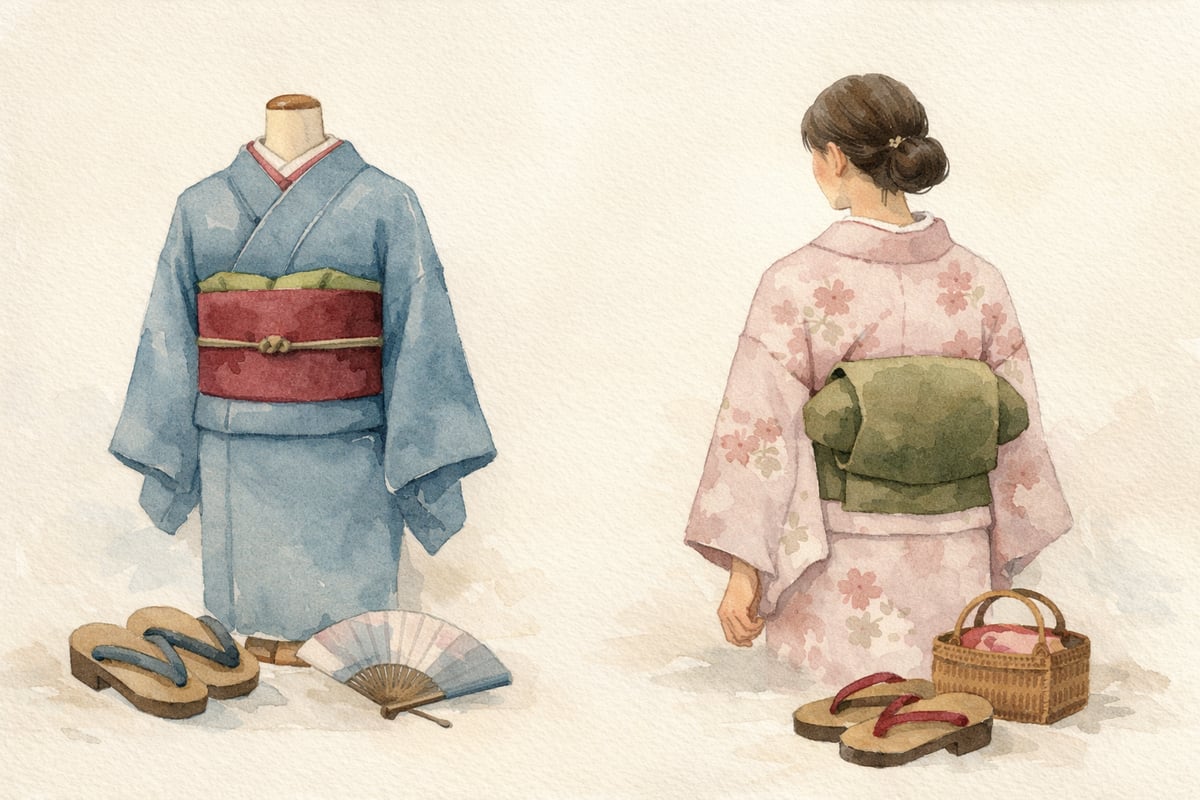
Being able to slip into a kimono on a whim, whenever the mood strikes you — doesn’t that sound appealing? Fireworks festivals, shrine visits, a day at the art museum: once you can dress yourself, you can enjoy all of these at your own pace, without relying on anyone else. Still, that first step can be confusing. Should you teach yourself, or is it better to join a class? Today, let’s work through it together with Iroha — the differences between self-study and kitsuke (dressing in kimono) classes, how to choose a class, and what to check during a free trial lesson.
🌸 Start here if you’re short on time
If you’d rather learn the basics at your own pace, self-study suits you. If you want to learn efficiently and ask questions along the way, a class is the better fit. When choosing a class, check how easy it is to get to, the lesson format, any costs beyond the tuition fee, and whether make-up lessons are available. If you’re unsure, a free trial lesson lets you get a feel for the place before deciding.
What changes once you can put on kimono yourself?
The biggest change is the freedom of being able to dress yourself the moment you feel like it. You no longer need to coordinate schedules with someone else — you can simply head out whenever the mood takes you. You might head to a shrine or temple in kimono, or spend a day at the art museum in kimono — once you can dress yourself, a day spent in kimono becomes so much more within reach. And each small step forward brings its own quiet sense of accomplishment.
Who suits self-study, and who suits a kitsuke class?
The first thing to know is that neither approach is inherently better — what matters is choosing whichever you’re more likely to stick with.
Self-study lets you learn the basics from books or videos at your own pace, which is its real appeal. It suits people who like making steady progress in spare moments, or who want to try things out without spending money at first. A kitsuke class, on the other hand, gives you the benefit of having someone check your finished look objectively and answer your questions on the spot. You’ll also pick up broader knowledge — about different kinds of kimono, etiquette, and so on — and may even make friends who share your interest. Classes suit people who want to learn efficiently or who want to explore kimono culture more deeply. If you suspect you might not keep up a self-study routine on your own, a class could give you the extra support you need.
What to check when choosing a kitsuke class
Classes come in many different forms. Keeping the following points in mind will make it easier to find one that suits you.
- How easy it is to get to. Is it somewhere you can reach without strain from home or work? This matters more than you might expect if you plan to keep it up long-term.
- Schedule. Some classes meet weekly, others every other week, others by appointment — the pace varies from school to school. Check that it fits your own rhythm of life.
- Lesson format. Group lessons tend to foster interaction among students, while one-on-one lessons tend to allow more detailed, individual attention. Choose whichever feels more comfortable to you.
- What you’ll need to bring. Will you bring your own kimono, obi (the wide sash tied around a kimono), and accessories, or are items provided for loan? Check whether you can attend empty-handed. For a rundown of what’s needed, see also this checklist of items needed for wearing kimono.
- Costs beyond the tuition fee. Some schools charge extra for textbooks, certification, or event participation. Before signing up, it’s worth confirming whether such costs exist, not just the basic tuition.
- Policy on make-up lessons or absences. Can you make up a lesson if something comes up, and what happens if you miss one? This is worth checking if you want to keep going without undue stress.
What to check during a free trial lesson
There’s a lot that a website or brochure alone can’t tell you. If a school offers a free trial lesson, you can get a feel for the actual atmosphere before committing. During the trial, it helps to pay attention to the following points.
- Content of the trial. How much will you actually be taught, and does it feel manageable even as a complete beginner?
- Length of the session. How long does it take, and is it easy to plan around?
- What to bring. Can you come empty-handed, or is there anything you need to prepare in advance?
- Future courses and costs. Is the explanation of what continuing would involve — content and cost — clear and easy to understand?
- The atmosphere of the class. Does the instructor’s manner and the other students’ vibe feel like a good fit for you?
- Conditions for signing up. It’s reassuring to confirm in advance who the trial is open to and any conditions attached to applying.
Trying out several classes and comparing them will help you see which place suits you best. If you’d like to get a real feel for a class’s atmosphere and teaching style, starting with a free trial lesson is one good way to go about it.
Combining self-study with a class also works well
You don’t actually have to commit to just one approach. Learning the basic flow in class, then reviewing it at home with videos or books, is a comfortable, effective way to improve. Understanding the “why” behind each step in class makes your self-study review at home go that much more smoothly. Feel free to mix and match in whatever way suits your own life.
In closing
Once you can dress yourself in kimono, a day spent in kimono becomes so much freer and more within reach. Whether you choose self-study or a class, what matters most is finding an approach you can keep up. If a class catches your interest, check how easy it is to get to, the costs involved, and whether make-up lessons are available — and if you’re still unsure, a free trial lesson is a reassuring way to see the atmosphere before deciding. There’s no need to rush — just take it one step at a time, at your own pace. Why not make this the year you add one more kimono day to your calendar?