
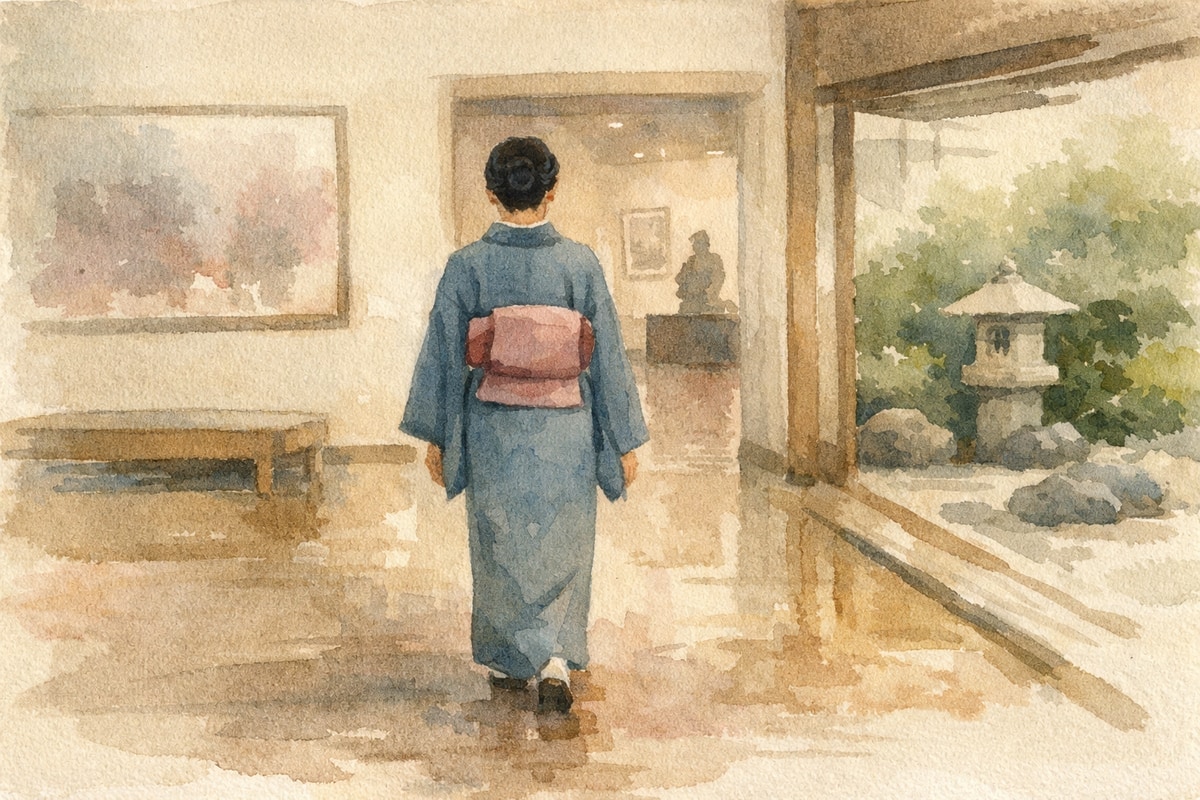
Wearing kimono to the museum — in a quiet gallery, the only sound is the soft rustle of silk. Many people long for this kind of experience. Today, let’s unpack what’s worth knowing about enjoying a museum visit in kimono.
🌸 The essentials (for those in a hurry)
Museums don’t have strict dress codes, but four small considerations go a long way toward being courteous to those around you: a small bag, quiet footwear, understated colors and patterns, and accessories that won’t make noise.
Travel light — just the essentials
A museum is a place for quiet, focused encounters with precious works of art. Carrying too much increases the risk of accidentally brushing against an artwork or another visitor. It’s reassuring to keep your belongings to a small drawstring pouch or clutch bag, just enough for your valuables. For anything larger, most museums have lockers where you can store your things.
Footsteps are part of your outfit, too
Unlike tatami flooring, museum floors are often made of hard materials, and the sound of zori (flat kimono sandals) can echo more than you’d expect. Choosing footwear that’s comfortable to walk in and doesn’t make much noise will make even long hours of viewing more pleasant.
Choose understated colors and patterns, and quiet accessories
In the galleries, it’s generally considered good manners to avoid overly flashy colors or patterns. It’s also worth paying a little attention to accessories like obijime (a cord tied over the obi) or obidome (obi clasps), since metal pieces can clink against each other. Long, dangling ornaments also carry some risk of brushing against the artwork.
A haori or shawl can come in surprisingly handy
Museums keep careful control of temperature and humidity to protect the artworks. If you were in Western clothes, you’d bring a jacket — with kimono, a haori (a kimono jacket) or shawl serves the same purpose. It’s worth keeping one on hand, especially when the seasons are changing.
Coordinating your outfit with the exhibition’s theme
Some museums encourage visitors to dress in a way that resonates with the exhibition’s theme. In kimono, you might choose an obi or accessories that echo the exhibition’s color palette — that kind of playful coordination is one of the special pleasures unique to kimono.
Frequently Asked Questions
Q. Is it okay to wear a hat while viewing the exhibits?
A. It’s generally best to avoid this in the galleries. A wide-brimmed hat can block the view for other visitors.
Q. Won’t a gorgeous houmongi (a semi-formal kimono) feel out of place?
A. As long as the colors and patterns are understated, there’s no problem. It’s a good idea to keep your look elegant and in harmony with the mood of the exhibition.
Q. I’m worried about walking for long stretches
A. Choose zori that are comfortable to walk in, and take breaks along the way as you view the exhibits.
In summary
- Museums don’t have strict dress codes — the basic principle is consideration for those around you
- Keep your bag small, your footsteps quiet, and your colors and patterns understated
- A haori or shawl is useful for adjusting to the museum’s climate control
- Coordinating your outfit with the exhibition’s theme is a pleasure unique to kimono
The more you learn, the more you notice how gently kimono can accompany these quiet moments. For tips on choosing comfortable zori, take a look at this article as well.
If you’re curious about books and films featuring kimono, don’t miss this guide to books and films where kimono take center stage.