
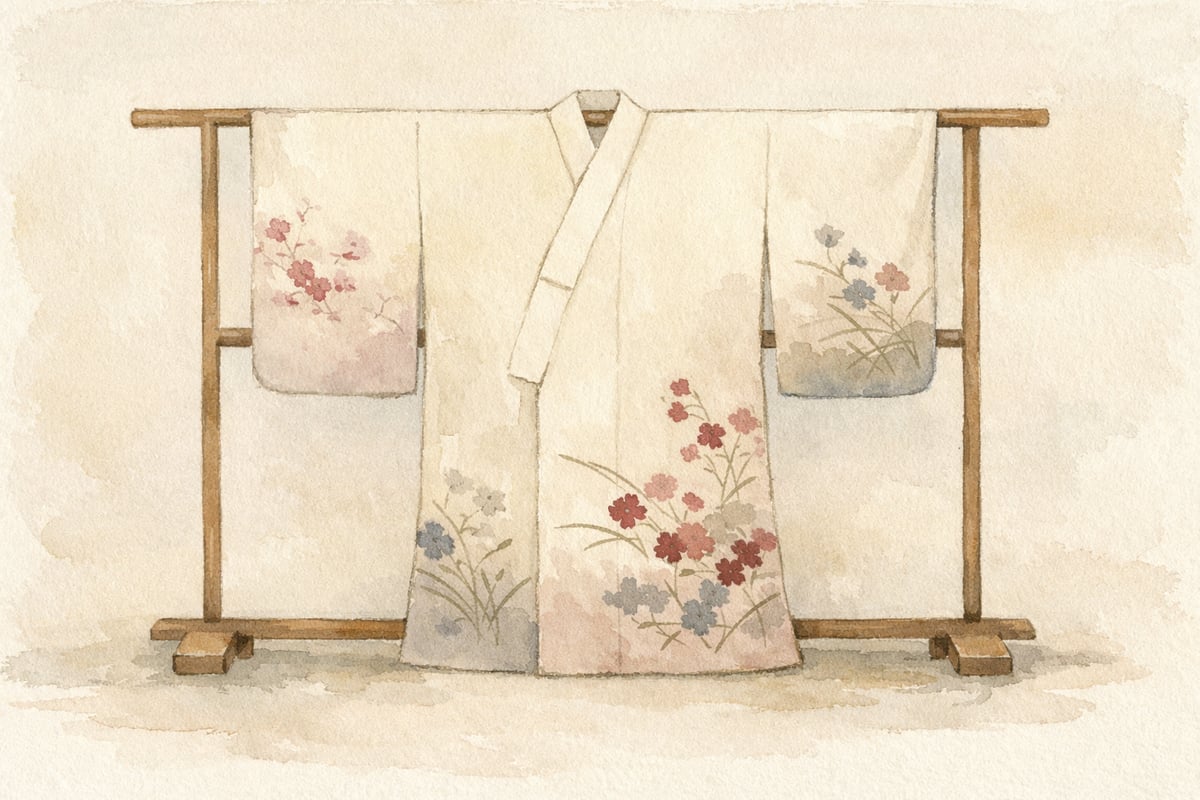
What do you do after taking off your kimono? “I was too tired, so I just left it as is,” or “I wasn’t sure what to do, so I ended up leaving it alone”—these are actually pretty common reactions. But kimono care varies depending on the fabric and finishing, so taking a little care afterward can help your kimono last much longer. Today we’ve put together the key steps you should take right after taking off your kimono, along with guidance on when it’s a good time to consult a professional cleaner.
🌸 In a hurry? Here’s the quick summary
Once you’ve taken off your kimono, the basics are: ① check for dirt and stains in a bright, well-lit spot, ② air it out in the shade, away from direct sunlight (3 hours to half a day), and ③ brush off any dust with a kimono-specific brush. If you find a stain, it’s best to consult a professional cleaner as soon as possible—treating it yourself at home with water or detergent can sometimes make things worse, depending on the fabric and type of stain.
Before you fold it away: what to check right after taking off your kimono
It’s tempting to fold your kimono right away after taking it off, but it’s actually important to pause and check for dirt or stains first. That’s because the sooner stains are dealt with, the easier they usually are to remove—even at the cleaners. Some stains become harder to remove the longer they’re left.
Here are the areas worth checking:
- Around the collar (eri): prone to foundation makeup and skin oils
- The cuffs (sode): easily come into contact with food and drink
- The chest area: where food or drink spills often land
- The hem (suso): mud splashes and dirt from walking
Spread the kimono out in a bright space and look it over as a whole. If you find a stain, jot down its location and likely cause (food, mud, etc.)—this will make it much easier to explain when you consult a cleaner. Sweat is also worth keeping in mind: it’s often invisible at first but can later cause stains or discoloration. If you wore the kimono in summer or were out for a long stretch of time, pay extra attention to areas where sweat tends to collect.
Basic care you can do at home
Once you’ve checked for stains, it’s time to air the kimono out in the shade—arguably the single most important step in kimono care. Hang it on a kimono-specific hanger away from direct sunlight for anywhere from 3 hours to half a day. This releases moisture and sweat trapped in the fibers, helping to prevent mold and insect damage.
If you wore the kimono on a rainy day, it will hold more moisture, so it’s best to air it out for a full day (we’ve covered rainy-day kimono care in more detail in a separate article). If your room tends to be humid, be mindful of ventilation and dehumidifying as well.
After airing, gently brush off any dust using a soft wasou-specific brush (boar or horsehair), moving from the collar area down through the shoulders, sleeves, body, and hem. The trick is to brush lightly in one direction rather than back and forth. Brushes made for Western clothing can damage the fibers, so it’s best to avoid using them on pure silk (shoken) kimono. Since the right brush depends on the fabric, if you’re unsure, it’s a good idea to check with the shop where you bought the kimono or with a professional cleaner.
Once you’ve confirmed the moisture has fully dried out, you can fold the kimono away. For more on storage, see our article on how to store a kimono.
Cases where you shouldn’t try to treat stains yourself at home
Kimono are often made from delicate materials—pure silk, chirimen crepe, gold leaf, embroidery, and the like—and care labels can differ quite a bit from those on Western clothing. When you spot a stain, it’s natural to want to handle it yourself right away, but using water or detergent carelessly can sometimes make things worse.
In particular, it’s safer to avoid treating the following at home:
- Lipstick, foundation, ink, or ballpoint pen stains: these are difficult to remove without professional cleaning
- Areas with pure silk, chirimen crepe, gold leaf, or embroidery: friction or moisture can alter the texture
- When you’re not sure what caused the stain: the wrong treatment can cause it to spread
- Larger stains (roughly 2-3 cm across or more): taking it to a specialist promptly often gets better results than trying to treat it yourself
As a general rule, the only acceptable first-aid step is to gently blot—never rub—a fresh water-based stain, such as coffee or soy sauce, with a damp towel right after it happens. For oil-based stains like butter or mayonnaise, simply dab gently with a dry cloth and leave the rest to a professional cleaner. Since the correct approach depends on the kimono’s fabric and finishing, it’s worth checking the care label, and if you’re unsure, consulting the shop where you bought it or a professional cleaner.
When it’s time to consult a cleaner
You might wonder, “Do I really need to have it cleaned every single time?” The answer depends on the type of kimono and how often you wear it. As a general guideline, the following is often suggested (since the right choice depends on your kimono’s fabric and condition, it’s best to check with a professional cleaner or a specialist kimono shop (gofukuten) for detailed advice):
- Formal kimono such as furisode (a long-sleeved formal kimono) or tomesode: it’s generally recommended to have these cleaned after every wearing. Removing dirt and sweat before long-term storage helps prevent discoloration and mold
- Everyday kimono worn often, such as komon (a casual kimono with a small repeating pattern) or tsumugi (a textured, hand-woven silk): once a season, at the end of the season, is the general guideline
- Whenever you notice dirt or a stain: don’t wait until the end of the season—consult a cleaner as soon as you can
Sweat in particular is hard to notice visually, so if you wore your kimono in summer or outdoors for a long time, it’s worth asking a professional cleaner about a sweat-removal treatment. For more on the different types of cleaning (such as the difference between full washing and unstitched washing), see our separate article on kimono cleaning basics.
What to check when choosing a home-delivery kimono cleaning service
These days, more and more cleaning services let you simply send your kimono from home for cleaning. As with a physical cleaning shop, it’s a good idea to confirm the following points in advance:
- Items and materials covered: which fabrics and finishes (pure silk, chirimen crepe, gold leaf, embroidery, etc.) the service handles
- How quotes are given: whether the price is fixed before you send the item, or whether you receive a quote after inspection
- Packaging requirements: whether a collection bag is provided, or whether you need to pack and ship it yourself
- Shipping costs: how much the round-trip shipping costs, and whether it varies by region (such as Hokkaido, Okinawa, or remote islands)
- Estimated turnaround time: how long the process takes
- Cancellation policy: whether a fee applies if you cancel after cleaning has already begun
Since pricing and terms can change, it’s best to check the official page or contact the service directly for the latest details before requesting a cleaning.
What you can confirm about kimono cleaning with Hi-Clear
The home-delivery cleaning service “Hi-Clear” has a dedicated product page for kimono. The following is information that could be confirmed on their official page as of July 2026. Prices, shipping fees, and turnaround times may change, so be sure to check the official page for the latest details before requesting a cleaning.
- How pricing works: the price isn’t fixed at the time of shipping—a quote arrives after inspection. At the time of ordering, the amount is set at “0 yen,” and you can review and confirm the quote before payment
- Packaging: no collection bag is provided, so you’ll need to pack and ship the item yourself
- Shipping cost (for reference): round-trip shipping for a kimono is listed at a flat 3,630 yen. Hokkaido, Okinawa, and some remote islands incur an additional fee (check the official page for the latest rates)
- Turnaround time (for reference): approximately 5 to 30 days after pickup, according to the listing (check the official page for the latest information)
- Stain removal, button repair, and lint removal: these are listed as complimentary services
- Cancellations: a fee applies if you cancel after cleaning has already begun, according to the listing (check the official page for details)
Note that it hasn’t been confirmed whether the kimono-specific page covers yukata, obi, nagajuban, or wasou accessories. Storage services also aren’t mentioned on the kimono-specific page. If you’d like to request cleaning for these items, it’s best to check with the official page or their contact desk beforehand.
Summary
Here’s a recap of kimono care after wearing:
- Check for dirt and stains in a bright space (collar, cuffs, chest, hem)
- Air it out in the shade, away from direct sunlight (3 hours to half a day, or a full day if worn on a rainy day)
- Brush off dust in one direction with a wasou-specific brush
- Fold and store once the moisture has fully dried out
- If you find a stain, consult a professional cleaner as soon as possible
The main things you can do at home are airing the kimono out and brushing off dust. It’s understandable to think, “surely a little water or detergent won’t hurt,” but since the right approach depends on the kimono’s fabric and finishing, it’s best to check with a professional cleaner or the shop where you bought it whenever you’re unsure. Make this small extra step after taking off your kimono a habit, and it will help you enjoy wearing it for years to come.