
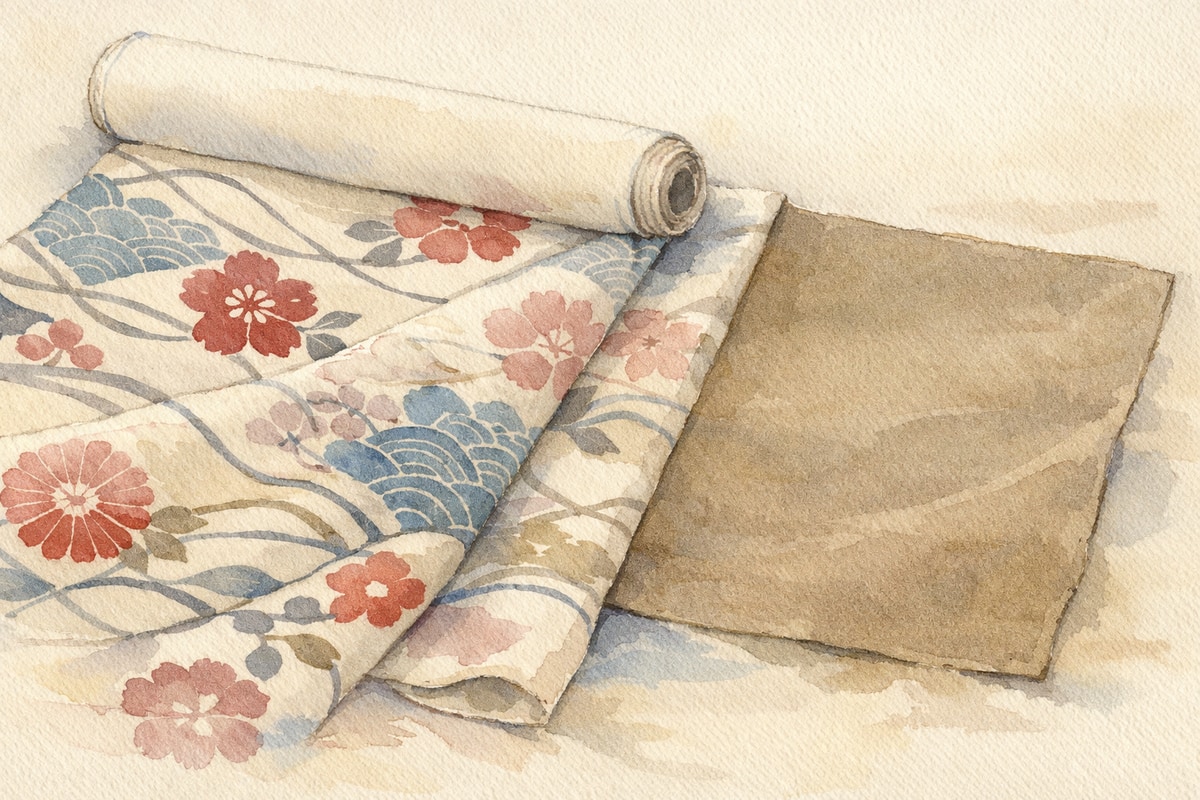
“It’s hotter than I expected today… am I really still supposed to be wearing an awase?” Have you ever found yourself thinking this in early June, or at the end of September? Going strictly by the calendar, hitoe (an unlined kimono) is only worn in June and September. But real-world temperatures don’t divide up so neatly, do they? Today let’s sort out this “how long can I wear hitoe” question, looking at both the traditional rules and more modern ways of thinking about it.
First, a Refresher on the Traditional Koromogae Rules
The custom of koromogae (seasonal kimono-changing) originally came to Japan from China during the Heian period and gradually evolved into its current form. Under the common modern breakdown, from October 1 through May 31 of the following year you wear awase (a lined kimono); in June and September you wear hitoe, which has no lining; and in July and August you wear usumono, made of sheer, breathable fabrics like ro (a sheer, gauzy summer silk) or sha (a light open-weave sheer silk). If you remember just these two things — whether there’s a lining, and how sheer the fabric is — you’ll rarely be confused about how to tell kimono apart by season.
This division isn’t so much a rigid old rule as it is an expression of a very Japanese sensibility: enjoying the season just a little ahead of time. That’s precisely why, at formal occasions like tea ceremonies, following this calendar is still considered the basic standard. At tea gatherings, people are expected to properly observe this seasonal dressing — awase from October to May, hitoe in June and September, and usumono in July and August — and no matter how much the actual temperature may vary, it’s safest to prioritize the rule in such settings.
For Casual Occasions, Temperature Can Be Your Guide
On the other hand, things are a bit different for everyday outings or casual meals with friends. With recent shifts in climate, some shop staff have observed that more people now wear hitoe based on actual temperature, roughly from late March through October. It makes sense: if June brings a string of scorching hot days, wearing a sweltering awase is far less appealing than staying comfortable in hitoe. As long as it’s not a formal occasion, there’s nothing wrong with prioritizing how the temperature actually feels and choosing hitoe or usumono accordingly.
That said, this only applies to casual settings. For formal occasions such as tea ceremonies, weddings, or ceremonies, the calendar-based dressing described above still remains the standard. Keeping in mind the distinction — “go by temperature for everyday wear, go by the calendar for formal occasions” — will make choosing what to wear far less stressful. For more on the finer differences between hitoe and usumono, you might also find this article on distinguishing hitoe and usumono helpful.
The Option of Year-Round Hitoe
These days, more people are choosing to wear hitoe not just in June and September, but all year round. Reasons for this include spending more time indoors in heated rooms during winter, hitoe being lighter and easier to care for than awase, and the lower cost of having it tailored. In colder months, you can adjust with a nagajuban (an under-kimono) or hadagi (an innermost undergarment), or layer a haori jacket, shawl, or coat, and still get through winter comfortably in hitoe. Choosing obi (the wide sash tied around a kimono) and accessories in wintery materials also helps preserve the sense of the season.
This raises the question of how to compensate for hitoe’s one real weakness. Because it has no lining, the strain on the fabric tends to concentrate in certain spots more than it would with awase.
Wearing Hitoe Long-Term? Pay Attention to Ishikiate
Hitoe kimono and nagajuban often have a reinforcing patch of fabric attached around the hip area — this is called ishikiate. When you sit down, this patch distributes the strain on the fabric across both sides rather than concentrating it along a single seam, helping prevent the kimono from tearing. It also helps prevent your undergarments or skin from showing through. The more often you sit down in daily life, the more ishikiate can help reduce wear and damage to the fabric around the hips.
If ishikiate is applied broadly from the waist down, that portion effectively becomes structured more like an awase, which also brings a warming effect — a welcome bonus if you’re aiming to wear hitoe year-round. That said, keep in mind that the extra layer of fabric can make things feel warmer, and if a different fabric from the outer layer is used, differences in shrinkage after washing may require extra care. For kimono designed to show off the sheerness of the nagajuban underneath, adding ishikiate will hide that sheer effect, so preferences vary here.
If you choose not to add ishikiate, another method is to reinforce the back seam instead, called sebuse. For usumono worn in the height of summer, the color of the ishikiate can show through and become noticeable, so sebuse is often used for tailoring these garments instead. Deciding how to construct a hitoe piece ultimately comes down to balancing coolness against reinforcement and warmth.
In Summary: When in Doubt, Prioritize the Occasion and How You Feel
There’s no single correct answer to how long you should wear hitoe. For tea ceremonies and formal ceremonies, stick to the calendar: awase from October to May, hitoe in June and September, usumono in July and August. For everyday casual wear, feel free to wear hitoe for a longer stretch, adjusting to the temperature and how you feel. Keeping these two guiding principles in mind means you’ll never have to force yourself into a sweltering awase on a hot day. If you’re considering year-round hitoe, it’s worth thinking through whether to add ishikiate as part of finding a construction that suits your lifestyle. For more on enjoying the sheer look of summer kimono, take a look at this article on ro, sha, and asa sheer kimono as well.