Kimono patterns are never just decorative — small wishes are woven right into them. Let’s unravel four auspicious motifs (monyou) that have been cherished for generations: the crane, the tortoiseshell, shippo, and pine-bamboo-plum.
🌸 Start here (for the time-pressed reader)
Crane and tortoise symbolize long life, tortoiseshell (kikko) stands for longevity and stability, shippo represents good relationships and flourishing descendants, and pine-bamboo-plum (shochikubai) speaks of vitality and eternal youth. Each motif carries a clear wish behind its design.
Crane and Tortoise: A Tale of a Thousand and Ten Thousand Years
“The crane lives a thousand years, the tortoise ten thousand” — this saying has long gone hand in hand with the crane-and-tortoise motif. Said to have come from China, it’s one of the leading auspicious motifs symbolizing long life. Traditionally, the crane depicted is the elegant red-crowned crane, while the tortoise is a minogame — a tortoise draped in trailing algae. A pair of each, standing side by side, is said to represent a devoted couple growing old together in harmony. It’s a wonderfully elegant pairing.
Tortoiseshell (Kikko): A Hexagon That Guards a Wish for Stability
A chain of regular hexagons modeled after a tortoise’s shell. The kikko motif, too, has long been cherished as a symbol of longevity and good fortune. Because the hexagon itself is considered the most stable shape found in nature, it has come to be seen as a shape that invites harmony and good luck. It’s said that samurai in the Kamakura period were also fond of using this motif.
Shippo: Circles Connecting into a Shape of Good Relationships
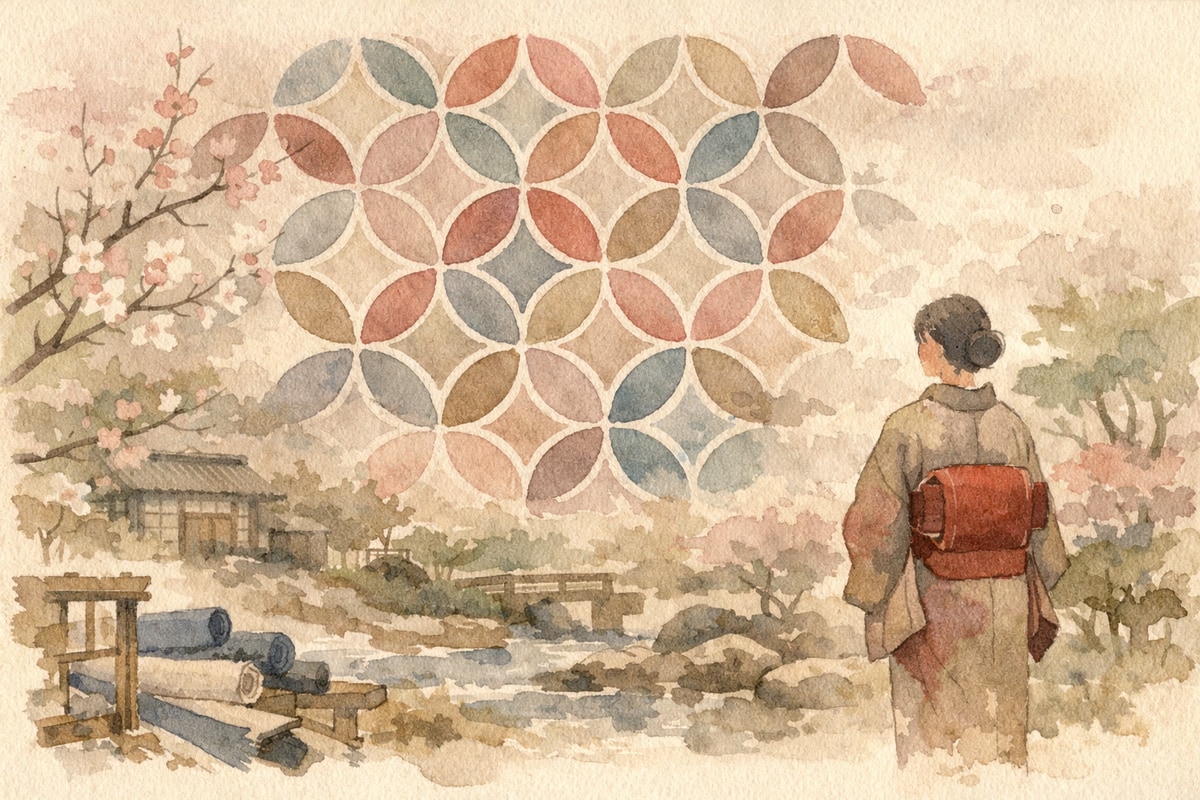
The shippo motif takes its name from the “seven treasures” mentioned in Buddhist scripture. With its overlapping circles stretching on endlessly, it has long been loved as a design representing “bonds between people,” “marital harmony,” and “endless flourishing of descendants.” Circles layered one upon another — it’s a design you’ve likely noticed without quite placing a name to it.
Pine-Bamboo-Plum (Shochikubai): Vitality Told Through Three Plants
Pine-bamboo-plum is a design often seen at New Year’s as well. The pine, which stays green all year round; the bamboo, which grows straight up toward the sky; and the plum, which blooms even in the harshest cold — each carries the wish for “vitality” and “eternal youth and long life.” The motif originally comes from the Chinese expression “the three friends of winter,” and it became firmly established in Japan as an auspicious design. Incidentally, pine is often considered the most prestigious of the three, followed by bamboo and then plum, but there is also a view that places the plum first — there’s no firmly fixed ranking. This very ambiguity is part of what makes the motif so rich with meaning.
Comparing the Four Motifs at a Glance
| Motif | Shape | Wish Expressed |
|---|---|---|
| Crane and Tortoise | Forms of a crane and a tortoise | Long life |
| Tortoiseshell (Kikko) | A chain of regular hexagons | Longevity, stability, harmony |
| Shippo | A continuous pattern of overlapping circles | Good relationships, marital harmony, flourishing descendants |
| Pine-Bamboo-Plum | Designs of pine, bamboo, and plum | Vitality, eternal youth and long life |
*The details of these origins and traditions may vary slightly depending on the source.
Frequently Asked Questions
Q. When is it appropriate to choose these motifs?
A. They suit celebratory occasions and outfits marking seasonal turning points especially well. Choosing a design once you know the wish behind it makes for a piece truly fitting for the day.
Q. Is pine always considered superior to bamboo and plum in the pine-bamboo-plum motif?
A. It’s commonly ranked pine, then bamboo, then plum, but there is also a view that places plum at the top — there’s no clearly fixed rule.
Q. Do tortoiseshell and crane-and-tortoise mean the same thing?
A. Both share the common thread of symbolizing long life, but they differ in focus: kikko carries its meaning through the hexagonal “shape,” while crane-and-tortoise carries its meaning through the “form” of the living creatures themselves.
Crane and tortoise and pine-bamboo-plum are only a few of the lucky symbols found on kimono. If you’d like to keep going, this introduction arranges kimono motifs by season, with symbols of power, luck and prestige among them, and pairs hundreds of photographs with short notes on each. Please check the product page for current details.
In Summary
- Crane and tortoise symbolize long life, as in “the crane lives a thousand years, the tortoise ten thousand”
- Tortoiseshell (kikko) carries a wish for longevity and harmony, expressed through the stable hexagonal shape
- Shippo represents good relationships and flourishing descendants, expressed through interlocking circles
- Pine-bamboo-plum speaks of vitality and eternal youth and long life through three plants
The more you learn, the more the story woven into a single pattern comes into view. Why not add a small story of your own to what you wear today? If you’d like to check the basics of kimono types and formality levels, see A Quick-Reference Guide to Kimono Types and Formality as well. Motifs suited to celebratory occasions, such as crane-and-tortoise and pine-bamboo-plum, are also popular choices for wedding attire. For more guidance on choosing an outfit, see Attending a Wedding in Kimono: How to Choose Based on Your Role.
Articles on motifs, dyeing, weaving, and other aspects of textile arts are collected in our Guide to Textiles and Patterns.