
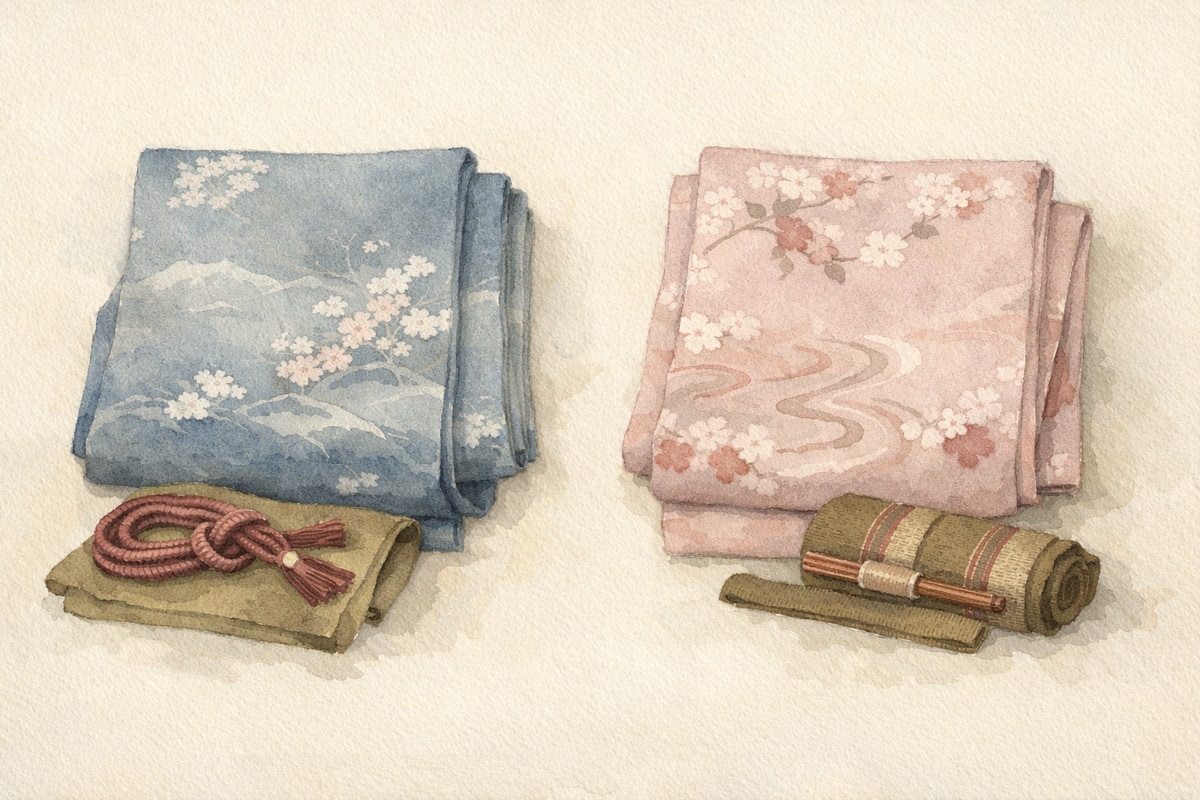
Call it “secondhand kimono” and you might think it’s all one category — but there’s another yardstick at play: the era in which it was made. “Antique kimono” and “recycled kimono” — did you know these two terms are actually used to mean quite different things?
🌸 The short version (for those in a hurry)
Antique kimono were tailored between the late Edo period and early Showa era — that is, before World War II. Recycled kimono were tailored after the war, from the mid-Showa era onward. That dividing line is what separates the two.
Era: another yardstick for measuring kimono
Antique kimono refers to kimono tailored from the late Edo period through the early Showa era — in other words, before the war. Recycled kimono, on the other hand, are those tailored after the war, from the mid-Showa era onward. Both may be called “secondhand,” but the sheer amount of time that has passed is completely different.
| Aspect | Antique kimono | Recycled kimono |
|---|---|---|
| Era tailored | Late Edo to early Showa (pre-war) | Mid-Showa onward (post-war) |
| Pattern and color tendencies | Bold color combinations, influenced by Art Nouveau and Art Deco, with a Taisho-romantic flair | Colors and patterns similar to modern kimono |
| Material | Often natural materials with no chemical dyes | Mostly materials similar to those used today |
| Sizing tendencies | Often shorter in mitake (the kimono’s overall length) and yuki (the sleeve length from center-back to wrist), reflecting the physiques of the time | Sizes tend to be closer to modern physiques |
| Condition | May show signs of age, such as discoloration of the lining or stains | Easier to find pieces in relatively good condition |
A story called Taisho romance
The appeal of antique kimono lies, above all, in their boldness. Color combinations you won’t find in modern kimono, and patterns blending in Western-inspired designs, capture the atmosphere of the Taisho era through the early Showa era — a time when Western culture was flowing into Japan. In a single pattern, the story of that era is woven in.
Things worth knowing before you enjoy them
Because antique kimono were tailored to fit the physiques of their time, their mitake and yuki can be shorter than what suits an average modern build. It’s reassuring to try them on and take careful measurements. Fabric can also show age-related wear or staining, so it’s worth checking the condition as well. You can find more on how to spot sizing issues and stains in this article.
Frequently Asked Questions
Q. Should beginners start with antique kimono or recycled kimono?
A. Recycled kimono may be easier to work with, since the sizing tends to fit more easily and they pair well with modern kimono items. If you want to enjoy distinctive patterns, antique kimono can also be a wonderful find.
Q. Can antique kimono be worn for everyday occasions?
A. It depends on the condition and pattern, but many people do enjoy them as stylish everyday wear. Just be sure to check the fabric’s condition carefully before choosing one.
Q. Are both types sold at the same shops?
A. Many shops carry both types. If you want to narrow your search by era, it helps to ask the staff whether a piece is pre-war or post-war — that way you’ll get guidance more smoothly.
Summary
- Antique kimono were tailored from the late Edo period to the early Showa era (pre-war)
- Recycled kimono were tailored from the mid-Showa era onward (post-war)
- Antique kimono are known for bold colors and patterns, while recycled kimono tend to have colors and patterns closer to today’s styles
- Antique kimono are often smaller in size, so trying them on for fit is reassuring
The more you learn, the more you can sense just how much time has flowed through a single kimono. Why not add a small story to today’s outfit?
If you’re thinking about letting go of kimono you already own, take a look at how to sell kimono and choose the right method as well.