
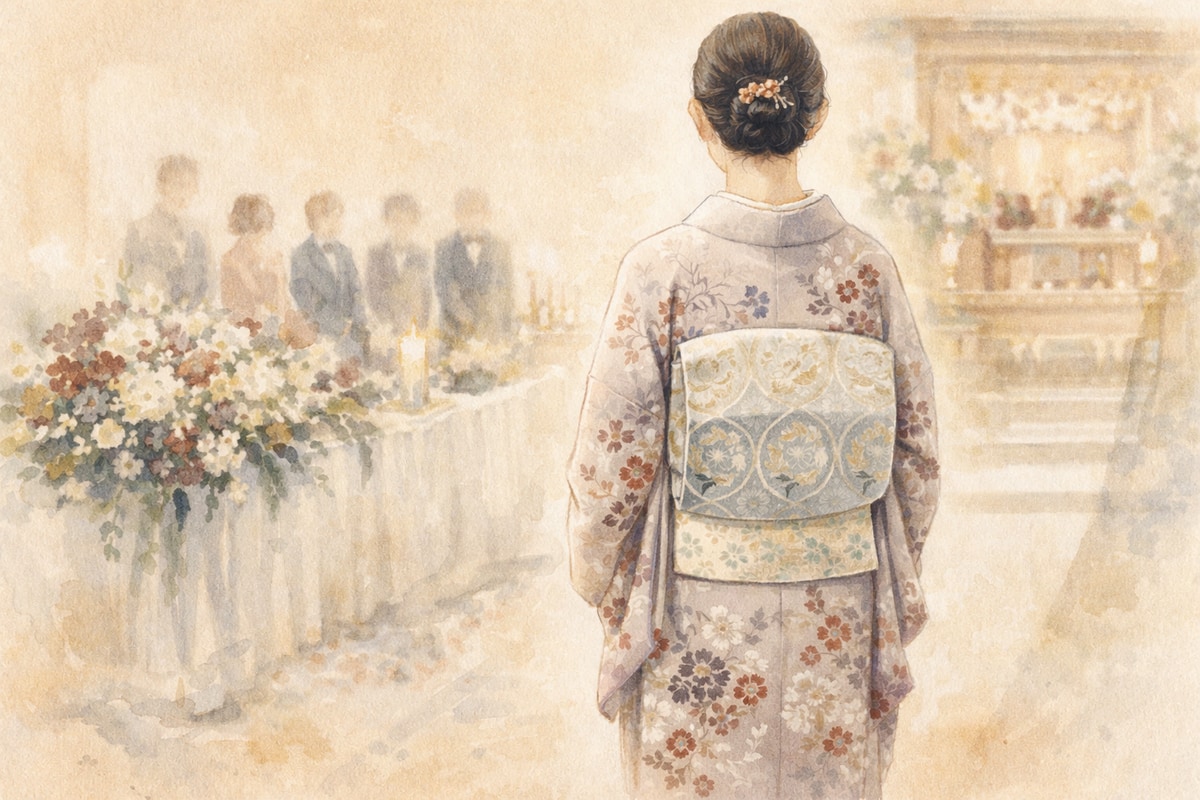
When attending a wedding in kimono, what should you wear? To cut to the chase, the answer depends on your “role” — your relationship to the bride and groom, and whether you’re married or single, clearly determine which kimono is appropriate. Let’s break it down by role.
🌸 The short version (for those in a hurry)
The mother of the bride or groom wears a black tomesode (a formal black kimono with crests). Close relatives should choose a black or colored tomesode. Friends and colleagues typically wear a houmongi (a semi-formal kimono). Avoid white and any colors or patterns that might evoke the bride.
Choosing Kimono by Role
| Role | Suitable kimono | Key point |
|---|---|---|
| Mother of the bride/groom, matchmaker (nakodo) | Black tomesode (with five crests) | The highest level of formal dress |
| Close relative (married) | Black tomesode / colored tomesode | A colored tomesode with five crests carries the same formality as a black tomesode |
| Close relative (unmarried) | Colored tomesode / furisode / houmongi | Choices vary by relationship and age — best discussed between both families |
| Friend/colleague (married) | Houmongi / tsukesage / iromuji | A reliable choice regardless of marital status |
| Friend/colleague (unmarried) | Furisode (a long-sleeved formal kimono) / houmongi | Furisode has a rough age guideline (see column below) |
*This is a general overview. For relatives, discussion between both families should take priority
Colors and Patterns to Avoid
- White — Considered the bride’s color, so guests should generally avoid it
- Outfits centered on red, black, and gold — Combinations that strongly evoke bridal wear are best kept understated
- Patterns or fabrics out of season — Avoid anything that doesn’t suit the venue or the time of year
The golden rule is to not outshine the bride. If you’re unsure about color or pattern, an elegant, understated classic monyou is a safe choice.
Until What Age Can You Wear Furisode?
Furisode (a long-sleeved formal kimono) is the formal dress of choice for unmarried women, but there’s no strict rule about the age at which one can wear it. It’s commonly said that the early 30s is a general guideline, but this is just one tendency, not a fixed rule. If you’re unsure whether furisode still suits your age, consider houmongi or a colored tomesode as alternatives.
What to Keep in Mind When Attending as a Relative
As a relative, the kimono you choose reflects on the formality of the whole family. Discussing what to wear with both families in advance helps ensure everyone is coordinated on the day. In particular, the black tomesode — the formal dress of choice for married women — is considered a breach of etiquette if worn by anyone other than a close relative, so it’s important to confirm your role carefully before choosing.
Frequently Asked Questions
Q. Which is safer, houmongi or tsukesage?
A. Both are perfectly appropriate for friends and colleagues. Houmongi has a continuous painted pattern (eba moyou) across the seams and a more elaborate look, while tsukesage tends to feel a bit more understated. You can choose based on the formality of the venue or your personal preference.
Q. Can unmarried women wear a colored tomesode?
A. Yes. A colored tomesode can be worn regardless of marital status, and it’s widely worn by close relatives.
Q. What should I wear if I’m past the age for furisode?
A. A colored tomesode or houmongi are good options. Since there’s no strict age rule, it’s reassuring to choose based on what others are wearing and the atmosphere of the venue.
Summary
- Wedding kimono choice depends on your role (relationship and marital status)
- The mother of the bride/groom wears a black tomesode; friends and colleagues typically wear houmongi
- Avoid white and colors or patterns reminiscent of the bride — the principle is to not outshine her
- There’s no strict age limit for furisode, but the early 30s is a common guideline
- As a relative, discussing plans with both families in advance brings peace of mind
…Having covered these role-based guidelines, what matters most is celebrating the couple’s new beginning wholeheartedly. If you’re unsure about your outfit, don’t hesitate to consult with shop staff.
If you’d like to learn more about the differences between black tomesode, colored tomesode, and houmongi, see this article. For an overview of kimono types and formality levels, check out this quick-reference guide to kimono types and formality as well.