
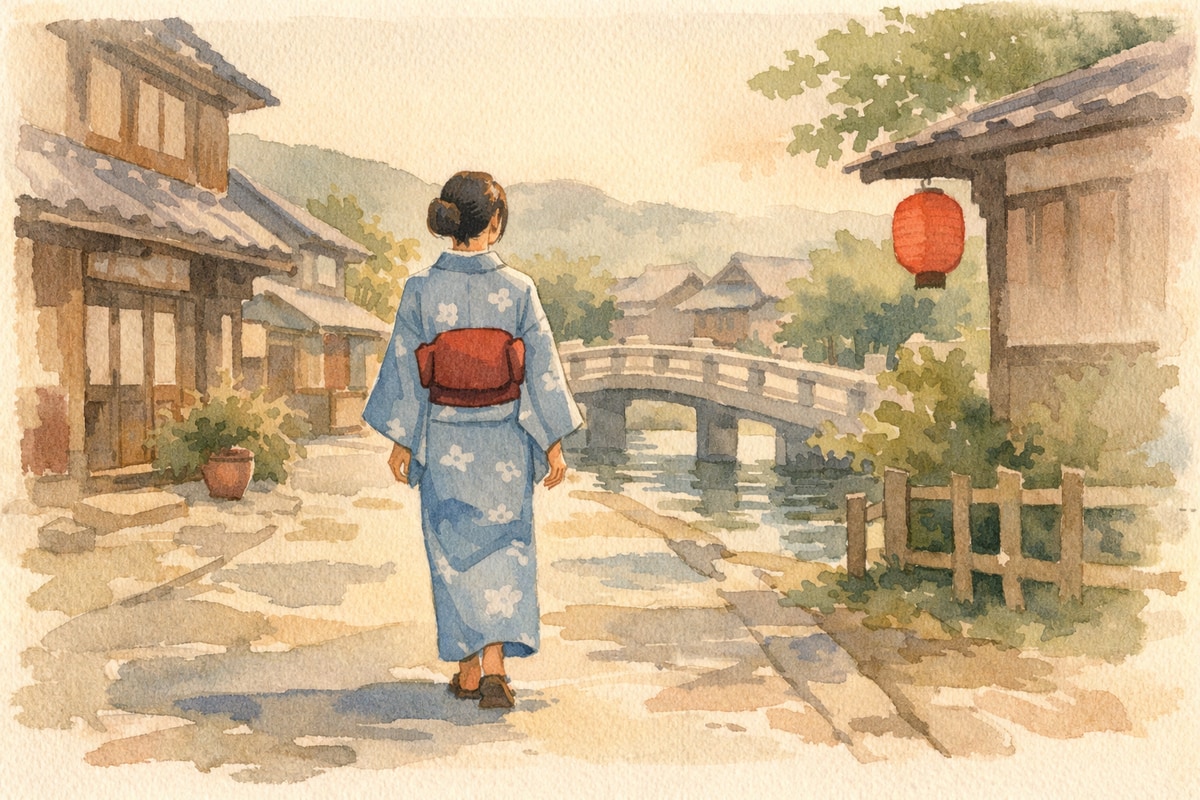
Strolling through town in a kimono while traveling—doesn’t that sound like a dream? Actually, it’s easier than you think: even if you don’t own a kimono, tourist-spot kimono rental services make it simple. Today, let’s walk through the flow from booking to return, plus tips for choosing a shop, so you won’t feel flustered even on your first try.
🌸 First, check this (for those in a hurry)
Kimono rental at tourist spots basically follows this flow: book online → visit the shop → choose your kimono → get dressed on the spot → stroll around town → return by evening. The best part is that you can go empty-handed and have everything, including the dressing, taken care of for you. Before booking, it’s reassuring to check just a few things: the return time, whether luggage can be kept at the shop, hair styling options, and what happens on rainy days.
How does kimono rental at tourist spots actually work?
Most kimono rental services at tourist spots are what’s called the “shop-based” type. You stop by a shop at your travel destination, pick out the kimono you like on the spot, have someone dress you in it, and head out into town just as you are. Many shops let you borrow a full set—kimono or yukata (a light cotton summer kimono), plus obi (the wide sash tied around a kimono), accessories, and even zori (flat kimono sandals)—so you’re fine even without owning any kimono yourself. The biggest appeal is being able to go out empty-handed and enjoy wasou (traditional Japanese dress) whenever the mood strikes.
If it’s a summer trip, yukata is a natural choice; if you want to enjoy kimono regardless of season, kimono works too—so you can pick based on the purpose of your trip. If you’re curious about the difference between yukata and kimono, take a look at this article on the difference between yukata and kimono.
The flow of the day, from booking to return
Don’t worry, there are only six main steps to remember. Let’s go through them one by one.
- Book online. Popular travel seasons and weekends tend to get busy, so once you’ve settled on a date, it’s reassuring to book early.
- Arrive at the shop and check in. Head to the shop at your reserved time.
- Choose your kimono or yukata. Pick one based on the color, pattern, size, and how you’re feeling that day. This is the most exciting part.
- Get dressed and have your hair styled. Staff will dress you, so there’s no need to worry even if you’re not used to wearing kimono. Some shops also offer hair styling.
- Head out to explore the town. Once you’re ready, go straight out to sightsee.
- Return everything. Bring it all back to the shop by the designated time, and you’re done.
If you’d like to borrow a kimono at a shop at your travel destination and have the dressing taken care of all at once, choosing a kimono rental with a shop right at the tourist spot lets you leave this whole flow to the staff. Not having to carry extra luggage, and being able to get ready on the spot before heading straight out, is the ease that only the shop-based type offers.
A few things worth confirming before you book
The following points vary a little from shop to shop. Checking them briefly before you book will help you avoid any last-minute scrambling on the day.
- Return time. Each shop sets its own deadline for when you need to bring everything back. It’s reassuring to plan your sightseeing around this time.
- Luggage storage. Whether the shop will hold your own clothes and belongings while you’re dressed up varies by shop. If you’ll have a lot of luggage that day, it’s worth checking in advance.
- Hair styling. Some shops include it with the dressing service, while others charge extra. If you want your hairstyle done too, it’s best to ask when you book.
- What happens on rainy days. It’s worth knowing what the plan is if the weather turns, and whether the shop lends out something to wear over the kimono.
- Size and items to bring. It’s reassuring to ask when booking whether you’ll need tabi socks or an under-layer, and whether there’s a kimono that will fit your height and build.
Details like these are usually written on the shop’s booking page or in its guidelines. For anything you’re unsure about, it’s a good idea to ask before you book.
Shop rental vs. home-delivery rental: what’s the difference?
The word “rental” actually covers two quite different types. This is often the trickiest point to decide on, so let’s sort out how to choose between them.
Shop rental means borrowing a kimono at a shop in your travel destination or at a tourist spot and being dressed on the spot. It’s perfect for anyone who wants to casually enjoy strolling around and sightseeing in kimono. Being able to go empty-handed and return everything the same day is what makes it so appealing.
Home-delivery rental means having a full kimono set delivered to your home. It suits occasions with a fixed date, such as weddings, seijin-shiki (the Coming-of-Age ceremony), or Shichi-Go-San (a celebration for children aged 7, 5, and 3), when you’d rather get ready calmly at home. Returning is as simple as sending it back by courier. This option is convenient when you’re using kimono for an event at home or in your local area, rather than while traveling.
If you plan to receive a kimono at home for a set occasion, a home-delivery rental service can be a convenient option. As a rule of thumb, it helps to match the type to the occasion—shop rental for strolling around while traveling, and home-delivery rental for events.
Ways to enjoy your day in kimono
Since you’ve gone to the trouble of renting one, it’s nice to choose a destination where wasou feels right at home. Shrines and temples are a good example—walking the approach path in kimono makes an ordinary trip feel special. If you’re curious about the manners of visiting, this article on visiting shrines and temples in kimono is worth a look. For a quieter day spent exploring museums, this article on visiting museums in kimono is also handy.
As you walk around, the obi or collar area may loosen up a little. For how to fix that, this article on fixing kizukure covers it, so it’s worth a quick look before you head out—it’ll help you stay relaxed and enjoy the day even if that happens.
Here are a few more small tips to make the day even more comfortable.
- Start in the morning. Since the return time is fixed, getting dressed early gives you more relaxed time for sightseeing and photos.
- Comfort matters too. Walking all day in zori you’re not used to can be tiring, so it helps to take breaks now and then as you go.
- Accessories set the mood. Adding hair ornaments or a bag really brings out the look of wasou. Many shops let you borrow these too, so it’s worth checking when you choose your outfit.
Wrapping up
Kimono rental at tourist spots comes down to this simple flow: go empty-handed, get dressed on the spot, and return everything by evening. Once you know that much, you’ll be fine even on your first try. Just confirm the return time and whether luggage can be stored before you book, and the day itself should go smoothly. Choose shop rental for strolling around while traveling and home-delivery rental for events, and you’re sure to find the perfect outfit for your trip.