To cut straight to it: with a wasou maedori (a pre-ceremony photo shoot in traditional Japanese bridal dress), preparation goes far more smoothly once you’ve decided on three things in advance — what to wear, where to shoot, and how many outfits to keep. Perhaps you’re drawn to the idea of shiromuku or iro-uchikake but aren’t sure where to start. This article works through it step by step: the differences between the outfits, how to choose a shooting style, and what’s worth checking before you book.
🌸 The quick version (for those in a hurry)
A wasou (traditional Japanese dress) maedori (a pre-ceremony photo shoot) is a photo shoot in bridal kimono attire, held on a separate day from the wedding itself. The three classic outfit choices are shiromuku, iro-uchikake, and hikifurisode, and shoots take place either in a studio or on location. Before booking, it’s worth confirming the number of outfits, the shooting location, what photo data you’ll receive, hair and makeup, kitsuke (dressing in kimono), and how rain is handled.
How Is a Wasou Maedori Different from Wearing Wasou on the Wedding Day Itself?
A wasou maedori is a photo session in bridal kimono held on a day separate from the wedding ceremony or reception. On the day itself, couples are often rushed by the schedule, but a maedori lets you take your time and focus purely on the photos. It’s also a chance to wear an outfit you won’t wear on the day, or to shoot at a place that means something to you — enjoying a kimono different from your wedding-day look is one of the special pleasures of maedori. If you’d like to get a handle on the formality levels and types of kimono used in weddings first, the quick-reference guide to kimono types and formality can help you see the bigger picture.
Shiromuku, Iro-Uchikake, and Hikifurisode: Three Bridal Looks
There are three outfits most commonly chosen for a wasou maedori. Let’s look at each in turn.
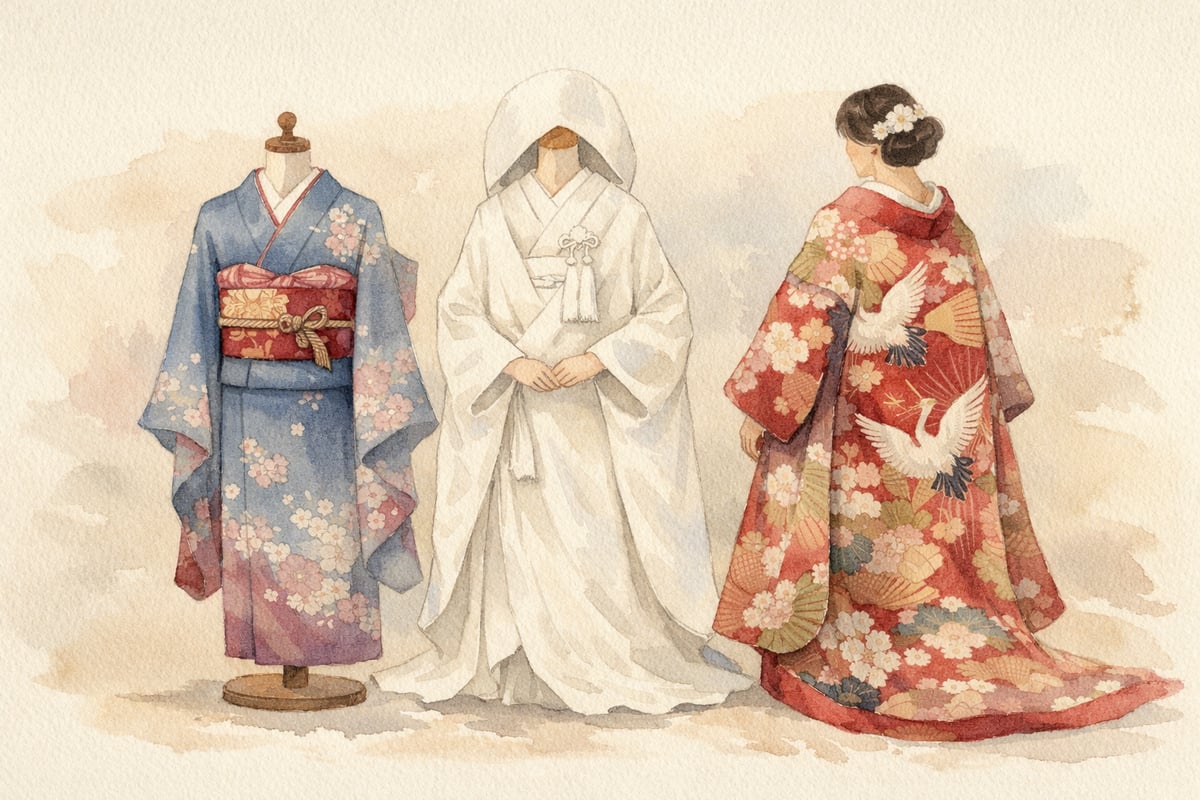
Shiromuku is an ensemble in which everything — from the uchikake (outer robe) to the kakeshita (under-kimono) and even the small accessories — is unified in white, and it’s considered the most formal style of bridal wasou. Its pure, dignified look is said to suit quiet settings such as shrines or Japanese gardens. Iro-uchikake is a more festive style, its vivid colors and patterns expressed through embroidery or weaving; it ranks just below shiromuku in formality and tends to stand out beautifully against colorful backdrops such as autumn foliage or gardens. Hikifurisode is styled with the hem trailing long behind, said to create a beautiful silhouette when standing. It’s a bridal variation of furisode (a long-sleeved formal kimono), chosen by those who want to express their own personal style. Since hikifurisode is a type of furisode, if you’re still deciding on your furisode, the article on whether to rent, buy, or wear your mother’s furisode (mamafuri) may also be helpful.
Location Shoot or Studio Shoot: Which Should You Choose?
Shoots generally fall into two types: outdoor “location shoots” and indoor “studio shoots.” Which suits you best depends on your circumstances and preferences, so let’s look at the features of each.
Studio shoots aren’t affected by weather, and you can shoot calmly in an air-conditioned indoor space. Changing outfits is easy, which makes studios a good fit if you want to capture several looks. Shooting time also tends to be shorter, with less burden from moving between locations. Location shoots, meanwhile, let you shoot against seasonal scenery such as shrines, temples, or Japanese gardens. While they capture the soft atmosphere unique to natural light, they’re also weather-dependent, so it’s reassuring to check in advance how rain is handled. The need to travel to the shooting location is another point worth factoring in.
For those who’d like to arrange both costume rental and photography together in one place, some kimono rental services offer packages designed specifically for wasou maedori and photo weddings, including options limited to particular locations such as Kyoto. These packages, which typically include bridal attire such as uchikake, differ in purpose and availability from general sightseeing kimono rentals, so it’s worth checking the details — shoot content, outfits, pricing, and booking conditions — directly with the provider before booking.
What to Check Before You Book
What’s included varies by shop and plan, so checking the following points before booking will help you avoid any last-minute scramble.
- The number of outfits. Confirm how many outfits are included in the plan, and how additional outfits are handled if you’d like more.
- The shooting location. Check whether it’s a studio or a location shoot, and if it’s a location shoot, where exactly and whether travel is involved.
- Photo data. The number of photos you receive, and whether the plan includes digital data, a printed album, or both, varies by plan.
- Hair, makeup, and kitsuke. It’s reassuring to confirm whether these are included in the plan or charged separately.
- Rainy-day plans. For location shoots, check whether you can reschedule or switch to a studio in case of bad weather.
- Service area. Shop-based services may only be available in certain regions, so confirm before booking whether the service covers the area you want.
The safest approach is to confirm anything you’re unsure about directly through the booking page or by inquiring beforehand.
In Closing
Once you’ve worked through the formality and mood of the outfits, the shooting style, and what to confirm before booking, even first-timers can prepare for a wasou maedori with confidence. Whether it’s the dignified beauty of shiromuku, the vibrance of iro-uchikake, or the individuality of hikifurisode, each can become a photograph that feels truly your own. May all the time spent deciding become one more cherished memory for the two of you. If you’re considering a wasou maedori in Kyoto, it may also be worth checking what location-specific packages are available there.