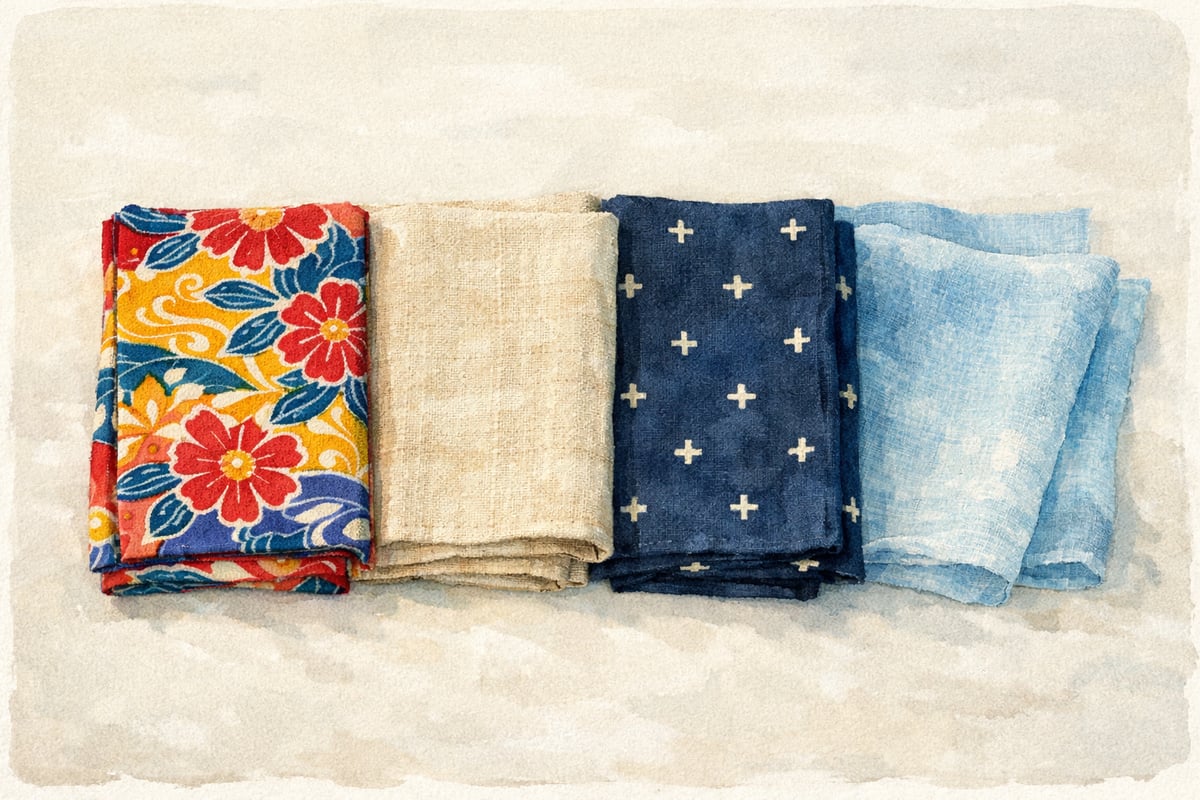
When people think of Okinawan dyeing and weaving, vivid bingata often comes to mind first. But bingata is really just the entry point. This article traces what ryusou—Okinawa’s traditional dress—actually looks like, then walks island by island through the dyeing and weaving traditions that grew up there, so the differences become easy to see.
What Is Ryusou, Okinawa’s Traditional Dress?
Ryusou is a style of dress passed down in Okinawa since the era of the Ryukyu Kingdom. Compared side by side with mainland kimono, the construction is clearly different. The upper garment has no okumi (front overlap panel), and the sleeves aren’t closed into a pouch shape but open into loose, wide tubes. The sides are said to have gussets, with slits cut into both sides of the hem. In other words, this is a cut and a way of wearing that creates ease between the body and the cloth, rather than following the body’s line. Raise an arm, and the breeze slips in through the sleeve opening and passes right through—a structure that makes perfect sense for getting through the humid summers of these islands.
The way of dressing has its own distinctive name, too. The women’s style of wearing it, called ushinchii, is defined in the Ryukyu Shimpo newspaper’s Okinawan-language dictionary as “a way women fasten their dress by tucking the lower part of the outer garment’s collar into the narrow sash worn around the inner garment.” Rather than being cinched tightly with an obi, it is simply tucked into a narrow sash, leaving the waist area relaxed and letting air flow through. This style of dressing can still be seen today in classical Ryukyu dance pieces such as “Hanafu” and “Hamachidori,” though it is explained that as everyday dress it gradually fell out of use from around the 1930s onward.
Another important thing to understand is that ryusou was never a single, fixed costume. The Ryukyu Kingdom was a trading nation that sailed back and forth across the sea to China, Japan, and countries of Southeast Asia. Dyeing and weaving techniques, materials, and pattern ideas traveled along those sea routes and were reworked on the islands. Clothing, too, varied in color, material, and pattern according to social rank, role, and occasion. Some fabrics—such as bingata and hanaori, discussed later—are said to have had their use restricted by the royal government. So while we casually say “Okinawa’s traditional dress,” who wore what was in fact finely differentiated.
Why Okinawa Became a Treasure House of Dyeing and Weaving
Okinawa Prefecture is home to more than a dozen crafts designated by the national government as traditional crafts, and many of these are dyed or woven textiles—with completely different fabrics developing on the main island, Kume Island, Miyako Island, and the Yaeyama Islands. Why did such distinct traditions emerge?
One reason is that the plants available on each island differed. The forests of Yanbaru were thick with ito-basho (fiber banana), while choma (ramie) grew well in Miyako and Yaeyama. Different available fibers naturally produced fabrics with different textures. Another reason is trade: techniques, materials, and designs arrived from outside and combined with local materials to take on their own distinct forms.
And one more factor that shouldn’t be overlooked is the tax system. Under the Ryukyu royal government there was a system called konoufu, in which woven cloth was submitted as tax. According to an explanation from Miyakojima City, Miyako jofu was designated in 1637 as tribute cloth under the head tax, and from then on was required to be an exceptionally finely woven textile. It was a harsh system, but as a result the techniques were honed to a fine art, and each island’s distinct character became sharper. The islands’ plants, the sea routes, and the royal government’s system—these three forces combined to form the map of Okinawan dyeing and weaving as we know it today.
Ryukyu Bingata, the Dye that Represents the Ryukyu Islands
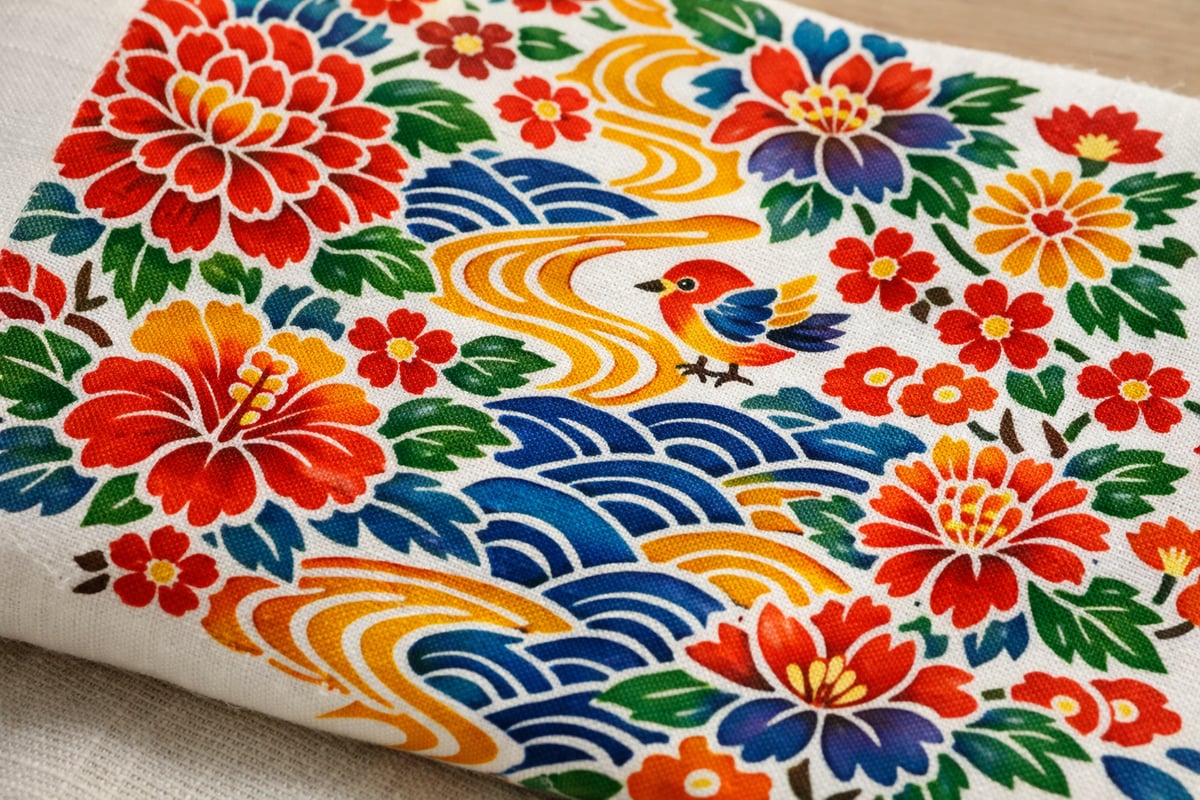
Bingata is Okinawa’s one and only traditional dyeing technique. According to the Ryukyu Bingata Business Cooperative, “there is a view that interprets ‘bin’ as meaning ‘color’ and ‘gata’ as meaning ‘pattern.'” The etymology has several theories and is not definitively settled.
Bingata patterns are created using a principle in which dye cannot penetrate wherever paste has been applied. Before dyeing, paste is applied in the shape of the pattern—this is the resist paste. From there, the technique splits broadly into two methods. One is katazuke, in which a stencil is placed on the fabric and resist paste is applied through it. The other is tsutsubiki, in which no stencil is used at all; instead, resist paste is squeezed directly onto the fabric from the tip of a cone-shaped bag, drawing the pattern freehand. The cooperative’s own explanation describes tsutsubiki as “technically difficult”—a technique where the skill of the hand shows directly in the result.
The way color is applied is another highlight of bingata. Color is added to the areas left unprotected by the paste, and then deeper shades are layered on top to create depth and shadow. This layering produces that rich, vivid depth of color. Both dyes and pigments are used, which is said to contribute to the strength of the color when it catches the light. And forming a pair with bingata is eegata (indigo-dyed bingata). That same blue discussed in the article on indigo dyeing and Japanese life was applied here too, dyed in gradations of indigo and black ink, and used extensively for summer clothing. In other words, the very same stencil can produce both vivid bingata and a cool, refreshing eegata.
What surprises many people is the range of motifs. Alongside tropical subjects like deigo flowers and fish, designs such as plum blossoms, snow rings, and cranes—things not actually seen in Okinawa—have long been depicted as well. As the cooperative itself puts it, the style holds “both Chinese-style grandeur and Japanese-style elegance.” Since this is a stencil-based dyeing technique, it’s also interesting to compare it with mainland Japan’s hand-painted yuzen versus stencil-dyed yuzen. Designs that arrived from across the sea were redyed in the islands’ own colors—and each motif seems to carry, within it, the memory of a nation built on trade.
Okinawa’s Representative Traditional Textiles
From here we move on to woven textiles. Each has its own production area and material, so try reading with an eye toward “which island, and made from what.”
Kijoka Bashofu
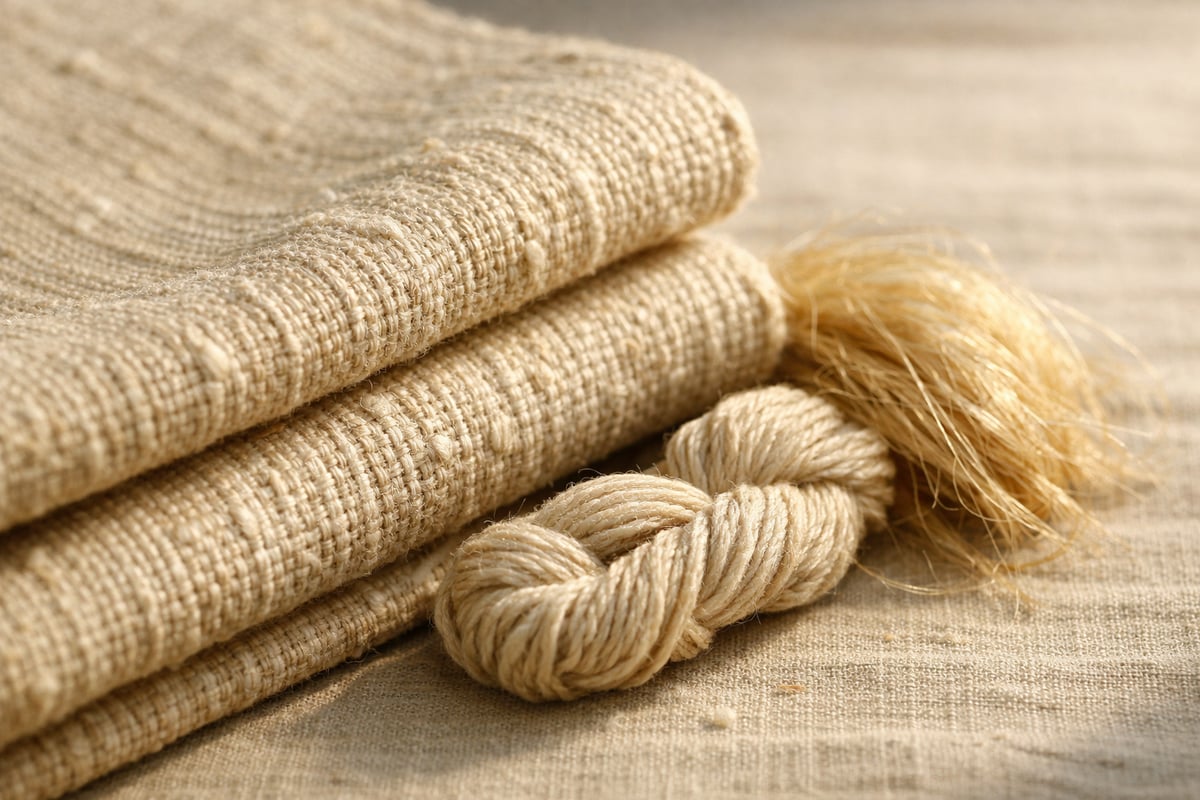
In Kijoka, in Ogimi Village in the northern part of Okinawa’s main island, weavers produce bashofu—a textile spun from fiber extracted from ito-basho, a relative of the banana plant. According to the official website, the fiber is “extremely difficult to handle due to its sheer delicacy.” The process begins with growing the basho plants in the field and passes through more than twenty steps before a single bolt of cloth is finally complete.
Held in the hand, it doesn’t have the smooth suppleness of silk but rather a crisp, dry firmness. It doesn’t cling to the skin and lets air pass through freely. It’s said to be one of Okinawa’s oldest textiles, and in 1974 “Kijoka no Bashofu” was designated a national Important Intangible Cultural Property, with the Kijoka Bashofu Preservation Society recognized as the holding organization. It is also a traditional craft designated by the Minister of Economy, Trade and Industry.
Ryukyu Kasuri
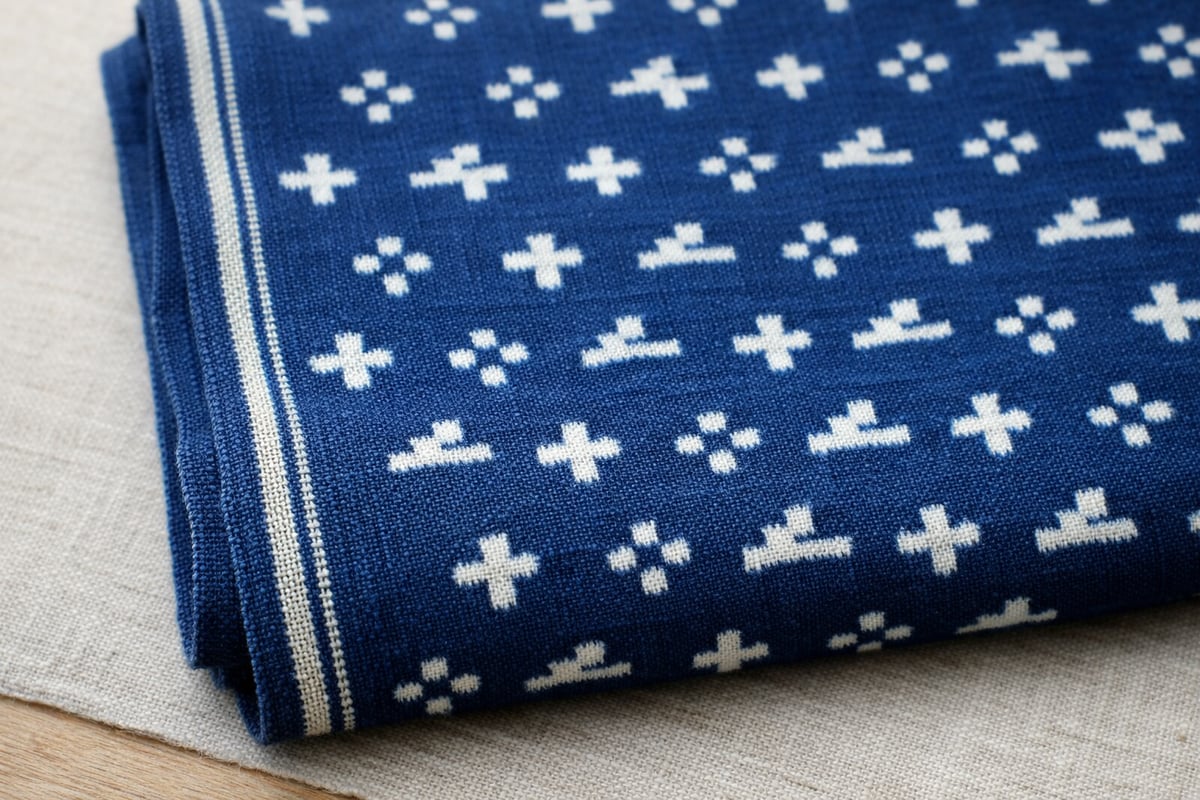
This is a kasuri (ikat-patterned) textile woven mainly in Haebaru Town in the southern part of the main island. Threads are bound and dyed in sections beforehand, so the pattern only reveals itself once the fabric is woven—and that calculated reveal is what makes kasuri so fascinating. Ryukyu kasuri is said to have around 600 design patterns passed down from the era of the kingdom, with names drawn from everyday life—birds, clouds, wells, swallows, and more.
It’s worth noting that Ryukyu kasuri is sometimes introduced as “the wellspring of Japanese kasuri,” but there are multiple views on how kasuri techniques spread, and it cannot be stated definitively that this is the sole origin of kasuri nationwide. It’s probably best viewed as one current within the larger flow of techniques that traveled back and forth along the sea routes.
Miyako Jofu
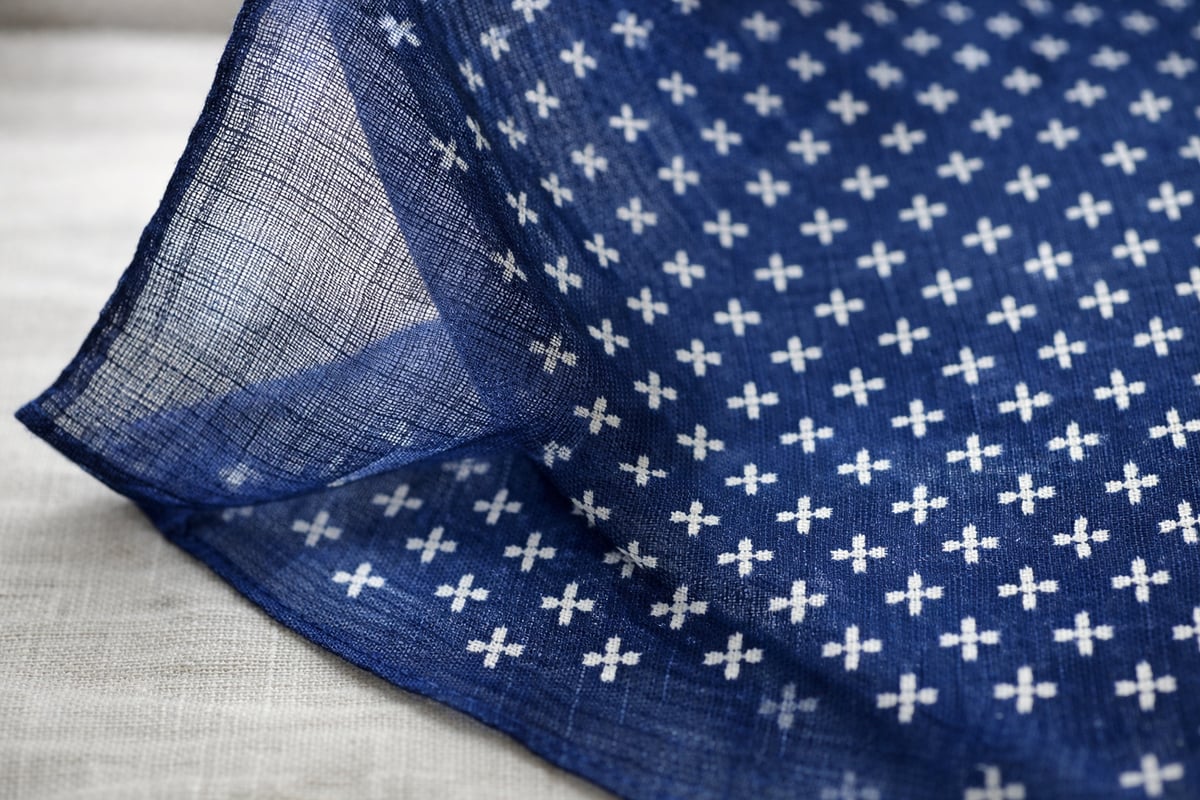
This is an asa (linen/hemp) textile woven on Miyako Island using thread made from choma (ramie) fiber. According to an explanation from Miyakojima City, it is said to have been first created by a woman named Inaishi in the late 16th century, and after being designated as tribute cloth for the head tax in 1637, it was required to meet exacting standards of fineness. It is considered one of Japan’s foremost jofu textiles, spoken of in the same breath as Echigo jofu and Ojiya chirimen. For more on asa itself as a material, see also Ro, Sha, and Asa: The Coolness Hidden in Sheer Kimono.
Its defining feature lies in how the thread is made. In a technique called teumi (hand-spinning), choma fiber is split into fine strands by fingernail and finger, joined, and twisted into thread. This skill, which cannot be replaced by machine, was designated a national Selected Conservation Technique in 2003 under the name “Hand-Spun Choma Thread.” The finished cloth is finished with a process called kinuta-uchi, in which it is pounded with a wooden mallet, producing its distinctive sheen. It was designated a national Important Intangible Cultural Property in 1978.
Yomitanzan Hanaori
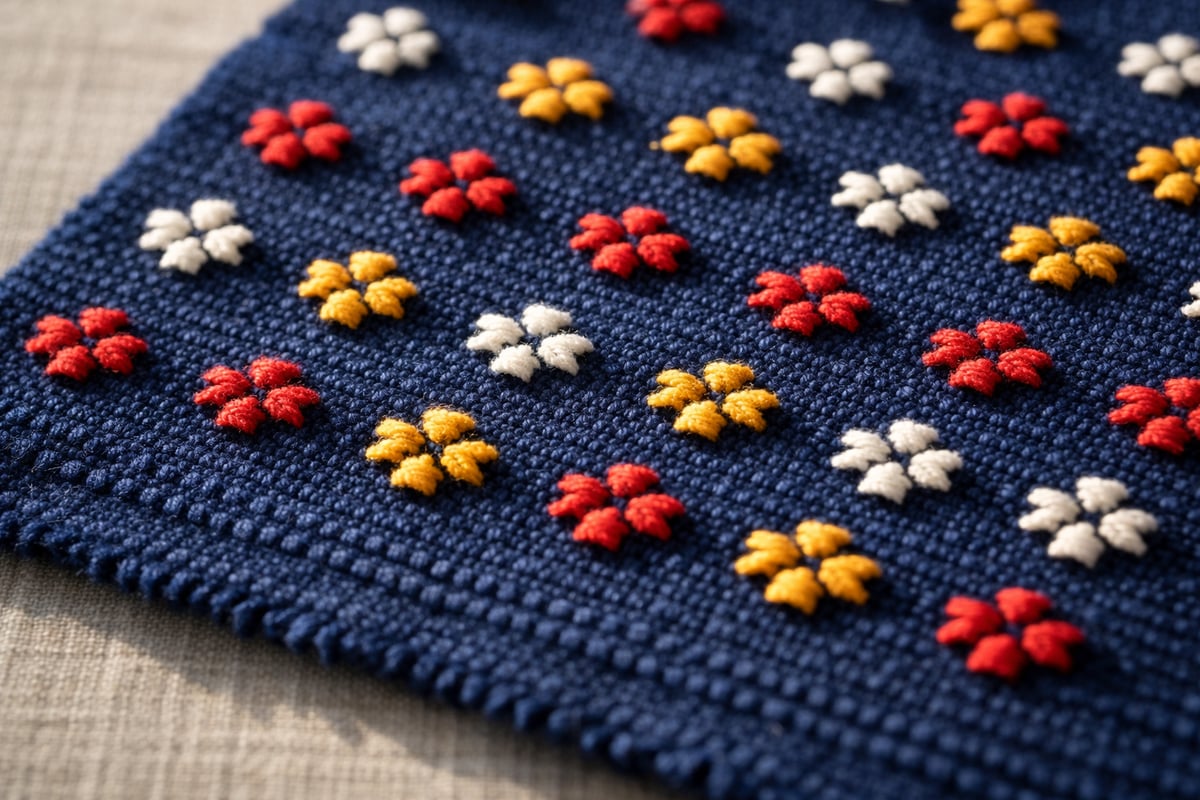
This fabric, passed down in Yomitan Village in the central part of the main island, is woven using a technique in which threads are floated to create raised patterns. The name comes from the way the patterns rise up across the surface as if flowers had bloomed there. Among its motifs are jinbana, representing coins; oojibana, representing a fan; and kajimayaabana, representing a pinwheel—each said to carry a wish, respectively, for prosperity, descendants, and long life.
It is said to have once been under the control of the royal government, with its wear restricted to a limited group of people. The tradition nearly died out at one point but was revived during the Showa era and has continued to be woven up to the present day.
Kumejima Tsumugi
This is a silk textile woven on Kume Island. It uses tsumugi thread, hand-spun from waste cocoons turned into silk floss, as well as hikiiito, thread drawn out by hand directly from cocoons. Dyeing is done using plant dyes made from vegetation native to the island, along with mud dyeing. The results are tones that can come only from the island’s soil and trees—susutake (sooty bamboo) color, reddish brown, silver gray, uguisu (bush warbler) green.
What’s especially notable is that everything from selecting the design and gathering the dye materials to dyeing the thread, binding the kasuri, and weaving is done by a single weaver, entirely by hand. That’s precisely why the presence of the maker lingers in the cloth. It’s an island tsumugi quite different from mainland varieties such as Yuki tsumugi, Oshima tsumugi, and Ushikubi tsumugi. Its hallmark is a simple, supple texture and deep coloring, and it’s said that each washing removes more of the lye, making the colors grow clearer over time.
Shuri-ori
This is a general term for the textiles passed down in Shuri, Naha City. Unlike the others, it doesn’t refer to a single technique but rather bundles together several weaving techniques—hanakura-ori, dōton-ori, kasuri, hanaori, and more. Being centered at the seat of the royal government, both the designs and the weaving reflect a certain formality and rank. Hanakura-ori in particular is described as the most prestigious of these weaves, said to have been worn by royal consorts and princesses.
Yaeyama Jofu
This is an asa textile from the Yaeyama Islands, centered on Ishigaki Island. Even though it’s also a jofu textile, the impression differs from Miyako’s version—it is characterized by reddish-brown kasuri patterns against a white ground. During the era of the Ryukyu Kingdom it was submitted as tribute cloth. Place Miyako jofu’s indigo alongside Yaeyama jofu’s white ground, and you start to see how, even using the same choma fiber, each island pursued a different vision of beauty.
Yaeyama Minsa
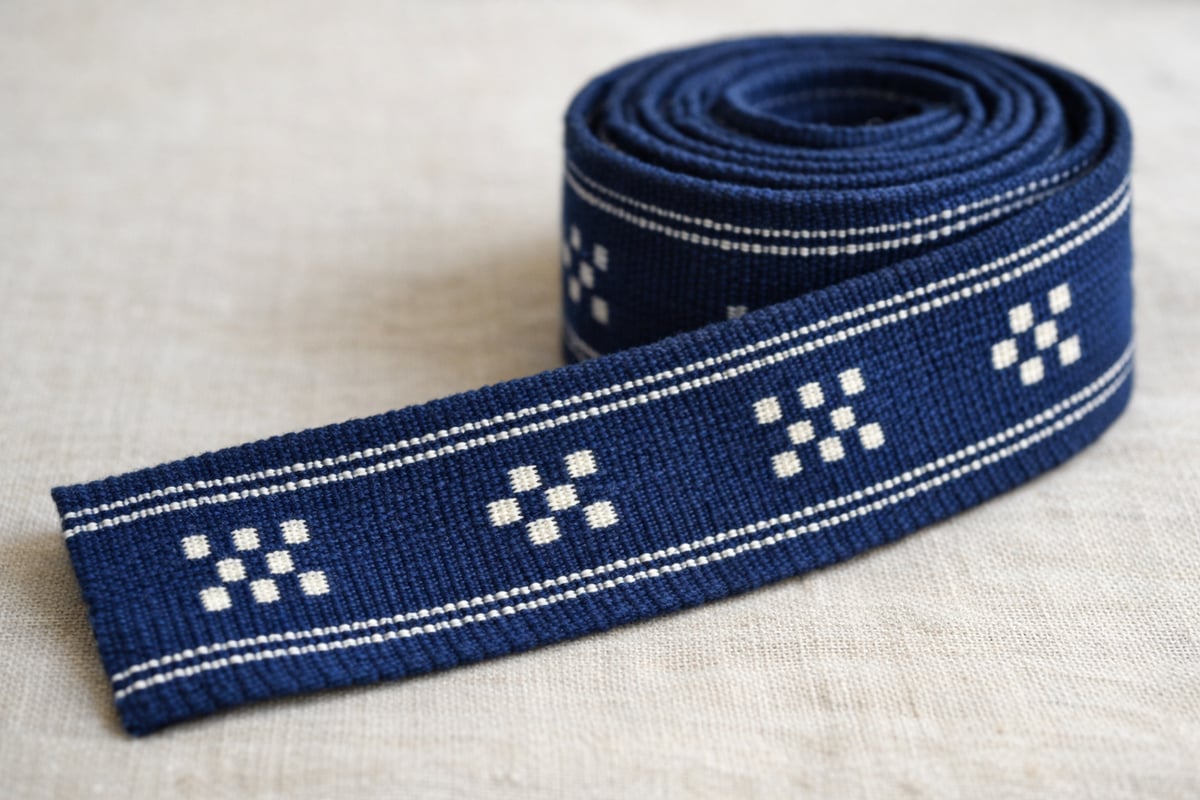
This is a cotton textile from the Yaeyama Islands, woven mainly for use as obi. It uses a plain-weave ribbed technique with thick cotton thread in the weft, giving it a somewhat thick, substantial feel.
Best known is the pattern of five squares and four squares arranged against an indigo ground. Five is said to represent “itsu” (five), and four represents “yo” (world/generation, also read as four)—together said to carry the meaning “may this bond last for generations to come,” according to tradition. The fine horizontal stripes running along both edges are called yashirami, likened to the many legs of a centipede, said to mean “please visit often.” According to legend, in the days when courtship involved a man visiting a woman’s home at night, women would give this obi to the man they cared for. All of these are folk interpretations passed down locally, and none are established as definitive origins.
Comparing Ryukyu Dyed and Woven Textiles at a Glance
| Name | Category | Main Material/Technique | Main Production Area | Features |
|---|---|---|---|---|
| Ryukyu Bingata | Dyeing | Katazuke/tsutsubiki; pigments and dyes | Various locations across Okinawa | Vivid multicolor; eegata uses gradations of indigo and black ink |
| Kijoka Bashofu | Weaving | Ito-basho fiber | Kijoka, Ogimi Village | Natural off-white, crisp, breathable |
| Ryukyu Kasuri | Weaving | Kasuri (thread bound and dyed in sections) | Haebaru Town and other areas of the southern main island | About 600 designs passed down from the kingdom era |
| Miyako Jofu | Weaving | Hand-spun choma thread; kinuta-uchi finishing | Miyako Island | Thin, lightweight asa cloth; fine kasuri and sheen on indigo ground |
| Yomitanzan Hanaori | Weaving | Hanaori (floated-thread) technique | Yomitan Village | Flower-like patterns rise in relief |
| Kumejima Tsumugi | Weaving | Tsumugi thread; plant dyeing and mud dyeing | Kumejima Town | Deep, subdued tones; one weaver handles the entire process |
| Shuri-ori | Weaving | Hanakura-ori, dōton-ori, kasuri, hanaori, and more | Shuri, Naha City | Umbrella term for multiple techniques; reflects royal formality |
| Yaeyama Jofu | Weaving | Asa textile made from choma | Ishigaki Island and other Yaeyama Islands | Reddish-brown kasuri on a white ground |
| Yaeyama Minsa | Weaving | Cotton; plain-weave ribbed technique | Yaeyama Islands | Five-and-four kasuri pattern; thick, suited for obi |
*Production areas and techniques listed are representative examples. There is variation by workshop and era.
Ways to Enjoy Ryukyu Dyeing and Weaving Culture Today
Once you know a little about it, you naturally want to see the real thing. You don’t need to overthink it—there are several ways in.
- Try wearing ryusou. Some tourist facilities offer the chance to try it on. You only truly understand the feeling of a breeze passing through the sleeves once you’ve worn it yourself
- Try dyeing or weaving. Some workshops accept visitors for hands-on experiences with bingata paste application and coloring, or with weaving on a loom. The weight of the paste, the sound of the reed striking the threads—these are the kinds of details that stay with you
- See the real thing at a workshop or museum. Facilities exist in the production areas themselves, such as the Ogimi Village Bashofu Hall and the Miyakojima City Traditional Crafts Center. The thickness and translucency that photographs simply can’t capture are right there in front of you
- Start small with accessories. Obi, bags, business card holders, coasters, table runners. Even a small item is enough to convey the substantial texture of minsa
You don’t have to start by buying a full bolt of cloth. Once you own even one small, palm-sized piece, the resolution at which you see these textiles in photographs afterward completely changes.
What to Check Before You Buy
If you ever have the chance to actually choose a piece, checking the following points beforehand can help you avoid later feeling that “this wasn’t quite what I expected.”
- The craft’s name and production area. Rather than simply “an Okinawan textile,” confirm exactly which craft and which production area it comes from
- Material. Silk, choma, cotton, or ito-basho fiber—each differs in texture and in how it needs to be cared for
- Shoshi (certification labels) and other markings. Some items come with a shoshi issued by the local producers’ cooperative. However, not every item carries the same certification label or marking. Small accessories and certain items may fall outside the scope of certification, so it’s safest to ask the shop staff exactly what any label indicates
- The maker. If the workshop name or the individual weaver is known, it’s worth noting down as a reference point for future choices
- Dimensions, tailoring, and condition. Whether it’s a bolt of cloth or an already-tailored piece, whether the dimensions suit you, and if it’s an older piece, whether there are stains or wear
- Care instructions. Asa and bashofu require delicate handling. Confirm before purchase whether an item can be washed at home or needs to be sent to a specialist cleaner
In Closing
The vermilion of bingata, the natural off-white of bashofu, the indigo of Miyako jofu, the five-and-four pattern of minsa. Lined up together, it becomes clear that Okinawan dyeing and weaving can’t possibly be summed up in a single phrase like “colorful tropical textiles.” Plants that grew on the islands, techniques and designs that arrived from across the sea, the structures of the royal government, and wishes woven into daily life—all of these are twisted into every single thread.
The next step, I think, is getting closer to the real thing. Visit a museum in a production area, sign up for a hands-on experience, or pick up just one small accessory—any of these will do. The cloth that once existed only on the far side of a photograph will appear before you with real thickness and weight. And it’s in that moment of holding it in your hands that the differences between each island come through most clearly.