
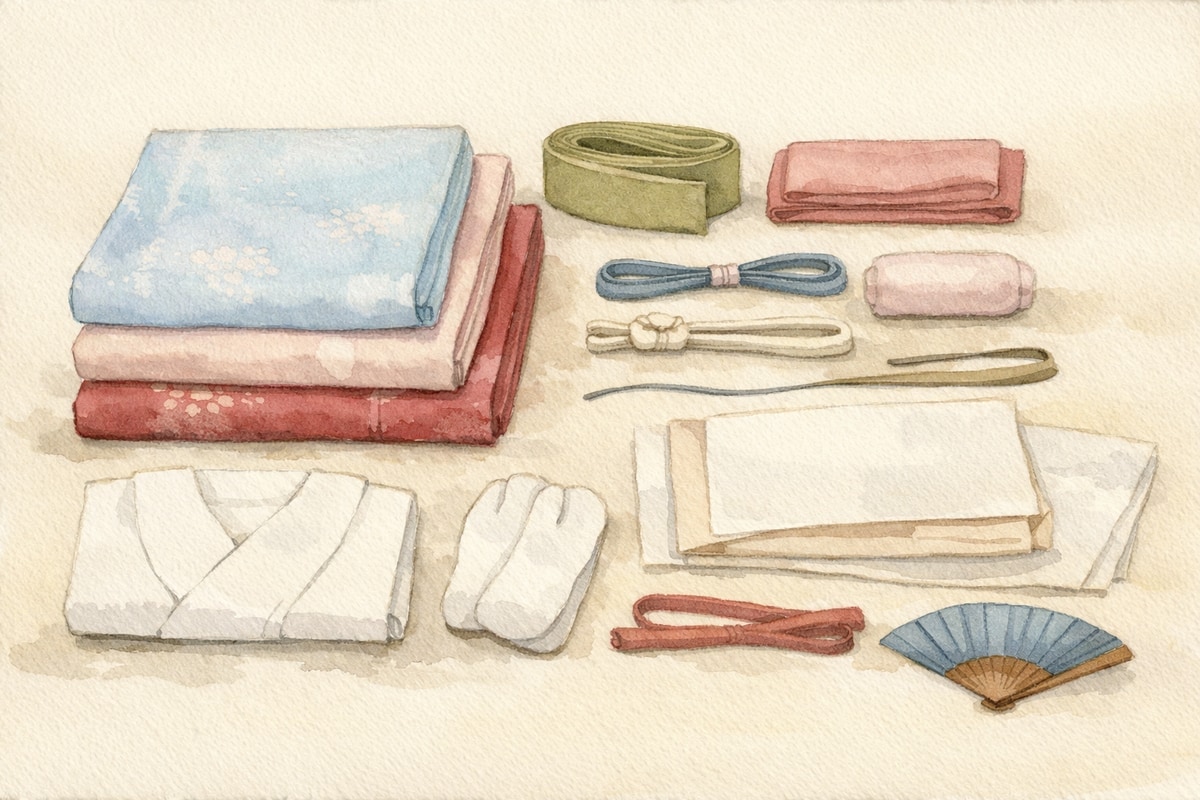
“Is it about time to switch to a hitoe?” “Can I already wear this as an usumono?” — Once you start wearing kimono, these questions tend to pop up whenever the seasons change. Just between us, this seasonal switch-over was actually the thing Iroha worried about most when starting out with kimono. Today, let’s pull the whole idea together in one clear, simple guide.
What’s the actual difference between hitoe and usumono?
First, don’t worry — there are really only two things to remember. The first is “hitoe,” a kimono worn during seasonal transitions, made from materials like silk or cotton but tailored without a lining, and without any see-through quality. The second is “usumono.” This is also unlined, but it uses summer fabrics such as ro (a sheer, gauzy summer silk) or sha (a light open-weave sheer silk), giving it a sheer, see-through look — the key difference from hitoe.
Among usumono, ro is considered suitable for formal occasions, while sha is seen as better suited to semi-formal or casual settings. Kimono made of asa (linen/hemp), meanwhile, are treated as usumono even though they aren’t see-through, but they’re not considered appropriate for formal occasions — they’re meant to be enjoyed as everyday outing wear instead. Sha is woven using a technique called “mojiri-ori,” in which two warp threads are crossed for every single weft thread, while ro is said to differ in that it mixes in plain weaving as well. The world of sheer kimono is surprisingly deep once you look into it. If you’d like to learn more, take a look at Ro, Sha, and Asa — The Cool, Sheer Side of Kimono as well.
It helps to remember formality and season together
Rather than just asking “is it see-through or not,” it also helps to check “is it formal or not” at the same time — doing both together makes choosing much easier.
The general timing for seasonal kimono switches (with regional and climate differences in mind)
A commonly cited modern calendar for these seasonal switches goes like this: June 1 to June 30 calls for hitoe; July 1 to August 31 calls for usumono suited to the height of summer; September 1 to September 30 calls for hitoe again; and October 1 to May 31 calls for awase (lined kimono). In terms of the traditional kimono calendar, June marks early summer, July and August mark the height of summer, and September marks early autumn — with the general idea being that early summer and early autumn call for non-sheer hitoe, while the height of summer calls for sheer usumono.
That said, this kind of calendar is really just one general guideline. In recent years, climate change has brought more days when temperatures don’t drop even once autumn arrives, and this has led to a growing movement to reconsider the old fixed rule of “switch from awase to hitoe on June 1, and from hitoe back to awase on October 1.” There’s even guidance suggesting that the chart is just one point of reference, and that it’s fine to enjoy kimono in a way that suits your region and that year’s climate.
Thinking it through by event or occasion
July is generally the month when sheer usumono like ro and sha fit the season best, while June and September are considered the standard months for hitoe. Even so, depending on temperature, region, air conditioning at the venue, travel time, and the occasion (TPO), there are times when hitoe is chosen even in July. This is actually one of the more interesting aspects of the kimono world — it’s not a strict rule that “July automatically means usumono”; there’s room to think it through based on the venue and how you’ll be spending the day.
Even in the world of tea ceremony, there’s a growing view that comfort should guide clothing choices based on the temperature, and it seems that even in a world that values tradition and formality, moving away from one-size-fits-all seasonal rules is becoming the standard way of thinking. We also touch on how to think about dress for different occasions — tea gatherings, meals, and more — in Kimono for the Theater, Dining, and Tea Gatherings: Thinking It Through by Occasion, so do take a look at that too.
How to decide when you’re unsure (balancing temperature, formality, and those around you)
“So how do I actually decide?” — honestly, between us, this is the part people worry about most. Iroha’s suggestion is to look at three things in order: first the temperature, then the formality of the occasion, and finally the balance with what those around you are wearing.
Cotton and wool kimono are generally worn as hitoe year-round, while black tomesode are, conversely, generally worn as awase year-round. In other words, the rules around seasonal switching were, from the start, surprisingly flexible depending on the material and type of kimono. Just knowing this can take the pressure off that feeling of “I absolutely have to do it this way.”
Matching the obi and accessories to the season as well
It’s not just the kimono itself — the obi (the wide sash tied around a kimono), obijime (a cord tied over the obi), and obiage (a fabric accent above the obi) are also part of how you bring a sense of season into your outfit. Pairing a sheer summer obi, or choosing colors that lean toward the season, can help pull the whole look together. We cover the basics of choosing these accessories in How to Choose Obijime and Obiage: The Basics of Formality and Color Matching, so it’s worth keeping that one bookmarked.
In closing
When it comes to switching kimono for the season, there’s a basic calendar to keep in mind — hitoe in June and September, usumono in July and August, and awase from October through May — but it’s perfectly fine to adjust your thinking a little based on temperature, that year’s climate, the venue, and the occasion. Once you know the traditional guidelines, try choosing based on today’s temperature and the occasion at hand — and with that kind of relaxed approach, enjoy your time with kimono.