The theater, a dinner party, a tea ceremony — all are “outings,” yet the right formality of kimono shifts with the occasion. To state the conclusion up front: there is no single kimono that is always the safe choice. Here is a general guide for each setting, along with points worth confirming in advance for peace of mind.
🌸 The short version (for those in a hurry)
For the theater and dinner parties, houmongi (a semi-formal kimono), iromuji (solid-color kimono without a crest), tsukesage, and komon (a casual kimono with a small repeating pattern) are the main choices. For tea ceremonies, the basic rule is to avoid tsumugi (a textured, hand-woven silk). Since the appropriate level of formality also depends on how formal the event is, when in doubt it’s safest to check with the host or your tea teacher.
The Theater: Consideration for Those Around You Comes First
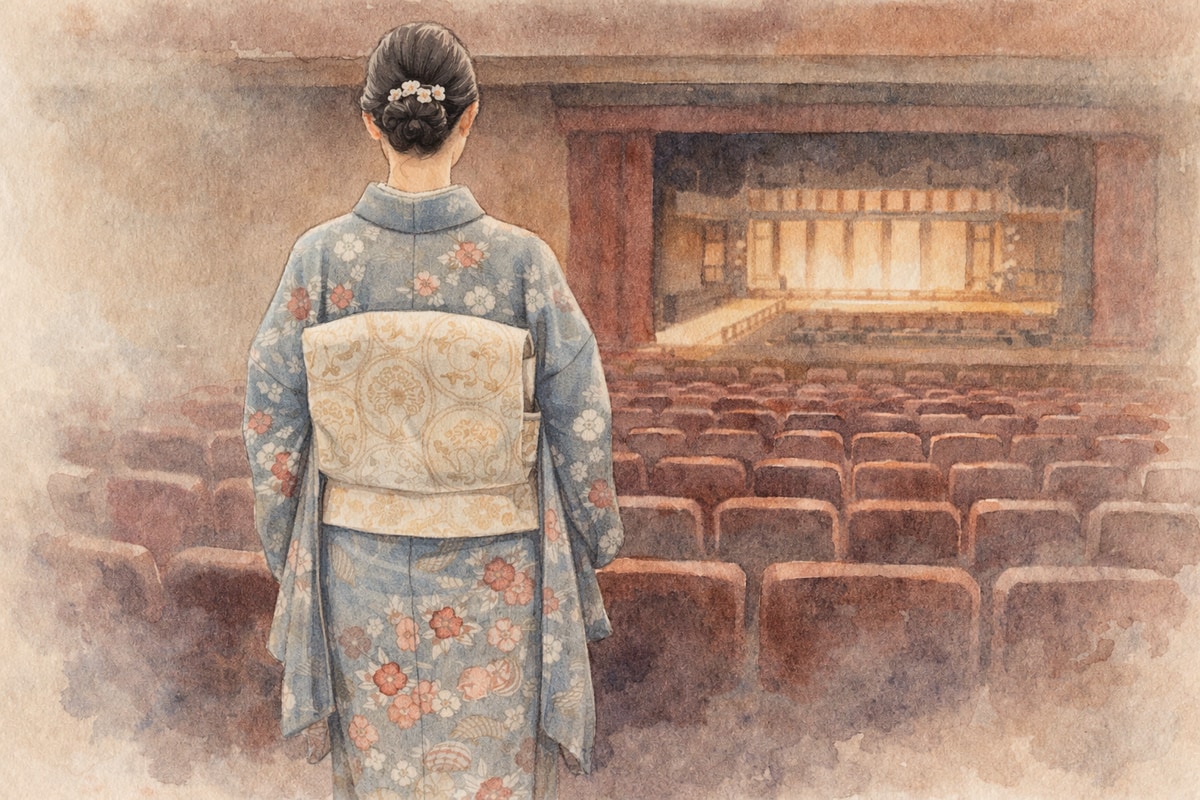
For the theater, houmongi, iromuji (without a crest), tsukesage, and komon are the styles typically chosen. Here, what matters most is not so much the kimono’s formal rank, but consideration for the people around you.
- Keep your hairstyle low in volume. A high bun or similar style can block the view of people seated behind you
- An obi (the wide sash tied around a kimono) knot such as otaiko, which sits flatter, is kinder to your seatback
- Choose footwear and fragrances that won’t make noise or carry a scent — it’s worth checking beforehand that your kimono and obi don’t have any lingering odor
Dinner Parties: Choose Based on Comfort and the Mood of the Venue
For dinner parties, houmongi and komon are common, and depending on the restaurant’s atmosphere, a more relaxed choice like tsumugi may also work. The general principle is to match the formality of the venue: houmongi or tsukesage for a formal dinner, and komon or tsumugi for a casual gathering.
Tea Ceremonies: The Golden Rule — Tsumugi Is Generally Off-Limits
Tea ceremonies come with a golden rule that doesn’t apply to the theater or dinner parties: “tsumugi is generally not appropriate.” Even an expensive tsumugi is still considered everyday wear in terms of formality, and is thought unsuitable for the tea room. Beyond that, the appropriate kimono varies with the formality of the gathering, as shown below.
| Formality of the Tea Gathering | Suggested Kimono |
|---|---|
| Highly formal tea gatherings, such as hatsugama (the first tea ceremony of the year) | Houmongi, tsukesage, iro-tomesode, or (if unmarried) furisode (a long-sleeved formal kimono) |
| Tsukigama (regular monthly tea gatherings) | Houmongi, tsukesage, iromuji, or Edo komon |
| Oyose (casual, larger-scale tea gatherings) | Iromuji without a crest, or Edo komon, are also chosen |
| Nodate (outdoor tea) and other very casual gatherings | Komon is the main choice. Even here, it’s safest to avoid tsumugi |
*Views may differ depending on the school of tea ceremony or the policy of a particular gathering. This is a general guideline only.
When in Doubt, Ask the Host or Your Teacher — It’s the Surest Way
Keeping in mind that “tsumugi is generally not appropriate” as the basic premise, exactly which kimono to choose beyond that depends on the school of tea ceremony and the formality of that day’s gathering. The most reliable approach is to ask the host or your tea teacher in advance.
Frequently Asked Questions
Q. Can I wear tsumugi to the theater?
A. It depends on the venue and the mood of the performance, but houmongi or komon are generally considered the safer choice. For a more casual performance, tsumugi can also be an option.
Q. What should I wear if I’m not sure what’s appropriate for a tea ceremony?
A. Start by asking the host or your teacher about the formality of the gathering. Even just hearing terms like “hatsugama,” “tsukigama,” or “nodate” will give you a helpful sense of the right level.
Q. I’m worried about standing out at the restaurant for a dinner party.
A. The basic principle is to match the formality of the restaurant. For a formal restaurant with private rooms, houmongi or tsukesage are typical choices; for a casual restaurant, komon or tsumugi are more common.
Summary
- For the theater and dinner parties, houmongi, iromuji, tsukesage, and komon are the main choices — and consideration for those around you matters too
- For tea ceremonies, the golden rule is that tsumugi is generally not appropriate, with further variation depending on the formality of the occasion
- When in doubt, asking the host or your teacher is the most reliable approach
Having walked through these guidelines for each occasion, what matters most in the end is your own enjoyment of the moment. Once your outfit is ready, all that’s left is to head out and enjoy yourself with confidence.
If you’d like to start from the basics of kimono types and formality, see also our quick guide to kimono types and formality.