
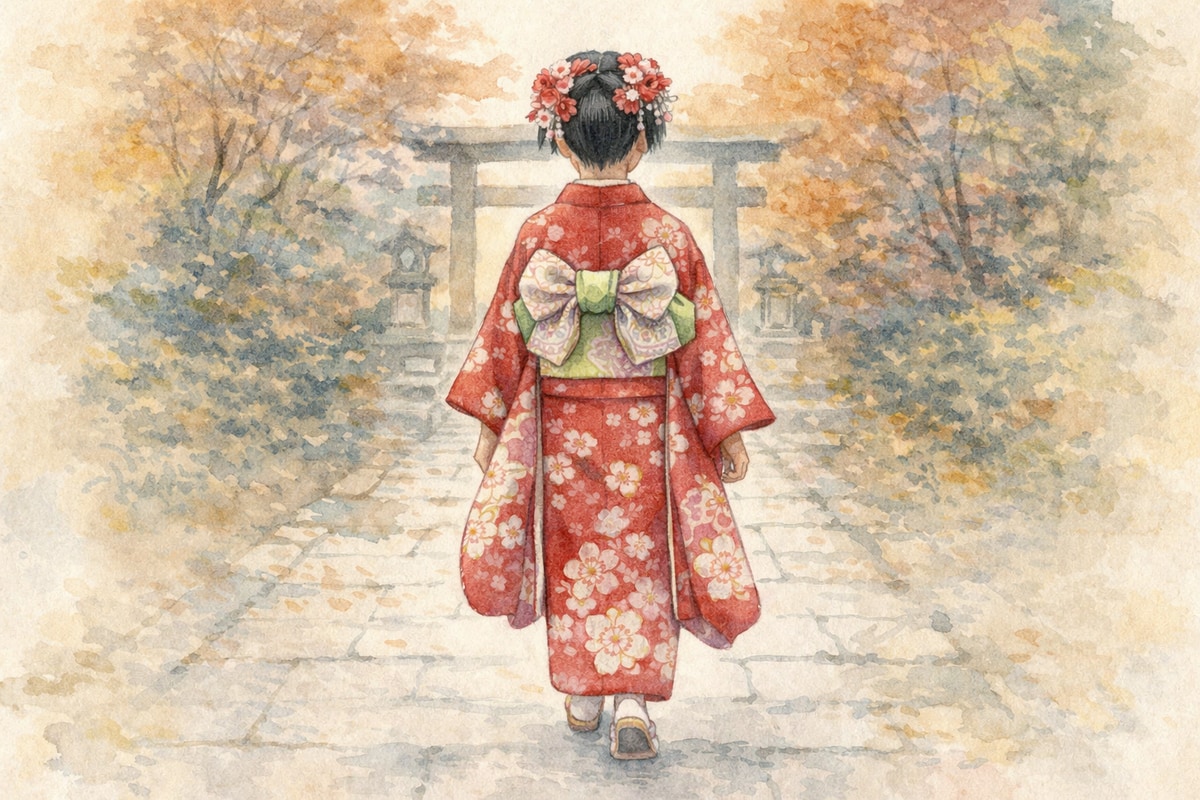
“I suppose it’s about time we booked the kimono for Shichi-Go-San (a celebration for children aged 7, 5, and 3)…” — this thought probably crosses your mind every time you notice how much your child has grown. In reality, the patterns and sizes available to you depend heavily on when you start moving. To cut to the conclusion: at many shops, the common pattern is that choices start narrowing about three months before autumn, and once October arrives, weekend slots begin filling up first. Let’s walk through this step by step.
Before you book, there are three things you need to decide first
When you open a kimono rental booking form, you may be surprised — and a little overwhelmed — by how many questions come at once. Don’t worry: what shops actually need boils down to just three things.
- The visit date (the day you’ll actually visit the shrine)
- How you’ll handle photos (a pre-ceremony shoot, a post-ceremony shoot, or photos taken on the day of the visit itself)
- Who you’re renting for (just your child, or the whole family’s wasou (traditional Japanese dress) too)
Without these three points settled, a shop has no way to give you an estimate. Conversely, once these three are decided, your booking will move forward quickly.
A month-by-month guide: spring and summer offer more choice, autumn fills up fast
At shops that move early, kimono rental bookings can already be underway by spring (April–May). Once summer (June–August) arrives, pre-ceremony photo shoots pick up in earnest, and this is generally the time when the widest range of patterns and sizes is still available.
As autumn approaches, though, things change. Bookings start increasing around September, and October and November are the busiest months, when photo shoots and shrine visits overlap — popular weekends can be fully booked at some shops. Some shops note that dates around November 15th, especially when a holiday falls on a taian (an auspicious day), tend to be particularly crowded, and some materials suggest visiting on a weekday instead.
On the other hand, there are times when booking is relatively easy. Weekdays, June–July, and December–February are consistently described as easier to book across sources — a useful guideline if you’d like to avoid the crowds.
Think of “kimono” and “photos” as two separate bookings
Here’s a point that trips up many families: kimono rental and photography are, in most cases, separate bookings. Some photo studios include kimono rental as part of a set plan, while in other cases you rent the kimono from one shop and arrange photography with a separate studio. Which route you choose changes how you need to move, so deciding this first will make the rest of your booking process much smoother.
For photos, you also have a choice between a pre-ceremony shoot and a post-ceremony shoot. Pre-ceremony shoots mainly take place from around April to September, while post-ceremony shoots happen from December through January–February of the following year. Post-ceremony shoots tend to be easier to book since they fall outside the peak season, but it’s said that kimono rental services for the shrine visit itself may not be available if you choose a post-ceremony shoot, so if you want to rent a kimono, be sure to check this against your photography timing.
What changes if you move early
You might think, “surely there’s no need to rush.” But moving early actually protects several things.
- Your preferred visit date (popular dates such as taian weekends)
- Your favorite pattern (popular colors and designs get booked first)
- A size that fits your child well (since Shichi-Go-San kimono differ in tailoring and construction by age, it’s reassuring to have more size options available. Differences by age are covered in Shichi-Go-San Kimono and Preparation Checklists for Ages 3, 5, and 7)
- Your preferred time slot for the pre-ceremony shoot (calmer morning slots tend to fill up fastest)
Conversely, if you’re not particular about the date or size, options may still remain even at the last minute. We’ll cover that next.
If you’re worried it might be too late, check things in this order
Even if autumn has already arrived, there’s an order of things worth checking before giving up.
- Check whether you can switch your visit to a weekday (more slots remain open compared to weekends and holidays)
- Talk with your family about whether a non-taian day would be acceptable
- Consider separating the pre-ceremony shoot from the shrine visit (many shops hold pre-ceremony shoots from around April to October, and post-ceremony shoots from December through February of the following year; one option is to complete the shrine visit first and handle photos later)
- Check whether hair, makeup, and dressing can be done at home on the day (kitsuke (dressing in kimono) and hair-and-makeup slots fill up separately from kimono rental bookings)
Even at the last minute, weekday shoots or post-ceremony shoots are often still bookable. Not everything is fully booked, so it’s worth checking directly with the shops you’re considering.
What to confirm at home before you book
Checking these details in advance will make things go more smoothly when you contact a shop.
- Your child’s current height and shoe size (this affects zori (flat kimono sandals) sizing. If you’re concerned about your child having trouble walking, see What to Do If Your Child Says Their Zori Hurt at Shichi-Go-San)
- How you’ll get there on the day (parking near shrines and photo studios tends to get crowded during the autumn Shichi-Go-San season)
- Care arrangements for younger siblings (including how you’ll divide accompanying duties if you have more than one child)
When deciding on outfits for the whole family, it also helps to think about the mother’s kimono at the same time, which will make preparations on the day go more smoothly. This is covered in Shichi-Go-San: What Should the Mother Wear? Choosing Between Houmongi, Iromuji, and Komon. Customs can vary by family and region, so when in doubt, it’s a good idea to check with relatives or the shop directly.
In summary: book in this order — decide the date, then the photo plan, then what to rent
To cut to the conclusion, the fastest path to a smooth booking for Shichi-Go-San kimono rental is deciding three things first: your shrine-visit date, your photography format, and who you’re renting for. Spring through summer offers the easiest choices, while autumn — especially October and November weekends — gets crowded, so it’s best to start with plenty of time to spare. And even if you’re running behind, weekdays and post-ceremony shoots remain options, so there’s no need to panic — just work through things one step at a time.
Having walked through all these steps, though, what matters most is simply greeting the day with a smile. The sight of your child dressed in their formal kimono is sure to become an unforgettable moment for your family. We hope it’s a wonderful day.