
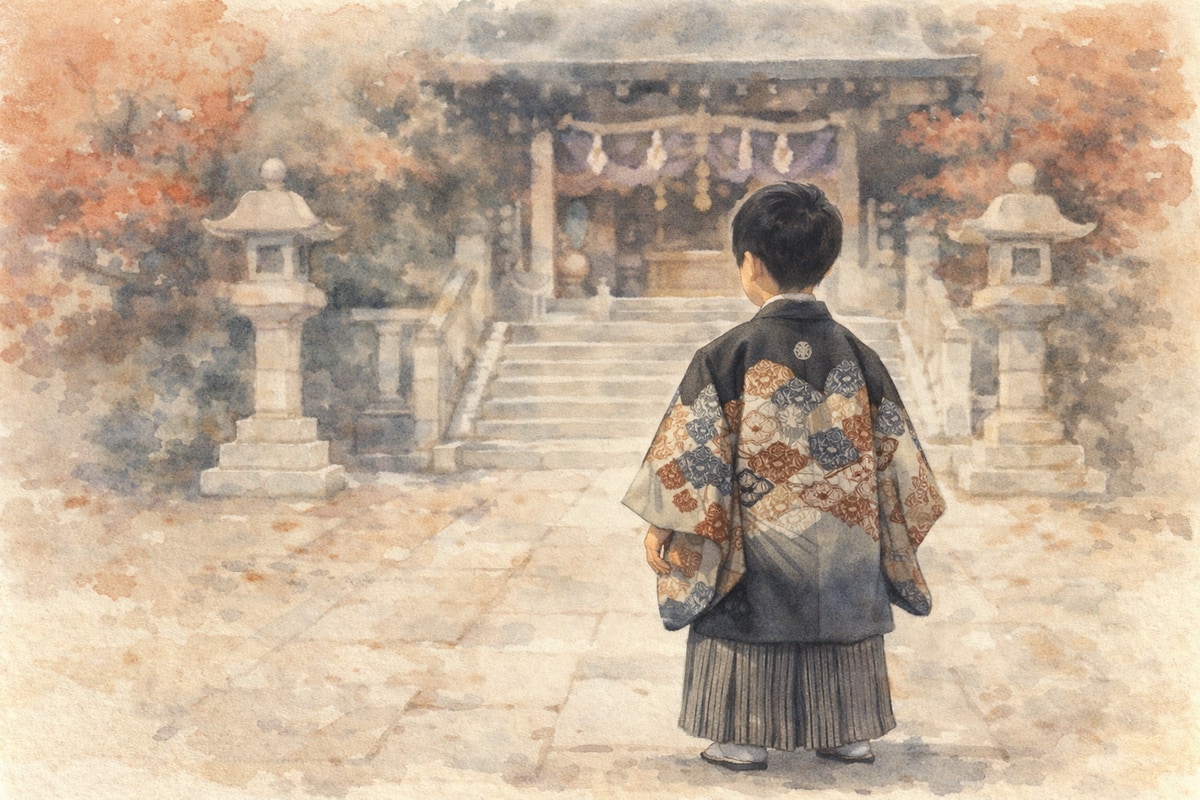
Once you start preparing for Shichi-Go-San (a celebration for children aged 7, 5, and 3), you may find that photo studio bookings fill up even faster than kimono reservations. In fact, you don’t have to take your Shichi-Go-San photos on the actual day of the shrine visit. There are three options: a pre-ceremony photo shoot (maedori), a same-day shoot, or a post-ceremony shoot. Which one you choose will determine both your kimono rental date and the date of your shrine visit. Let’s go through them one by one.
Decide “when to shoot” first
To get straight to the point: when preparing for Shichi-Go-San, deciding “when to take the photos” before choosing the kimono makes everything that follows much easier. The photo studio booking, the kimono rental, and the shrine visit date may seem like separate matters, but they’re actually all connected around the photo shoot date. Photo timing generally falls into three types: maedori, a same-day shoot, or a post-ceremony shoot, and the rough timing is as follows: maedori runs from around April to October, the same-day shoot takes place around November 15 (the day of the observance itself), and the post-ceremony shoot happens from December onward. Let’s look at each of these three options in turn.
Who maedori suits
Maedori means having the photos taken on their own, before the actual Shichi-Go-San shrine visit. Families who want to avoid the crowds and take their time typically choose a date sometime between around April and September or October. Many photo studios actively recommend maedori as well, so that bookings don’t all pile up during the Shichi-Go-San season.
The biggest benefit is that it frees up time on the actual day of the shrine visit. Since the photos are already done, some families find they can finish both the visit and the celebratory meal in about half a day. Because you can choose the shoot date freely, it’s easier to work around your child’s mood and physical condition — another advantage of maedori. During the Shichi-Go-San season from October to November, both shrines and studios get crowded, and just the dressing and moving around can tire a child out. Choosing maedori lets you avoid that and pick a calmer day instead.
On the other hand, if you do both a maedori shoot and same-day photos, your child will end up wearing kimono twice. This does allow you to mix and match, say wearing Western clothes for the shrine visit itself to keep things simple, but it’s worth knowing in advance that the kimono preparation and kitsuke (dressing in kimono) won’t be a one-time affair.
Who a same-day shoot suits
A same-day shoot means combining the shrine visit and the photo session into a single day. This suits families who find it hard to split things across two dates, those who want to take a single block of time off work, or those who want grandparents included in the photos. Wrapping everything up in one day is certainly a major advantage.
That said, the schedule can get packed, and doing kitsuke, the shrine visit, and the photo shoot back to back in one day can sometimes strain a child’s stamina or cause the kimono to come loose (kizukure). Some families also find that trying to fit everything into one day leaves little room to relax and enjoy the celebration. The time spent in kimono itself may end on a single day, but that day’s contents tend to be busy — this is the defining feature of a same-day shoot.
The post-ceremony shoot option
A post-ceremony shoot means taking the photos separately, sometime after Shichi-Go-San is over, from December onward. Most take place from December through the following January or February. Since fewer people book during this period compared to those wanting maedori, and photo studios have finished their high season, this option offers benefits such as easier bookings with no crowding, less competition for costumes, and more relaxed shooting in spacious studios. It’s also chosen as a fallback for families who forgot to arrange a maedori shoot, or whose child wasn’t feeling well enough on the day itself.
That said, because the post-ceremony shoot period falls after the shrine-visit season, kimono rental for going outdoors may not be available. This period tends to overlap with the seijin-shiki (the Coming-of-Age ceremony) season, and some studios may not even offer a Shichi-Go-San-specific menu at that time. Some relatives may feel that all the events of an occasion should be completed on the same day. It’s reassuring to mention in advance that you’ll be taking the photos on a separate date.
How the burden changes at ages 3, 5, and 7
How you think about the shoot date also depends on your child’s age. The very sizing categories themselves differ — age 3 uses the mitsumi cut and age 7 uses the yotsumi cut — and children’s tolerance for spending time in a hifu (a sleeveless overcoat) or with an obi (the wide sash tied around a kimono) tied on varies a great deal as well.
At age 3, children mainly just wear a hifu over the kimono without an obi, but even so, sitting still for a long time in unfamiliar clothing is a burden in itself. Five-year-old boys wear haori and hakama, while seven-year-old girls wear a yotsumi-cut kimono with the obi properly tied, and the more walking and sitting involved, the more tiring it becomes. During the crowded October-to-November season, when both shrines and studios are busy, dressing and moving around alone can use up a lot of energy, so being able to choose a time when your child is in a good mood via maedori is a welcome option — especially for younger children. It’s also worth checking in advance about how to prepare for children who find it hard to walk long distances in zori (flat kimono sandals), so the day itself goes smoothly.
Example ways to plan your schedule
Based on everything above, scheduling approaches can broadly be organized into three patterns.
- Complete maedori (from around April to October) beforehand, then focus purely on the shrine visit in Western clothes or comfortable attire on the day itself
- Take photos in the morning of the day, then handle the shrine visit and celebratory meal together in the afternoon
- Complete the shrine visit on the day, and leave the photos for a post-ceremony shoot from December onward
Which approach works best depends on your child’s stamina and how you prioritize finding a day when the family can gather easily. Since this varies by household and circumstance, it helps to talk it over as a family before deciding.
What to check before deciding
Once you have a rough idea of the shoot date, checking the following three points before booking can help you avoid last-minute scrambling.
- Whether the shoot location is a major photo studio chain, a house studio, or a traditional photo studio (the atmosphere and finished results differ)
- Whether the kimono will be rented or brought from home (policies on bringing your own kimono, or combining it with a rental, vary by studio, so it’s worth confirming directly with the store you plan to use)
- Where the kitsuke will take place, and who will look after any younger siblings during that time
Whether or not you can bring your own kimono is a point that varies especially widely from store to store. If you’d like to use a kimono you’ve prepared yourself at home, be sure to confirm this at the time of booking.
In closing
To sum up: deciding when to take Shichi-Go-San photos becomes much easier once you work backward from how long your child can comfortably spend in kimono. If you want to avoid crowds and take your time, maedori is a good fit; if you want everything finished in one day, a same-day shoot works; and if you’d rather keep the day itself simple, a post-ceremony shoot is another option. Whichever order you choose, what matters most is that your child gets to greet the day with a smile. May that one photograph, standing in festive dress beside their family, become a wonderful memory.