
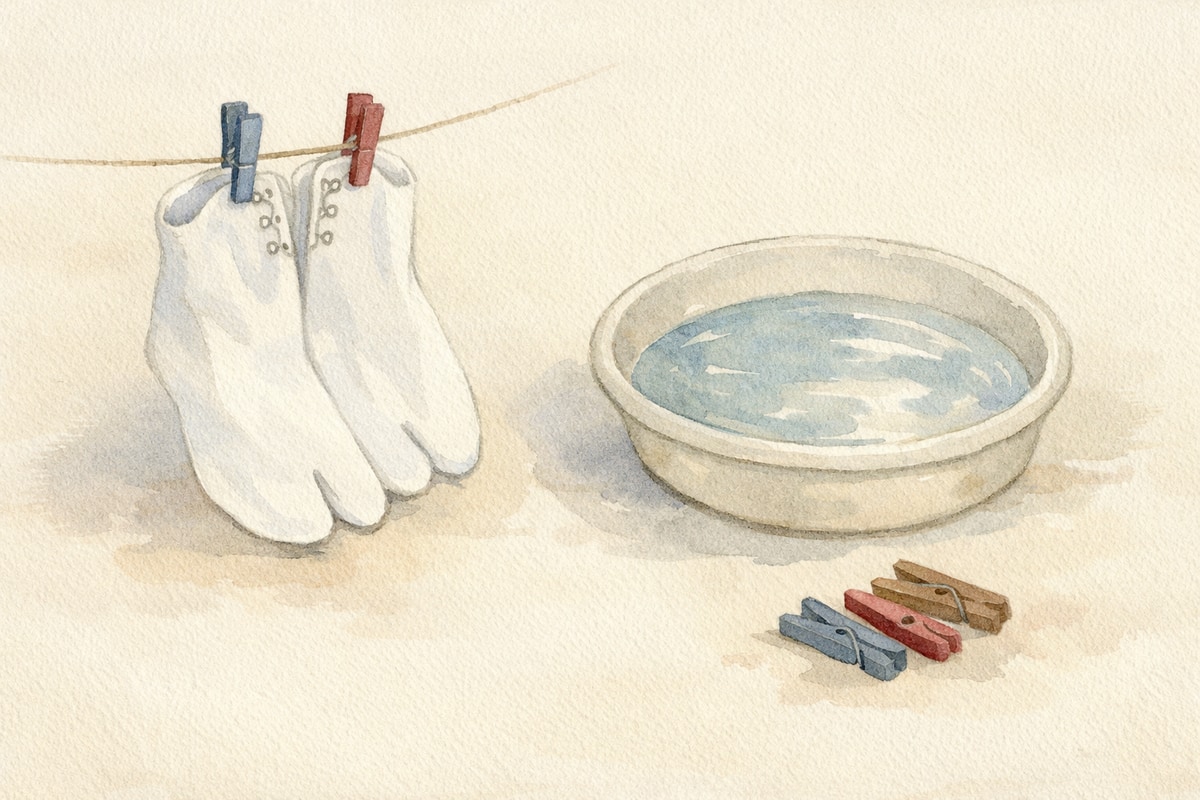
You come home from an outing in kimono, take off your tabi, and notice the toes look a bit grayish. Sound familiar? Actually, how white your tabi stay afterward depends a lot on what you do in the first few minutes after taking them off. If you get the timing of washing and the way you dry them right, white tabi can stay white for much longer than you’d expect. Today let’s walk through the steps, organized around the points people tend to find confusing.
What to Do Right After Taking Them Off
Tabi tend to get dirtiest at the toes and soles. Dust picked up while walking and sweat from bare feet soak into the fabric, so it’s best to start washing as soon as possible after taking them off. The longer you wait, the deeper the grime works into the fibers, so ideally you’d wash them the same day.
Before washing, it’s worth checking the material. Most white tabi are made of cotton, either plain-weave ‘kyarako’ (highly absorbent, thin and supple, with an understated sheen suited to formal wear) or twill-weave ‘broadcloth’ (soft, stretchy, and resistant to wrinkling). There are also silk-blend and synthetic stretch tabi. Since shrinkage and safe ironing temperature vary by material, it’s worth taking a moment to check the care label rather than skipping it.
Hand-Washing Steps: Neutral Detergent, Press-Washing, and Spot-Cleaning the Toes
Hand-washing is the basic approach. Using a washing machine can easily cause tabi to lose their shape or shrink, so hand-washing is the safer way to keep white tabi usable for longer. Dissolve a neutral detergent meant for delicate fabrics in lukewarm water, and for areas like the toes and soles where dirt tends to concentrate, press-wash gently with the pads of your fingers. Rather than scrubbing, think of it as repeatedly pressing firmly and releasing. Once you’ve finished rinsing, move on to drying.
If Washing by Machine: Use a Net, Fasten the Kohaze, and Choose a Gentle Cycle
If you’re busy and need to rely on a washing machine, there are a few precautions to keep in mind. First, fasten the kohaze (the metal clasps at the heel) before placing the tabi in a laundry net — left unfastened, they can damage the drum or other clothing. Choose a gentle cycle meant for hand-washables or delicates, and avoid the spin-dry cycle, since spinning causes shrinkage and misshaping. Depending on the material, using a wire-framed net to help hold the shape can also help. It’s worth also reading up on how to choose tabi size and material, which can make it easier to notice changes in fit after washing.
Drying and Finishing: Shape Them and Dry in the Shade, Then Iron if Needed
Once washed, first blot the tabi thoroughly with a towel. The single most important step for a good finish is to pull the sole fabric firmly left and right while it’s still damp, smoothing out any wrinkles. It’s much harder to stretch out wrinkles once the fabric has dried, so don’t miss this window while it’s still wet.
When hanging them to dry, clip the thread section where the kohaze are attached with a clothespin and dry in the shade. Direct sunlight can actually cause dullness, so choose a well-ventilated spot out of the sun. Avoid a clothes dryer as well, since it causes shrinkage and misshaping.
If you do iron them, 100% cotton white tabi can be ironed quickly at high heat. Silk-blend tabi are delicate, so iron while pulling the fabric taut; synthetic tabi may not need ironing at all depending on the material, so check the care label before deciding.
When Yellowing or Grayish Discoloration Won’t Come Out
Even with careful washing, white tabi can sometimes still turn yellow. This discoloration happens when protein-based residue such as sweat oxidizes over time, and it’s a type of stain that detergent alone struggles to remove. For mild dullness, soaking the tabi in lukewarm water with an oxygen-based bleach for 30 minutes to an hour, then rinsing and hand-washing with a neutral detergent, can often restore their whiteness. That said, always check the care label before trying this.
On the other hand, stains that have set in over time, deep discoloration, or staining caused by mold may not come out fully at home. Repeated bleaching in an attempt to force the issue can damage the fabric or distort its shape, so in those cases it’s safer to consult a specialist cleaner. If you’re curious about kimono and tabi care more broadly, you might also find the basics of kimono cleaning useful.
In Summary: White Tabi Care Comes Down to ‘Quick, Gentle, and Flat’
Caring for white tabi really comes down to three simple principles: wash them soon after taking them off, press-wash gently rather than scrubbing, and stretch the damp fabric flat before drying in the shade. Stick to this order and white tabi will end up being a far longer-lasting companion than you might expect. The next time you come home from an outing, spend just a few minutes on your tabi right away — they’ll thank you for it.