
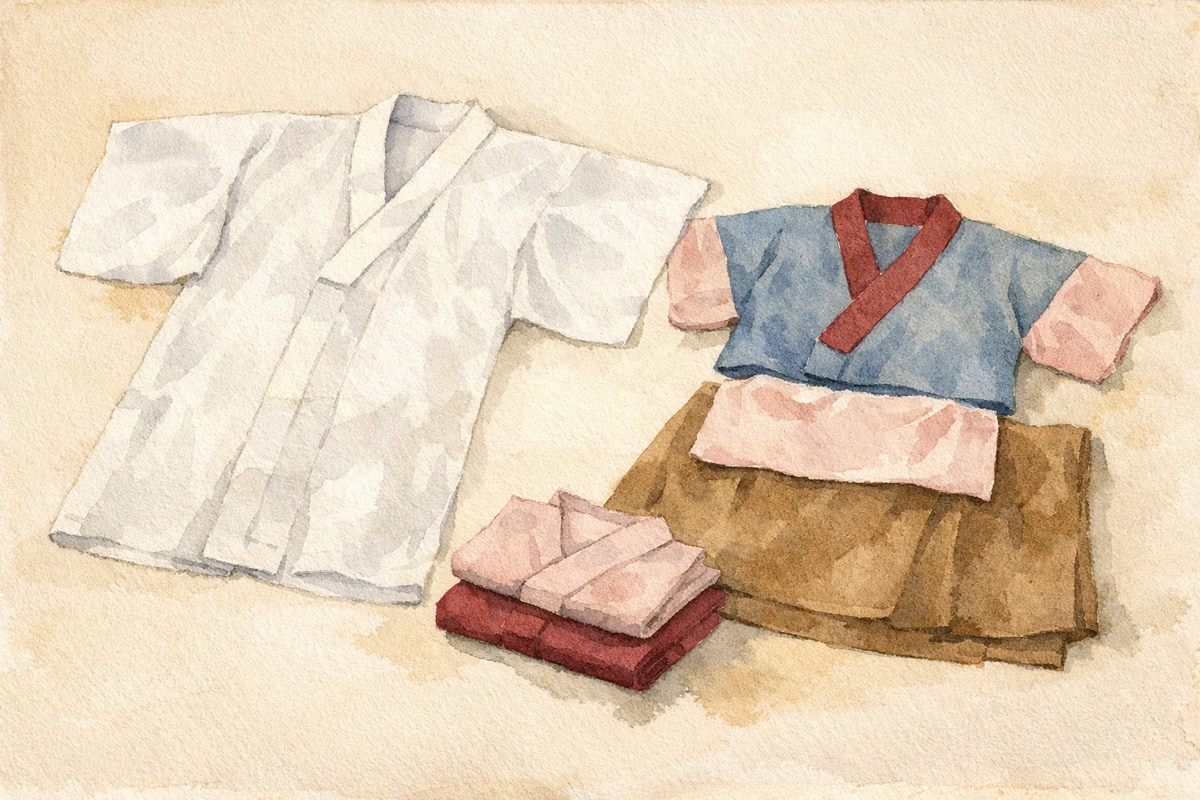
You probably agonize over choosing a kimono, but when it comes to the nagajuban (an under-kimono), do you just grab whatever’s on hand and figure one is as good as another? Here’s a little secret: both comfort and overall elegance can change quite a bit depending on the nagajuban you choose. Pure silk or polyester? Hitoe or two-piece? With so many options, it’s easy to feel lost — but don’t worry, there are really just two things to keep in mind: “fabric” and “tailoring.” Let’s work through them one at a time.
The Role of the Nagajuban and Basic Tailoring Styles
The nagajuban is worn underneath the kimono — think of it as an undergarment made specifically for kimono. It protects the kimono from sweat and skin oils, and also helps the collar area look neat and crisp. Broadly speaking, there are two tailoring styles: awase (lined) and hitoe (unlined, using only the outer fabric). As a general guideline, lined kimono are worn from around October to April, while unlined (hitoe) nagajuban are typically worn from around May to June and September to October. That said, this can shift depending on the climate and region, so it’s fine to adjust based on how warm or cool the weather actually is that year.
Hitoe tailoring, with no lining, feels crisp and cool, but it has one weak point: the back seam is more prone to tearing. Adding a reinforcing panel called an “ishikiate” in that area offers peace of mind. Just mention it when you place your tailoring order, and you’ll be able to wear it comfortably for a long time.
Pure Silk vs. Polyester: What Changes with the Fabric
The biggest point of hesitation when choosing a nagajuban is probably the fabric. Pure silk (shoken) feels soft against the skin and offers excellent warmth and moisture absorption, with an elegant look suited to formal wear. Good-quality shoken is also said to generate less static electricity. Polyester, on the other hand, tends to generate a bit more static, but it’s affordable and easy to handle, which is its appeal.
Here’s where things really diverge in practical terms: shoken can’t be washed at home and needs to be cleaned by a specialist shop. If you wash it yourself, it often shrinks and turns stiff, and ironing usually won’t restore it. Polyester and other synthetic fabrics, by contrast, can often be washed at home, and some products don’t even need ironing to finish. Just be sure to check the care label first — that’s the key to avoiding mistakes. If you’d like to learn more about the differences between fabrics, take a look at Pure Silk or Polyester: Which Is Better for Your Kimono? A Gentle Breakdown of the Differences.
Another Option: Han-juban and Two-Piece Nagajuban
If you feel like “shoken sounds lovely, but the upkeep seems like a lot,” there’s another option: the han-juban or two-piece nagajuban. This is a nagajuban split into upper and lower parts — a “han-juban” for the upper body paired with a “susoyoke” for the lower body. The body of the han-juban is often made of cotton, which is a relief if you tend to sweat and want to stay comfortable. And because it’s split into two pieces, it’s easier to adjust the length, letting you shift the position of the susoyoke to suit your height.
For everyday wear, one big advantage of the two-piece style is that it can be washed at home. It’s also said to be easier to dress in for fuller figures, and because leg movement doesn’t affect the upper body as much, it’s less prone to the kimono coming loose (kizukure). Interestingly, the Meiji-era writer Ichiyo Higuchi is said to have worn a two-piece juban for everyday use — proof that the desire for ease of movement hasn’t changed, then or now. There’s also an even simpler tube-sleeved han-juban, which can be worn regardless of sleeve or yuki (the sleeve length from center-back to wrist) length and is often made of 100% cotton, making care effortless. For casual outings, this style is often more than enough.
Choosing by Season
Building on everything above, choosing by season starts to feel natural. The basic flow is: during the cold months when you wear a lined kimono, pair it with a warm, lined shoken nagajuban; as the weather warms from around May to September or October, switch to a hitoe nagajuban. Because hitoe has no lining, it stays breathable even in warmer weather, and shoken is said to offer a good balance of warmth and moisture absorption. It’s easiest to decide if you think of it alongside the timing of your kimono’s own seasonal changeover — for more on that, see When Should You Switch Kimono for the Season? A Gentle Guide to Hitoe and Usumono.
Care Tips and Matching Your Han-eri
The nagajuban is also the piece that absorbs the most sweat every time you wear it. Since shoken can’t be washed at home, it’s best to send it for cleaning as soon as possible after a season of heavy sweating. Some shops offer a “sweat-removal cleaning” service, so if sweat stains are a concern, it’s worth checking in advance and keeping that in mind for storage. With a polyester two-piece nagajuban, on the other hand, you can often just wash it and let it dry, which makes everyday use much less of a hassle.
Once you’ve chosen your nagajuban, don’t forget one last thing: how it pairs with your han-eri (collar piece). The color and fabric of the nagajuban affect how the han-eri looks, so choosing one to suit the season and occasion can really refine the impression around your collar. For a detailed guide on choosing one, see How to Choose and Attach a Han-eri: A Gentle Guide by Season and Occasion.
In Summary
Choosing a nagajuban becomes much easier once you think of it along two axes: fabric (shoken or polyester) and tailoring (lined or unlined, one-piece or two-piece). For formal wear, go with shoken; for everyday wear you want to wash easily, choose a two-piece or polyester version. Once you’ve got that distinction down, all that’s left is to choose based on season and occasion. Our suggestion: start by getting one two-piece nagajuban for everyday use, then gradually build up your shoken pieces for formal occasions. Take it at your own pace, and enjoy getting to know your nagajuban along the way.