
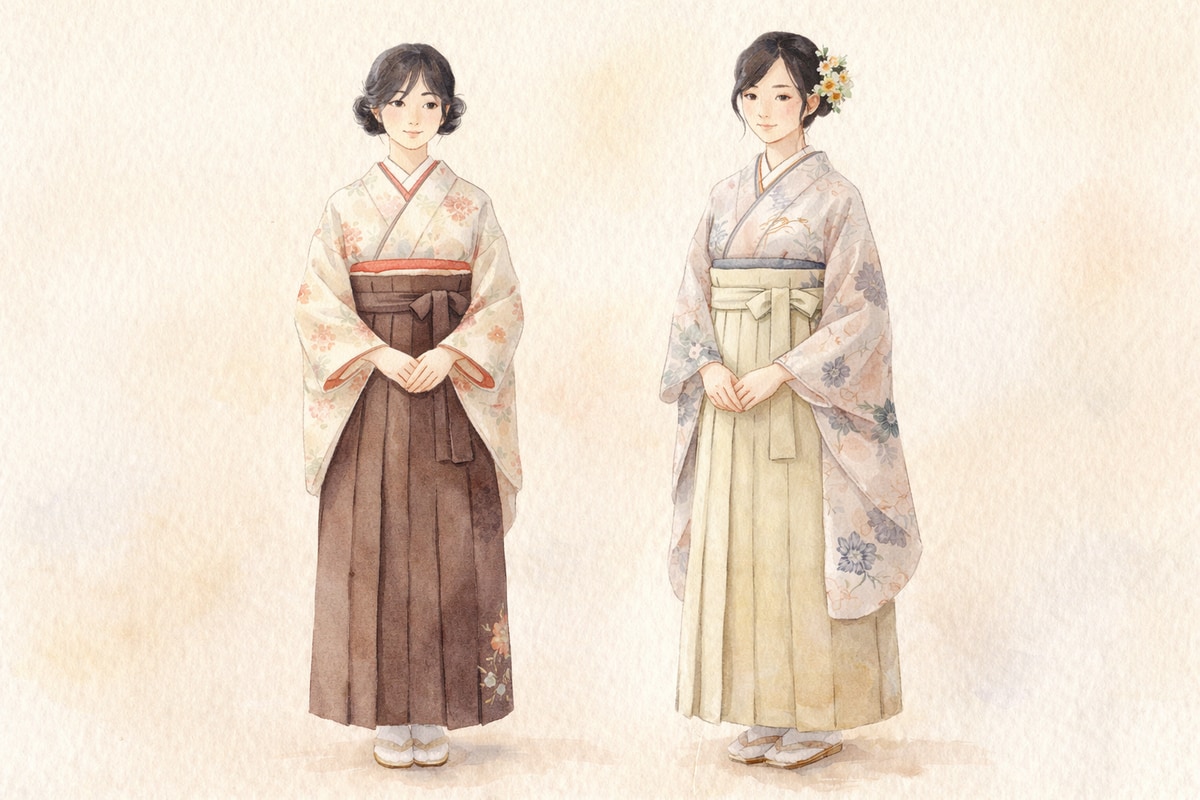
Once you’ve settled on your kimono and hakama (a pleated skirt-like garment) for graduation in a nijyaku-sode (a kimono with sleeves about 76 cm long) style, the next thing you’ll likely wonder about is the collar area. How should you choose a haneri (a cloth collar)? Is a kasane-eri (a decorative layered collar) really necessary? You may have heard that even with the same kimono, a different collar color can completely change the impression it gives, leaving you unsure what to base your choice on. This article walks you gently through the difference between haneri and kasane-eri, and how to choose each one to create the look you want, for anyone pairing nijyaku-sode with hakama for graduation.
Haneri and Kasane-eri Actually Have Different Roles
Let’s start with an important premise. Haneri and kasane-eri (also called date-eri) may look similar, but they serve completely different purposes. A haneri is sewn onto the collar of the nagajuban (an under-kimono) worn beneath the kimono, and its original purpose is to protect the collar area from dirt and stains. A kasane-eri, on the other hand, is a decorative accent that makes it look as though you’re wearing an extra layer of kimono underneath — it’s an item meant purely for enjoying the effect of layered color.
In short, the haneri is about practicality, while the kasane-eri is about styling and effect. Just knowing this distinction makes it much easier to decide which one you’re choosing, and why.
How to Choose Haneri Colors and Patterns
Each haneri color carries its own impression. White conveys a clean, refined feel; black suggests dignity and calm maturity; red brings a passionate, energetic feel. As a general guide, if your furisode (a long-sleeved formal kimono) or kimono already has a bold, flashy pattern, a white or black haneri will help pull the overall look together, while a simple kimono can be balanced nicely with a brighter color like red used as an accent.
Here’s one tip for choosing the embroidered haneri that’s popular these days: pairing a pale-colored kimono with a vividly colored embroidered haneri brightens up the whole area around your face. That said, since graduation is a formal occasion, it’s safest to choose embroidery that’s elegant — neither too flashy nor too plain.
Is a Kasane-eri Necessary?
“Do I really need a kasane-eri?” is a question that comes up often. The short answer is that a kasane-eri is an accessory worn with formal kimono, and it’s standard practice to include one with more formal outfits like furisode or a graduation hakama coordinate. When pairing a kasane-eri with formal kimono, choosing one in white or a solid color is a safe bet.
How you layer the kasane-eri can make a big difference to the overall impression of your hakama outfit. Using it as an accent color brings out the kind of elegance that suits graduation beautifully. Lately, modern lace kasane-eri trimmed with pearls have also become popular. It helps to remember that if haneri is about practicality, kasane-eri is about enjoyment — keeping that in mind makes choosing much easier.
Pairing With Hakama
For graduation hakama outfits, the kimono typically paired with it is the nijyaku-sode style, with sleeves about 76 cm long. Nijyaku-sode is also known as ko-furisode (a short furisode), and it’s the mainstream choice for graduation ceremonies. At the same time, more people are choosing to pair a full furisode with hakama for a more glamorous, individual look. Combining furisode with hakama isn’t a breach of etiquette, and it poses no issue in terms of formality either. If you’re torn between nijyaku-sode and furisode, their sleeve-length differences are explained in more detail in a related article, which is worth reading alongside this one.
Here’s one example where the right choice depends on your role: when a female teacher wears hakama at a graduation ceremony, she should pair it with either nijyaku-sode or houmongi (a semi-formal kimono). Even if she’s unmarried, furisode is considered taboo for a teacher’s position, since it’s seen as too glamorous. Since the students are meant to be the center of attention, it’s customary for teachers to choose nijyaku-sode or houmongi for a more understated look.
Creating a Look by Age and Taste
With these color associations in mind, let’s organize some ways to create a look that feels like you. For a neat, composed impression, go with a white-based haneri and keep the kasane-eri in white or a pale color as well. For a more mature, sharp look, use a black haneri to tighten the overall impression, then add a single accent color with the kasane-eri. If you want to lead with glamour and a festive mood, let a red haneri or a boldly colored embroidered haneri take center stage, and keep the kasane-eri understated to balance things out. In other words, haneri and kasane-eri are easiest to choose once you decide which one should take the lead.
If the kimono’s pattern is already lively, keep the collar understated; if the kimono is simple, feel free to have fun with the collar. Keeping this balance of addition and subtraction in mind will make choosing your collar pieces far less stressful.
In Summary
The haneri is a practical item that protects the collar area, while the kasane-eri is a styling item meant to let you enjoy layered color. Once you’ve grasped this difference in roles, all that’s left is to choose based on the impression each color gives — white for a clean look, black for maturity, red for glamour — while keeping the balance with your kimono’s pattern in mind. Once you’ve decided between nijyaku-sode and furisode and settled on your collar coordination, your graduation outfit is practically complete. It’s worth saving this guide to look back on when you’re putting your outfit together.