
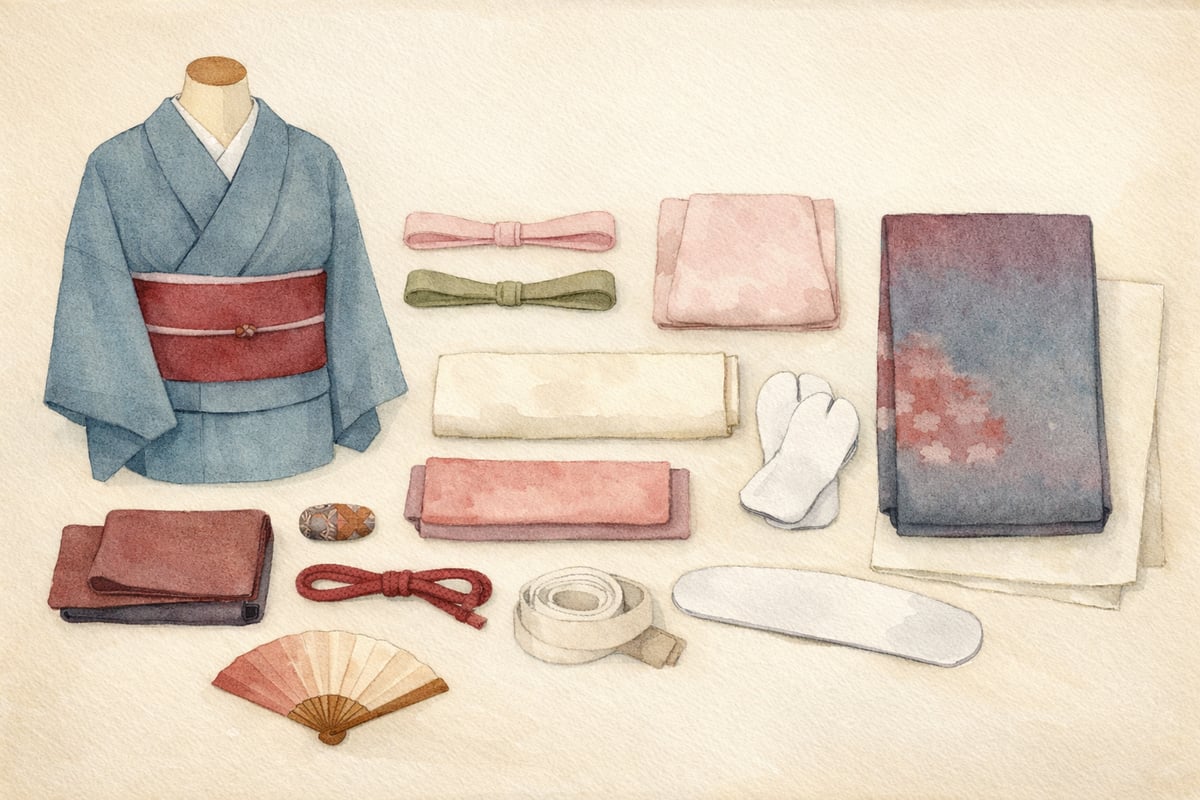
Have you ever taken off your kimono, glanced at the underarm area, and felt a jolt of worry—”wait, is that a stain?” Here’s the thing: even if nothing’s visible in the moment, it can quietly surface years later. Today, let’s walk through sweat care you can do at each stage—before you put the kimono on, while you’re wearing it, and right after you take it off.
Where Sweat Stains Tend to Form, and Why
The areas most prone to sweating are the underarms, back, and around the collar (eri). These are exactly the spots where the hadagi (an innermost undergarment) or nagajuban (an under-kimono) presses closely against the kimono, making it easy for sweat to soak into the fibers. Sweat contains sebum and mineral components, and when these linger deep in the fibers, they can cause trouble down the road. Sebum in particular isn’t fully removed by ordinary dry cleaning, and if it’s left in storage, it’s said to lead to yellowing and stains over time. Just knowing this much already makes it much easier to see what to prioritize.
Preparing Before You Dress: Undergarments and Sweat Pads
Here’s a little secret: the biggest difference is made before you even put the kimono on. Hadagi are often made from highly absorbent cotton gauze, which soaks up sweat and helps keep it from transferring to the kimono or nagajuban. A susoyoke (underskirt) is typically made with cotton around the waist and a smooth material like cupra around the hem. There are also other options: aseshiri juban made with ashibe weave using rush-grass cores, quick-drying moisture-wicking undergarments, and types with waterproof panels at the underarms and back. Especially in hot weather, choosing an undergarment that truly absorbs sweat is the surest way to keep sweat from transferring onto the kimono. If sweat behind the knees is a concern, sweat-absorbing stetеko (undergarment shorts) are another option worth considering. If you’re unsure which undergarment to choose, it’s worth reading How to Choose a Wasou Bra and Undergarments: The Basics of Body Shaping as well.
Tips for While You’re Wearing It
While you’re out and about in kimono, it helps to take breaks now and then to let your body cool down. If you’ll be standing outdoors for a long stretch, even a few minutes in front of a fan can make a real difference in how much you sweat. The basic idea is to let your sweat pads and undergarments absorb the moisture—but this is also where your earlier preparation really pays off. In other words, what you prepare beforehand and what you do on the day are really two halves of the same strategy.
First Aid Right After You Take It Off
If you know you sweated heavily while wearing the kimono, take a moment before folding it away as usual. Kimono cleaning services offer a treatment called “ase-nuki” (sweat removal), separate from ordinary dry cleaning, which applies high-pressure steam to sweat-prone areas like the underarms and back to lift sweat that has soaked into the silk. Standard dry cleaning uses petroleum-based solvents, so while it can remove oily sebum and dust, it’s not well suited to removing water-soluble sweat stains. For a kimono that’s absorbed a lot of sweat, it’s considered safest to have both a regular cleaning and an ase-nuki treatment done together. Times like a change of season, or before putting a kimono away for long-term storage, are especially good moments to consider ase-nuki.
Home Care and When to Take It to a Cleaner
If sweat is left untreated, an unwelcome change gradually sets in over time. Mineral components in sweat, such as magnesium and potassium, soak into the fibers and slowly oxidize over roughly three to five years, deepening in color from yellow to orange to brown. This is the phenomenon known as “yellowing,” and once it progresses, ordinary stain removal often can’t fix it—it may require extensive dye correction, or in some cases may not be fixable at all. Pure silk (shoken) in particular tends to hold onto wrinkles once it’s absorbed the salt in sweat, so it’s safe to say that both of the two big trouble spots—yellowing and stubborn wrinkles—trace back to sweat.
So where should you turn for help? That’s a fair question. Many general dry cleaners that handle Western clothing also accept kimono, but in practice, some can only do a standard overall clean, and staff aren’t always experienced in treating yellowing. If preventing sweat stains is a priority for you, it’s a good idea to choose a kimono cleaning specialist that offers an ase-nuki service. Some shikkaiya (specialist shops, often connected through a gofukuten, that handle kimono repairs and stain removal) outsource the stain-removal work itself, so turnaround times and pricing aren’t always clear upfront. If that concerns you, it’s reassuring to confirm the scope of work and expected turnaround before requesting the service. For old, heavily discolored sweat stains, ase-nuki alone won’t reverse the damage—you may need a dedicated “shimi-nuki” (stain removal) treatment to break down the oxidized components, or, if the affected area is large, “arai-hari” (a full wash done after taking the kimono apart at the seams). For more on what you can do at home versus when to head to a cleaner, we’ve laid it out in detail in Kimono Care After Wearing: What You Can Do at Home and When to Use a Cleaning Service, which is worth bookmarking.
In Summary
When it comes to sweat and kimono, it really comes down to two things: choosing the right undergarments before you dress, and taking one extra step after you take it off. Don’t worry, there are only two things to remember. On days you know you sweated heavily, the key is choosing to consider ase-nuki rather than simply putting the kimono away as usual—make that call, and the shock of discovering yellowing years later becomes far less likely. And hopefully, that little worry we started with—”is that stain going to be okay?”—feels a bit lighter now, too.