“Do I really have to buy a wasou bra (a bra made for wearing under kimono)? Can’t I just use a regular one?” — this was the question that puzzled Iroha most when she first started wearing kimono. The short answer: you can wear a kimono without one. That said, how neatly the collar sits does change noticeably, so once you’re wearing kimono more often, having one on hand is reassuring. The reason isn’t about your body at all — it’s about the shape of kimono fabric itself.
🌸 The quick answer (for those in a hurry)
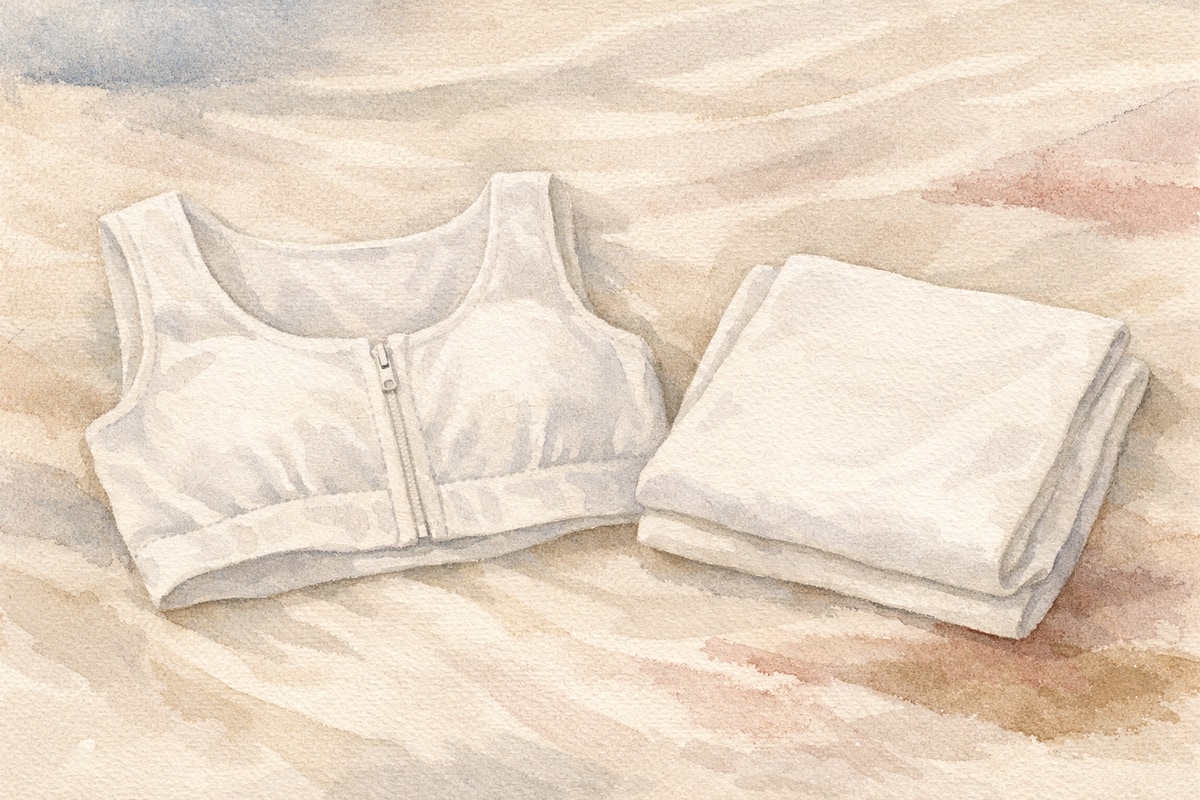
A wasou bra isn’t essential. But because kimono are sewn in straight lines, the flatter your underwear, the more naturally the fabric will sit. If you’re using something you already own, choose one without underwire. If you’re buying a purpose-made one, the front-zip style is the standard choice.
Do you need a wasou bra? You can wear kimono without one
First of all, it’s not true that you can’t wear a kimono without a wasou bra. You can get dressed in your own underwear as-is, and plenty of people do just that.
That said, wearing a Western-style bra under a kimono can sometimes cause the collar (eri) to lift, or make the kimono coming loose (kizukure) more likely as time passes. On days when you’ll be spending long hours in formal settings — wearing a furisode (a long-sleeved formal kimono) or houmongi (a semi-formal kimono), for instance — having a purpose-made one gives you extra peace of mind.
Which brings up the next question: “So can I just use a regular bra instead?”
Can a regular bra work instead? When it does and when it doesn’t
The short answer is: yes, as long as it has no underwire. A non-wire bra or sports bra you already own, one that creates a smooth, gentle line, is more than enough to start with.
- Soft material that doesn’t feel constricting even worn for long stretches
- A color like beige or white that won’t show through the nagajuban (an under-kimono)
- Breathable fabric (helps prevent trapped heat and moisture)
What doesn’t work well is an underwired Western-style bra. Underwire is designed to create curves, and under a kimono that tends to make the collar lift. Layering a wasou bra on top of a Western bra is also best avoided, since it tends to distort the shape rather than help it.
Why does kimono call for different underwear?
This is the heart of what this article wants to convey. The reason lies not in the body, but in how kimono are constructed.
A kimono is made from fabric cut in straight lines and sewn together in straight lines. Unlike Western clothing, it isn’t cut three-dimensionally to follow the curves of the body. Because of this, kimono fabric has a quality where the flatter, less contoured a surface is, the more naturally it drapes. It’s a bit like wrapping flat paper around something curved — it wrinkles — versus wrapping it around a straight cylinder, where it lies smooth.
What a wasou bra does isn’t reshaping your body. It simply creates a surface the fabric can drape over easily, supporting the kimono’s side of things — nothing more. The word “hosei” (adjustment/padding) gets used for this, but think of it not as correcting the body, but as smoothing the surface to suit the kimono.
So a wasou bra isn’t a tool that only suits certain body types. It’s a tool for adjusting yourself slightly to accommodate the needs of the kimono fabric.
Four things to check when choosing one
| Point | What to look for | Why |
|---|---|---|
| Underwire | None | Curves from underwire tend to make the collar lift |
| Opening style | Front-opening zipper type | Easy to put on and take off, and less likely to shift sideways |
| Size | Check whether larger sizes are available | Options like XL make it easier to find the right fit |
| Material | Cotton-blend or similar, comfortable against skin and moisture-absorbing | More comfortable to wear over long stretches |
The front-opening zipper style in particular is the standard shape in kimono circles. It’s cited as easy to put on and take off, and less prone to shifting sideways. If the material has some stretch, it can follow your shape without feeling tight.
Choosing by season makes the day itself much easier
Even with the same type of wasou bra, comfort can vary a great deal depending on the season you’re wearing it in.
For summer or for wearing a yukata (a light cotton summer kimono), go for something thin and breathable. Some are made with mesh fabric for both sweat absorption and ventilation, making them a reassuring choice for occasions where you’re likely to perspire. On the other hand, for winter events like a seijin-shiki (the Coming-of-Age ceremony) or a graduation ceremony, something with a bit more thickness can actually feel more settling to wear.
The longer you’ll be wearing it, the more the comfort of the material matters. Choose based on the season and how your day will unfold. For sweat-related measures specifically, see our guide to managing sweat in summer kimono and yukata.
If you’re wearing kimono more often and thinking it might be time to get one of your own, it’s worth comparing front-opening styles, size ranges, and materials. Use the four points covered in this article as a checklist while you look for the one that suits you.
A wasou bra and a hadagi serve different roles
A wasou bra and a hadagi (an innermost undergarment, also called hada-juban) aren’t a case of choosing one or the other. The hadagi’s job is to absorb sweat and protect the kimono from stains; the wasou bra’s job is to create a surface the fabric can drape over. Since they handle completely different tasks, it’s reassuring to have both. For the full picture of what to gather before dressing, see our checklist of everything you need to wear a kimono.
Frequently Asked Questions
Q. Can I wear a kimono without a wasou bra?
A. Yes, you can. That said, the collar may lift more easily, or the kimono may come loose more easily over time. On days with a formal look worn for long hours — such as furisode or houmongi — having a purpose-made one offers extra peace of mind.
Q. Is it meant to be worn tightly?
A. No. There’s no need to cinch it tightly. A stretchy material gently following a smooth surface is enough. If it feels constricting, the size may not be right for you.
Q. How should I choose a size?
A. Beyond S, M, and L, it helps to check whether larger sizes like XL are available. If you can be measured or try one on, that’s the most reliable approach.
Q. Is it still hot in summer?
A. That depends on the material. Types made with mesh for sweat absorption and breathability can keep you comfortable even in summer.
Summary
- A wasou bra is not essential — but it does change how neatly the collar sits
- If substituting, choose one without underwire; avoid layering it over a Western-style bra
- If choosing a purpose-made one, check three things: front-zip style, size range, and material
- What’s being adjusted isn’t the body but the surface the fabric drapes over — a tool to suit how the kimono is constructed
- Its role differs from a hadagi; having both on hand is reassuring
If you’d like to start from the basics of kimono types and formality levels, see our at-a-glance guide to kimono types and formality 🌸
For kimono care in general, see our guide to kimono care and storage.