
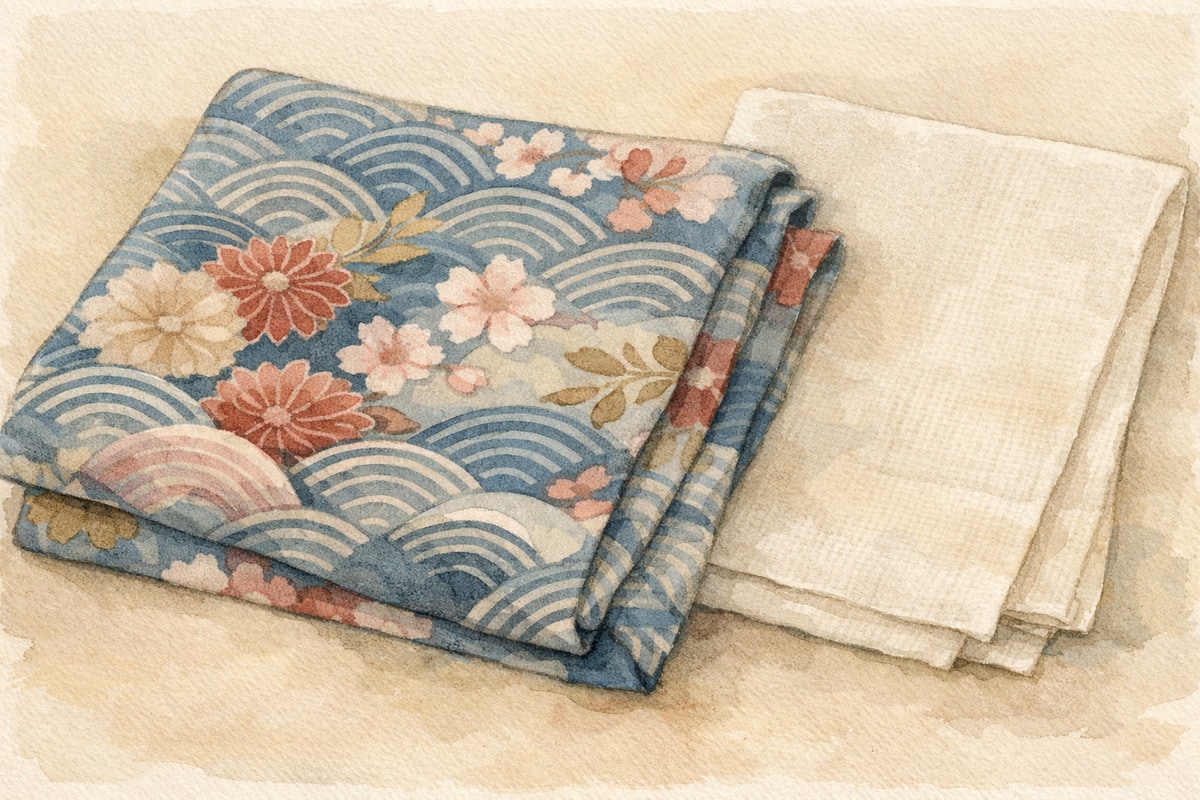
A shirt cut from a bolt of silk that once had a completely different life as a woman’s kimono, worn now open-collared with a pair of jeans – there is something quietly satisfying about that idea. It is also confusing to shop for, because the words used to describe these shirts online do not always mean what they seem to mean. Some listings are selling cloth with real weaving history behind it. Others are selling a printed pattern that only borrows the look. Knowing the difference before you click “buy” is the whole game.
Where the idea of a kimono aloha shirt actually comes from
Hawaii’s aloha shirt tradition grew in the early to mid-20th century out of a mixed community of immigrant tailors and dressmakers, including Japanese residents who worked with the textiles they knew. It is well documented that Japanese kimono fabric and yukata cotton were among the materials used by early shirtmakers in Hawaii, alongside other imported and local cloth. What is less settled is the exact sequence of who first cut a kimono into a shirt and when – the popular stories are colorful, but the precise origin is genuinely contested among textile historians, so it is honest to treat it as a shared, tangled history rather than a single clean invention story.
What is not contested is the logic of it. A kimono is not sewn from a pre-shaped pattern the way a Western shirt is. It is made from a single bolt of narrow fabric, cut into straight panels and stitched with almost no waste. That same bolt, once the kimono is taken apart, becomes a flat, generous piece of cloth – a natural, practical source of fabric for a boxy, straight-seamed garment like a shirt. That is the real and lasting connection between the two garments: not a single invented moment, but a fabric shape that happens to suit a shirt very well.
What “real kimono fabric” means when you are reading a listing
When a seller says a shirt is made from actual kimono silk, they usually mean the panels were cut from a used or vintage kimono, or from bolt-end silk originally woven for kimono. This matters for a few practical reasons a shopper can check for:
- Seams and panel width – kimono fabric bolts are narrow, roughly 14 inches wide, so a shirt made from one often shows a center seam down the back or unusual piecing where panels were joined.
- Weave and hand-feel described in the listing – words like habutai, chirimen (crepe), tsumugi, or rinzu point to specific traditional silk weaves, which is a sign the seller is describing real textile construction rather than just a motif.
- Pattern placement that looks slightly irregular – genuine kimono motifs were designed to flow across a wrapped garment, not to repeat neatly, so a real-fabric shirt often has an asymmetrical or off-center design rather than a tidy all-over print.
None of this proves authenticity on its own, and only the seller can state what the material actually is – a buyer’s job is to read those details and see whether the description holds together, not to take a single word like “silk” at face value.
What kimono-print fabric means, and why it is not a lesser thing to buy
A great many shirts sold as “kimono style” or “kimono print” are made from new fabric – often cotton, rayon, or polyester – printed with a pattern inspired by kimono or yukata motifs: waves, cranes, cherry blossoms, seigaiha circles, and so on. This is a legitimate and long-standing design tradition in its own right, closely related to how Hawaiian shirt prints have always borrowed motifs from many cultures. The honest distinction is simply this: kimono-print fabric shares the imagery, kimono silk shares the material history. A listing that is clear about which one it is offering is doing its job properly, whichever category it falls into.
Reading pattern names without guessing at meaning
Traditional motifs carry meaning that varies by region, era, and even by family or kimono school, so it is worth treating any single explanation offered online with some caution. Cranes are widely associated with longevity, waves with resilience, and certain florals with specific seasons, but these associations were never fixed by one central authority – they developed over centuries through custom, poetry, and regional taste. A listing that names a motif is telling you what the pattern is called, not necessarily settling what it “means.”
Why the fabric type changes how the shirt should be worn and cared for
This is where the distinction stops being academic and becomes practical. Real kimono silk is a delicate, often unlined fabric that was never designed to be washed the way a cotton shirt is; it usually needs the same gentle, dry-clean-or-hand-wash caution as any vintage silk garment. Kimono-print cotton or rayon, by contrast, generally behaves like any ordinary shirt fabric and tolerates regular washing far better. Knowing which category your shirt falls into tells you how to launder it, not just how to describe it – and that single piece of information can be the difference between a shirt that lasts for years and one that is ruined in its first wash.
If you are ready to shop, see our guide to identifying real kimono silk versus kimono-print aloha shirts at /en/kimono-aloha-shirts-real-kimono-silk/.