
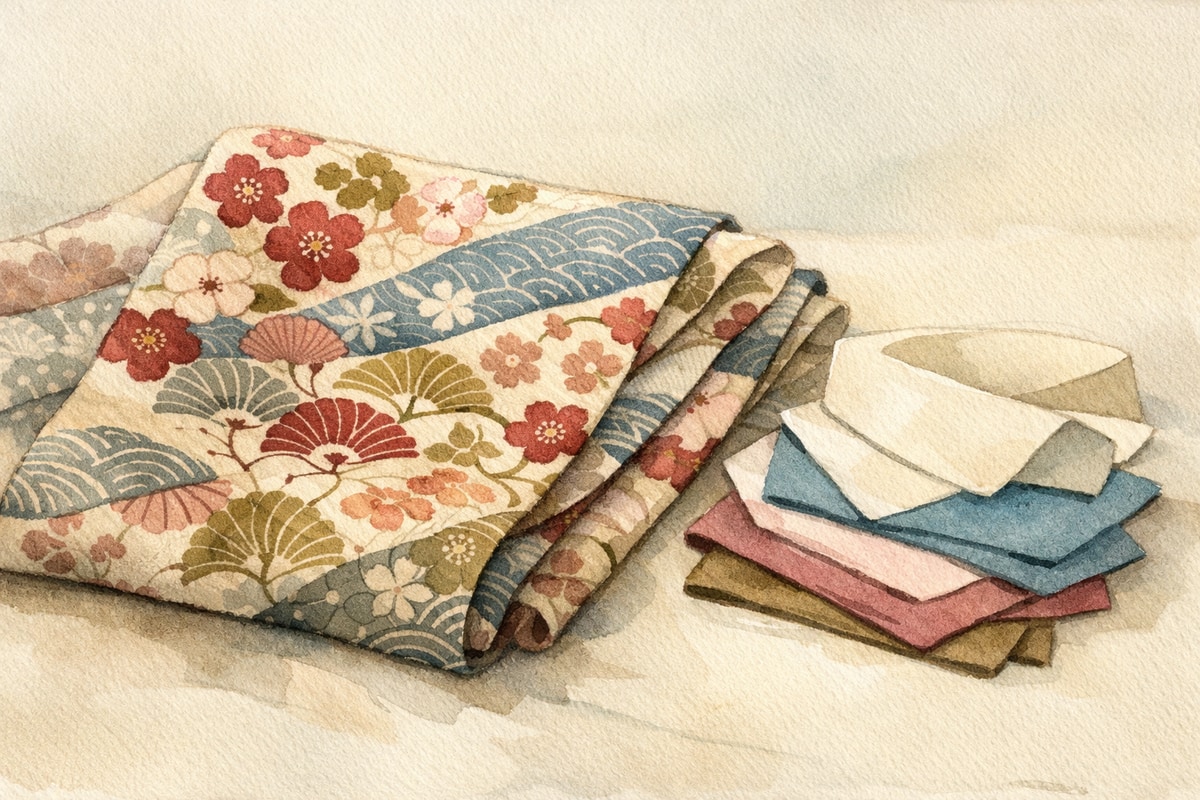
A shirt cut from an actual kimono bolt is not the same product as a shirt printed with a kimono-style pattern, even though both can show up side by side in a search for “kimono Aloha shirt.” The difference matters for the price you’re paying and for what lands in your hands: one is a factory print on ordinary shirting cloth, the other is a piece of cloth that was once woven, dyed, and sometimes hand-painted to become part of an actual kimono. If you’re buying online, from a listing you can’t touch, you need to know what to look for before you check out, not after the package arrives.
One thing worth knowing upfront: at the time of writing, the shirts on Amazon.com that could actually be traced back to real, unused kimono bolts all came from a single kimono shop based in Karatsu, in Saga prefecture. That’s not a criticism of the shirts themselves — it just means the pool of genuine bolt-cut listings is small, and a lot of what surrounds them in search results is kimono-print cloth made to look similar.
The three checks that tell you what you’re actually buying
Before you commit to a listing, run it through a few quick checks. These are the fast version; the full breakdown with photos and edge cases lives at how to choose a kimono Aloha shirt, but here is what to look at right now, on the product page in front of you.
- Fabric name, not just fabric feel. Genuine kimono cloth is silk, and a trustworthy listing will say so plainly — often naming the weave or type, such as chirimen (crepe) or rinzu (satin-weave silk with a woven pattern). If the listing only says “soft” or “silky feel” without naming a fiber, assume it’s polyester until proven otherwise.
- Seams and panel lines that don’t quite match a normal shirt. Kimono bolts are narrow — roughly 36 to 38 centimeters wide — so a shirt cut from one often shows extra seams, pieced panels, or a print that doesn’t flow perfectly across the front placket. A shirt-print fabric made specifically for shirts has no such constraint, so it tends to look too seamless and too perfectly matched at the seams.
- Language that points to a used or vintage kimono. Sellers working with real bolts will often mention that the cloth came from a vintage or antique kimono, or that it’s a remnant from a kimono maker. This kind of detail is a strong sign the seller understands the material rather than just sourcing printed yardage.
None of these checks require you to be an expert in textiles. They just require reading the listing as carefully as you’d read the description of a used car — and treating any claim of “real kimono silk” as the seller’s claim, not a fact, until the listing itself backs it up with specifics.
What “bolt-cut” and “one-of-a-kind” mean for you as a buyer
A kimono bolt, or tanmono, is a single continuous length of cloth, traditionally about 11 to 12 meters long, woven and finished to become one kimono. When a maker repurposes that bolt into a shirt instead, there’s only so much yardage to work with, and only one bolt with that exact pattern and colorway. That has a few practical consequences worth expecting going in.
- Sizing tends to run in narrow bands, not a full standard range. A single bolt might yield only a handful of shirts, sometimes in one size only, because there isn’t enough cloth left over to cut a wider range. Always check the actual measurements in the listing — chest width, length, shoulder — rather than trusting a size label like “M” or “L”, since these don’t map cleanly onto kimono-cut yardage.
- The exact pattern you see in the photo is the exact pattern you’ll receive, or it might not be. Some listings sell a true one-off: what’s photographed is the only shirt in existence with that cloth. Others cut several shirts from one bolt and the placement of the pattern will vary slightly from shirt to shirt because kimono patterns are rarely symmetrical or repeating in a simple grid. If the listing says “one of a kind,” take it literally and expect the piece photographed to be the only one available in that fabric.
- These listings sell out and don’t restock. Because the source material is a finite bolt rather than a fabric roll a mill can weave more of, once a size or pattern is gone, it’s genuinely gone. There’s no next production run of the identical cloth.
Fit and care: silk behaves differently from cotton shirting
Kimono silk was woven to be worn wrapped and belted, not fitted to a torso, so a shirt cut from it will sometimes drape or move a little differently than a cotton Aloha shirt of the same labeled size. It’s worth reading buyer photos or measurements rather than assuming your usual shirt size will translate directly.
Care also deserves attention before you buy, not after. Silk kimono cloth is generally more delicate than the cotton or rayon used in typical Aloha shirts: it can be sensitive to water spotting, direct sun exposure, and machine agitation. Traditionally, kimono fabric is cared for through dry cleaning or specialist textile cleaning rather than home washing, and many sellers will recommend the same for a silk shirt cut from one. Check the listing’s care instructions before purchase, and don’t assume a silk kimono shirt can be treated like a standard cotton one — because washing habits genuinely vary by fabric type, and getting this wrong can permanently affect a piece of cloth that can’t be replaced.
Start with this Amazon.com search for kimono silk aloha shirts. Before you decide, read the fabric line of each listing and look for “kimono fabric”, “silk (shoken)” and “single bolt” — the wording that separates real kimono silk from kimono-print.
Made from new kimono silk (bolt-cut, one-of-a-kind)
A piece of cloth with a history, not just a print
So the question from the start — real silk or clever print — comes down to reading the listing the way you’d read a provenance note: does it name the fiber, does it explain where the cloth came from, does it show seams consistent with a narrow kimono bolt rather than wide shirting fabric. A shirt that passes those checks is carrying something a printed reproduction can’t: an actual piece of a garment that existed before it became a shirt. If you want the fuller picture of how kimono fabric ends up as Aloha shirts in the first place, and why this crossover exists at all, that background is covered in what is a kimono Aloha shirt.