
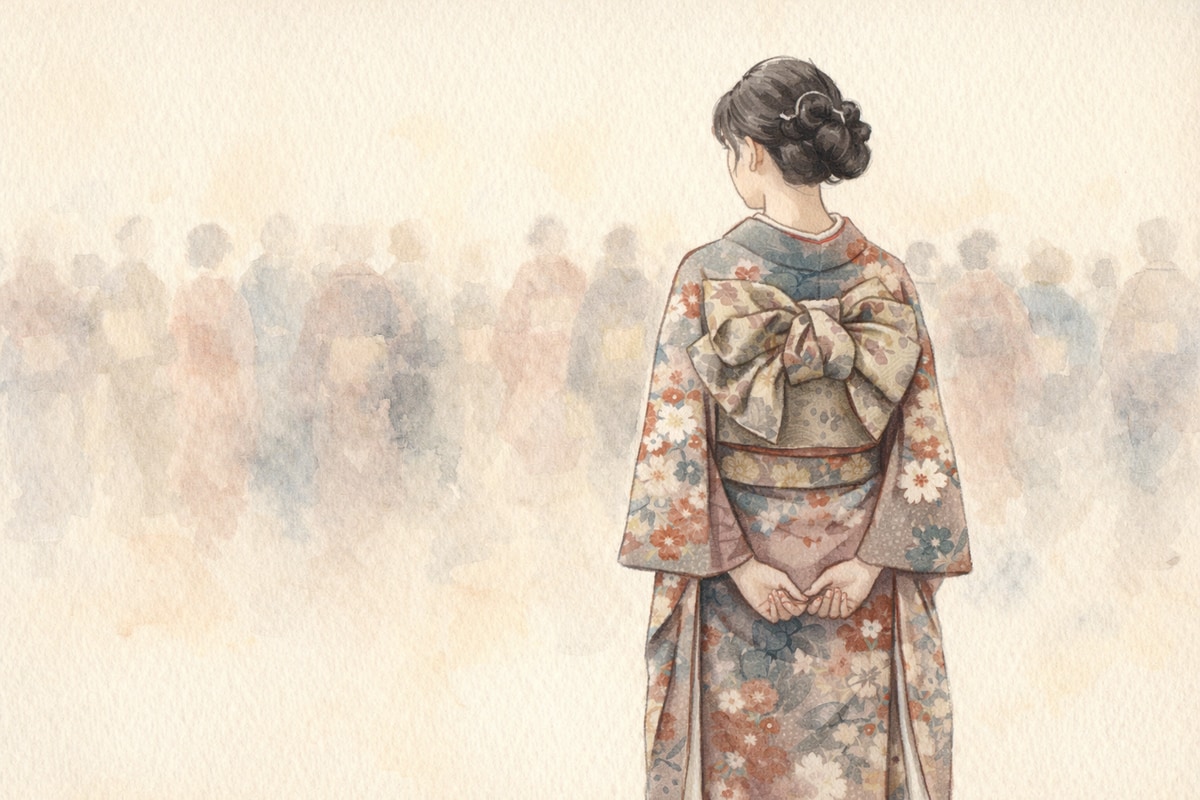
Now that your furisode (a long-sleeved formal kimono) booking is settled, you’ve probably had a moment to breathe. But the next worry creeping in is likely something more specific: “What do I still need to gather before the day?” and “What should I be doing the day before and on the day itself?” Whether you’re the one celebrating your seijin-shiki (the Coming-of-Age ceremony) or the parent seeing them off, knowing the dressing location, timing, and checklist in advance means you won’t be scrambling on the day. The short answer is this: once the dressing location, time, and checklist of items are settled by the day before, everything on the day itself simply falls into place, step by step. Let’s walk through it in order.
What to Decide After Booking: Location, Time, and the Maedori Date
Once your furisode booking is done, the next thing to decide is where you’ll have your hair, makeup, and dressing done. Whether you use a hair salon, a dedicated studio, or an affiliated shop near the ceremony venue, you’ll want to work backward from the ceremony’s start time to set your appointment. As a guide, dressing in furisode generally takes about 40 minutes to an hour, and including hair and makeup, the whole process runs about an hour and a half to two and a half hours. If the ceremony starts at 10 a.m., it’s common to book an appointment around 5 or 6 a.m. so that everything is finished between 7 and 8 a.m. Some studios even start as early as 4 a.m., so it’s reassuring to aim for being fully ready two to three hours before the ceremony begins. This is also the time to decide whether you’ll do a maedori (a pre-ceremony photo shoot). We cover how to choose the right timing for maedori in more detail in a separate article (When Should You Schedule Your Coming-of-Age Maedori?).
Checking What You Need: What’s Included in the Rental and What You Should Prepare Yourself
When you rent a furisode, most of the accessories are usually included in the set. That said, the exact range varies by shop and plan, so it’s worth confirming once.
Items Often Included in a Rental Set
A typical set includes a fukuro obi (a formal brocade sash tied in an elaborate knot), a date-eri (a decorative collar insert), an obiage (a fabric accent above the obi), an obijime (a cord tied over the obi), a feather shawl, a bag, zori (flat kimono sandals), a nagajuban (an under-kimono), tabi socks, a date-jime (an underband used to secure layers), a sanju-karihimo (a triple cord used for temporary ties), koshihimo (waist ties), an eri-shin (a collar stiffener), a mae-ita and ushiro-ita (front and back boards that sit inside the obi), and an obi-makura (a pad used to shape the obi knot). The fukuro obi is the sash used to create the formal knot; the sanju-karihimo and wasou belt are small items used as temporary ties to prevent the kimono coming loose (kizukure); the mae-ita is a board placed inside the obi to prevent wrinkles. It’s a lot to remember just by name, but with rental, this whole set is often delivered directly to the salon or venue, so you won’t need to carry it all yourself.
Items You’ll Want to Prepare Yourself
Hair ornaments, however, are generally not included in rental sets. You’ll need to purchase these yourself to match the colors and pattern of your furisode. Undergarments that touch the skin directly, such as a hadajuban (a thin underslip) or hadagi (an innermost undergarment), are also excluded from rental at some shops for hygiene reasons. Padding used for body shaping is often substituted with towels, and since the amount needed varies by body type, it’s reassuring to prepare a bit more than you think you’ll need. Some plans require you to prepare the obiage, obijime, and date-eri yourself, so it’s worth confirming the rental scope with a quick question at the time of contract, so you’re not caught off guard on the day saying, “Wait, I don’t have this.”
What to Do From One Month to One Week Before
This is the period for a final check of sizing and accessories. If you’re preparing items yourself, such as hair ornaments, delivering them to the salon or dressing location at least a week in advance helps avoid any mix-ups when it’s time to hand them over. At the same time, confirm your transportation and meeting time for the day itself. Ceremony start times vary by region. In one example, start times for reception and the ceremony itself differed by ward, with some wards starting in the morning and others in the afternoon. Since this depends on your area and venue, it’s worth double-checking the details on your invitation.
Preparing the Day Before
The day before, go over everything once more: your dressing appointment time, the ceremony start time, when you’re meeting friends, and the start time of any after-party. If your furisode and wasou (traditional Japanese dress) accessories are rented, the whole set is usually delivered together to the dressing location, but it’s reassuring to double check with the staff exactly what time and where it will arrive. Also use the day before to do a final check of what’s in your bag. The basics include your invitation, a handkerchief, tissues, money, cosmetics for touch-ups, and a fully charged phone. Some venues won’t let you in without your invitation, so pointing and confirming it’s in your bag the night before helps cut down on forgotten items on the day. Since you’ll need to wake up early, it’s best to turn in early that night too.
Timeline of the Day Itself
From Getting Ready to the Ceremony
On the day, you’ll first head to the dressing location, moving from hair and makeup into the dressing itself. Dressing generally takes about 40 minutes to an hour, and the total time including hair and makeup runs roughly an hour and a half to two and a half hours. If you’re dressing yourself at home without much experience, it’s not unusual for it to take more than three hours. Working backward from the ceremony start time and booking with a bit of extra margin means that even if things run behind, you won’t feel rushed. Once you’re ready, do a final check before heading to the venue. If you need to use the restroom during the wait before the ceremony, it helps to already know how to manage the sode (sleeve) and hem of your furisode so you can move calmly. We’ve laid out the detailed steps in How to Use the Restroom in a Furisode or Kimono, which is worth a read while you’re getting ready.
After the Ceremony: Photos, Meals, and the After-Party
Once the ceremony ends, it’s common to move into photos with friends or a reunion-like gathering, often flowing straight into an after-party. If you plan to change into Western clothes for the after-party, decide in advance where and when you’ll change out of your furisode. Some shops ask you to bring your own towel or undergarments for changing, so be sure not to overlook any instructions from the dressing shop. Since it’s a long day spent in furisode, it’s wise to keep meals light, with just occasional sips of water, and to use the restroom early, so you can focus on photos and conversation without worrying about the kimono coming loose.
Preparing for Kizukure, Cold, and Rain
Coming-of-Age ceremonies held in January inevitably come with cold weather to contend with. The feather shawl worn with furisode is more decorative than warming, so you’ll need to think separately about protecting your neck and feet from the cold. For a gentle guide on cold-weather measures for kimono, covering the neck, sleeve openings, and feet in that order, see Where Should You Start With Cold-Weather Measures for Winter Kimono?. If rain is in the forecast, take care with what you wear over your kimono and how you handle your footwear, so your hem and feet don’t get wet. If you’re ever unsure, the surest approach is to ask the person who dressed you to retie things on the spot.
In Summary
Preparing for your furisode may look like it involves many steps, but each one simply needs to be taken in order. The short answer is this: once the dressing location, time, and checklist of items are clear by the day before, there’s hardly anything left to worry about on the day itself. We’ve gone into a lot of detail here, but what matters most is simply greeting the day with a smile. May that one day, spent in your beautiful formal attire, become a cherished memory.