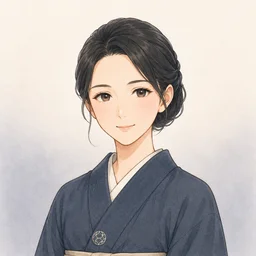
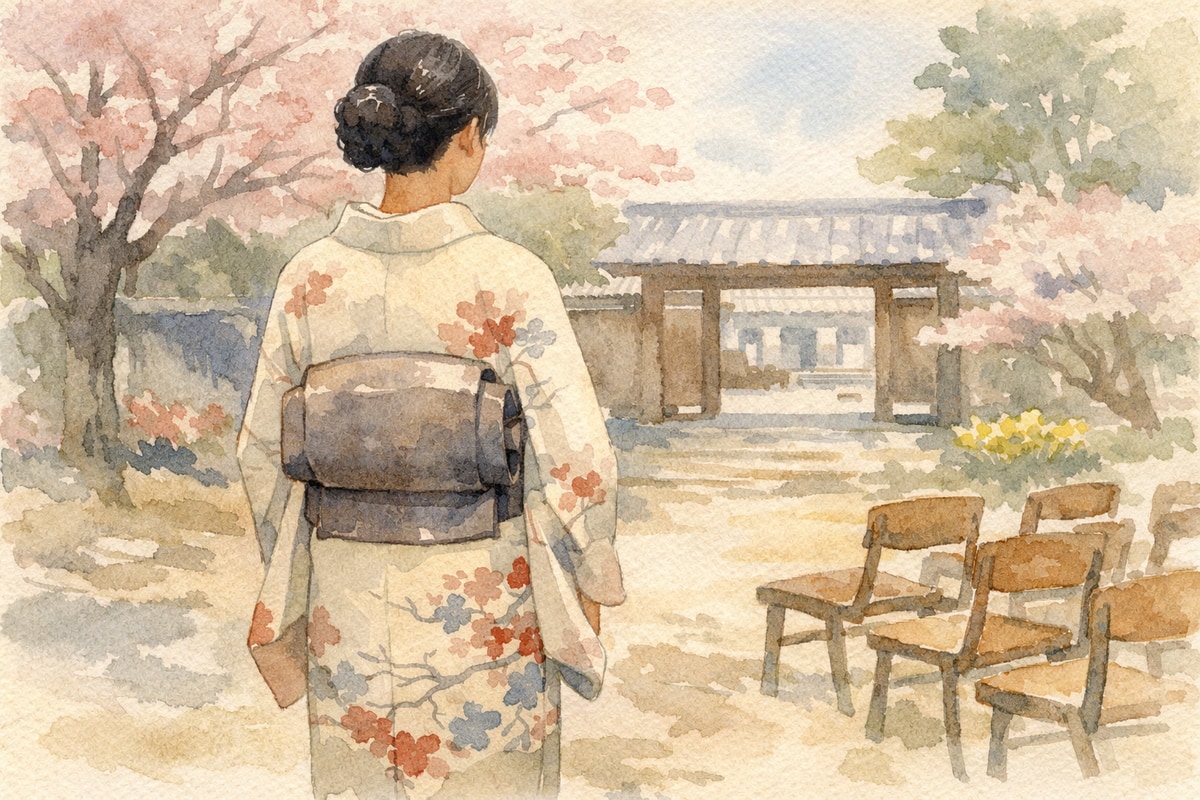
Should a mother wear the same kimono for both the entrance ceremony and the graduation ceremony? The short answer: the type of kimono can stay the same, but the way you think about color shifts slightly between the two events. Graduation is about “parting and gratitude,” while the entrance ceremony marks “a new beginning.” Keeping this distinction in mind will help you dress in a way that fits in naturally at school events.
🌸 Quick answer (for those in a hurry)
The standard kimono choices are houmongi (a semi-formal kimono), tsukesage, or iromuji. One common approach is calmer colors for graduation (deep navy, gray, etc.) and soft, bright colors for the entrance ceremony (pink, cream, etc.). Either way, avoid flashy colors or large, bold patterns.
The type of kimono follows the same logic as Shichi-Go-San
For mothers, houmongi, tsukesage, and iromuji are generally considered semi-formal wear. This is the same framework used for a mother’s kimono for Shichi-Go-San (a celebration for children aged 7, 5, and 3). What differs here is the approach to choosing color.
Graduation vs. entrance ceremony: different ways of thinking about color
| Ceremony | Meaning | Commonly chosen colors |
|---|---|---|
| Graduation ceremony | Parting, and gratitude toward the school | Calm colors such as deep navy, gray, blue-gray, or light blue |
| Entrance ceremony | A new beginning, a celebration | Brighter colors such as soft pink, cream, beige, young-grass green, or wisteria |
*This reflects one common way of thinking about color choice. It can vary depending on region or the general mood of the school.
Colors and patterns to avoid for both ceremonies
- Flashy shades such as deep pink, orange, or red
- Large, bold patterns or designs with strong contrast
- Patterns showing cherry blossoms alone — since they match the graduation/entrance season so closely, they can sometimes come across as too “season-specific.” Some feel that a pattern combining several spring flowers is more versatile and easier to wear again later.
The standard choice for the obi is a fukuro obi tied in a nijudaiko (double-drum) knot. Pairing it with an obi in a pale color such as white or silver creates an elegant, cohesive look.
Keeping in mind: how not to stand out at a school event
The most important thing is not to draw more attention than your child. Since many mothers wear Western-style clothing at both entrance and graduation ceremonies, a kimono in restrained colors and patterns won’t stand out at all. If you’re unsure about the general atmosphere, asking the homeroom teacher or an experienced mother beforehand can also help put your mind at ease.
Frequently Asked Questions
Q. Can I use the same kimono for both the graduation and entrance ceremonies?
A. Yes. A houmongi or iromuji in calm colors can work for both ceremonies, simply by changing the obi and small accessories.
Q. I’ve heard many mothers wear Western clothing. Will a kimono stand out?
A. Not if the colors and patterns are understated. In fact, a mother dressed elegantly in kimono tends to be well received.
Q. Which is easier to choose: iromuji or houmongi?
A. If you’d rather not worry about choosing a pattern, iromuji is a good fit. If you also want a touch of elegance, a houmongi in calm colors is a good choice.
Summary
- The standard kimono types are houmongi, tsukesage, and iromuji
- One common approach is calm colors for graduation and brighter colors for the entrance ceremony
- Avoid flashy colors and large patterns for both; the obi is typically a fukuro obi in a pale color
- The most important thing is not to outshine your child
Having said all this about color choices, what matters most is watching over your child’s milestone with a happy heart. If you’re unsure about your outfit, don’t hesitate to ask for advice as well.
For more on choosing cherry blossom patterns by season, see this article, and for the basics of kimono types and formality, see this quick-reference guide to kimono types and formality.