
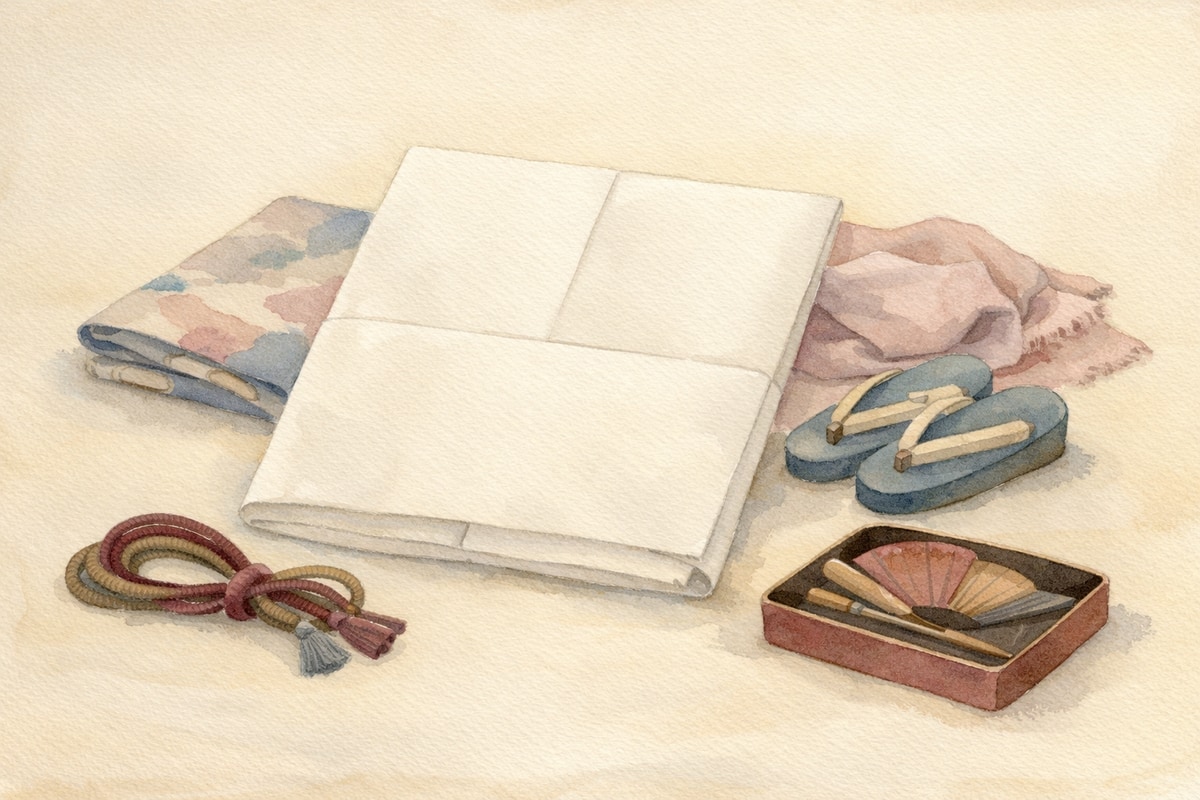
After all the care that goes into a kimono, storing it the wrong way can mean opening the closet next time to find stains or mold — a disappointing surprise. But don’t worry: the keys to good storage really come down to just three things — tatoushi (a paper wrapper for storing kimono), mothballs, and humidity control. Let’s walk through the steps you can start using today, together with Iroha.
🌸 The 10-second version
Wrap each kimono individually in tatoushi, use only one type of mothball, and keep it away from direct contact with the kimono. Replace the tatoushi every 1–2 years. Avoid high heat, humidity, and direct sunlight, and you’ve covered the basics.
The 3 Basic Steps of Storage
- Wrap each kimono individually in tatoushi — tatoushi is a wrapping paper made of moisture-absorbing washi that helps prevent mold and wrinkles
- Use only one type of mothball — position it so it doesn’t touch the kimono or the tatoushi directly
- Store in a place with low humidity, such as a paulownia (kiri) wood chest — paulownia wood absorbs and releases moisture naturally, making it ideal for kimono storage
| Item | Guideline |
|---|---|
| Replacing tatoushi | Roughly once every 1–2 years. Brown discoloration, spots, or mold are signs it’s time to replace it |
| Replacing mothballs | For store-bought products, about every six months |
| Airing out (mushiboshi, in shade) | Choose a dry, sunny day; autumn (around November) is sometimes recommended |
Common Mistakes — and How to Avoid Them
- Using several types of mothballs at once — combining different types can trigger a chemical reaction. Always stick to just one type
- Overstuffing a tatoushi with kimono — keep it to around five kimono per wrapper; beyond that, split them into a separate drawer to help prevent the garment from losing its shape
- Storing wool kimono together with pure silk (shoken) kimono — this raises the risk of insect damage, so it’s best to store them separately by material
- Storing in hot, humid locations — avoid closets near bathrooms or toilets, and rooms that get direct sunlight
A Little Extra Care When Storing
Placing thicker kimono (such as black tomesode or furisode) on upper shelves and lighter, summer-weight kimono on lower shelves — in other words, separating storage by fabric thickness — helps prevent the garments from losing their shape. Adding a moisture-regulating item, such as a binchotan charcoal sheet, alongside them is also effective for humidity control.
Is Pure Silk More Resistant to Insects? Differences by Material
Some say that kimono made of shoken (100% silk) are less prone to insect damage than wool ones. That said, this doesn’t mean mothballs or airing out are completely unnecessary — the risk of mold from humidity remains the same regardless of material. Don’t let your guard down just because it’s shoken; it’s safest to keep up with the basic care routine regardless.
Frequently Asked Questions
Q. My tatoushi has started turning brown. What should I do?
A. That’s a sign it’s time to replace it. Brown discoloration or spotting means the tatoushi’s moisture-absorbing capacity is nearing its limit. Replace it with fresh tatoushi before any stains can transfer to the kimono.
Q. Is it okay to skip mothballs altogether?
A. While some say shoken is less prone to insect damage, it’s still best not to let your guard down. For peace of mind, use one type of mothball, placed so it doesn’t touch the kimono directly.
Q. What if I don’t have a paulownia (kiri) wood chest?
A. A plastic storage case works fine too. In that case, wrap the kimono in tatoushi and add a dehumidifying agent or a binchotan charcoal sheet alongside it to keep humidity well under control.
Summary
- The basics of storage come down to three things: tatoushi, a single type of mothball, and humidity control
- Replace tatoushi roughly every 1–2 years, and mothballs roughly every six months
- Avoid high heat, humidity, and direct sunlight, and make use of a paulownia wood chest or dehumidifying items
- Store wool and pure silk separately, and be careful not to overstuff
It helps to think of cleaning and storage together as a set. You can read about the difference between maruarai and araihari cleaning methods in this article.
If you’d like to brush up on the basics of kimono types and formality levels, take a look at this quick guide to kimono types and formality too 🌸