
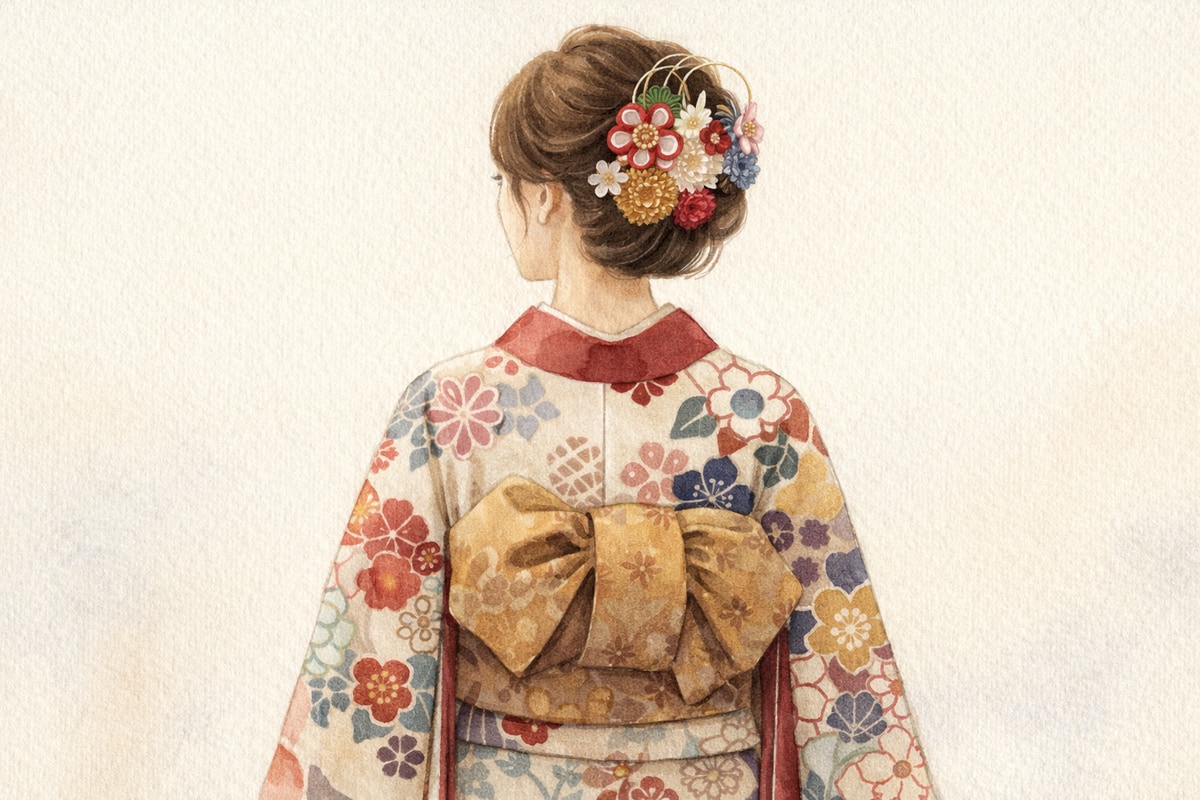
As seijin-shiki (the Coming-of-Age ceremony) or maedori (a pre-ceremony photo shoot) approaches, a lot of people end up agonizing less over the furisode (a long-sleeved formal kimono) itself and more over “which hair accessory should I choose?” Should it be a tsumami zaiku kanzashi (a traditional fabric-flower hairpin), or fresh flowers for a soft, gorgeous look? Both are lovely, which is exactly why it’s so hard to decide.
Let’s start with the conclusion: there is actually no data anywhere that compares the two in terms of raw popularity. Tsumami zaiku tends to be described as the “classic, time-honored choice,” while fresh flowers are framed as the “eye-catching” option. In practice, it seems less about which one is more popular and more about which suits you better. So in this article, we’ll line up the features and caveats of each side by side, so you can figure out which one is the right fit for you.
The Characteristics of Tsumami Zaiku, and When It Shines
Tsumami zaiku is a traditional craft that dates back to the Edo period. Small squares of fabric are folded by hand—”pinched,” or tsumami—into shape, one petal at a time. Thin fabrics like silk or cotton are typically used, and the pieces are usually assembled with starch-based paste.
Because it’s often made from the same kind of silk as the furisode itself, it tends to pair beautifully with kimono. The sheen of silk blends naturally with the patterns of the furisode and the gorgeousness of the obi (the wide sash tied around a kimono). It also comes in any flower shape or color you like, so it’s reassuringly easy to coordinate with your furisode’s pattern.
Above all, the real peace of mind is that once it’s finished, it stays exactly the same from morning until night. Even through a long ceremony, you never have to worry about it wilting partway through—that’s one of the real strengths unique to tsumami zaiku.
The Appeal and Caveats of Fresh Flowers
Fresh flowers, on the other hand, carry the charm of feeling special “just for that one day.” The scent and texture of real flowers bring a kind of beauty that artificial flowers or tsumami zaiku simply can’t replicate.
That said, the most important thing to keep in mind is that fresh flowers are quite delicate—they’re vulnerable to impact and friction, and they typically only hold up for about four to six hours. In hot weather, that window gets even shorter, so if your hair styling starts early in the morning, the flowers may have already wilted by the time the ceremony itself begins. For an all-day event like seijin-shiki, this limited window is really what determines which option makes sense for you.
It’s also worth knowing that durability varies quite a bit by flower type. Baby’s breath, chrysanthemum, and orchid are considered relatively sturdy and well-suited to hair accessories, while gerbera, roses, and dahlias are popular too, thanks to their wide range of vivid colors. Spray roses and carnations are also said to be easy to handle, making them good choices if it’s your first time working with fresh flowers. On the flip side, flowers like lilies that produce a lot of pollen are best avoided, or at least have their pollen carefully removed first, since pollen stains are very hard to get out of kimono fabric.
If you’re arranging the flowers yourself, cut the stems down to about 2 cm and keep them in water right up until use. Adding a flower preservative or revitalizing solution can help them last longer. How you store them after picking them up also depends on the flower type, so it’s safest to keep them away from heated rooms and direct sunlight and follow the florist’s instructions.
Differences in Cost and Lead Time
One thing that’s easy to overlook: it’s rare for furisode shops or hair salons to already have fresh flowers on hand for hair accessories. Since fresh flowers require extra effort to source and store, you’ll usually need to arrange them separately with a florist.
In other words, choosing fresh flowers isn’t as simple as picking a tsumami zaiku piece and just putting it on the day of the event—you’ll need to handle sourcing the flowers, storing them, and arranging pickup or delivery on the day, all yourself. This can be a great fit if you have plenty of time to spare, or if you actually enjoy the preparation process itself, but it might feel like a burden if you’re busy right up until the big day.
Tsumami zaiku, by contrast, can be purchased or rented ahead of time, so you don’t need to worry about its condition as the day approaches—it’s much easier to plan around. If you’d like a fuller picture of the accessories to gather and the kitsuke (dressing in kimono) process before the big day, this article may also help: A Guide to Furisode Accessories and Kitsuke Timing for Seijin-shiki: A Day-Before and Day-Of Timeline
Matching with Your Hairstyle
Beyond tsumami zaiku and fresh flowers, hair accessories for seijin-shiki also include kanzashi and combs made from artificial flowers or dried flowers, and it’s become trendy to pair these with mizuhiki cord or pearls for a more distinctive look. Tsumami zaiku pairs especially well with mizuhiki and pearls, adding a touch of glamour to updos. The texture of the silk helps pull the whole hairstyle together.
With fresh flowers, tucking them softly into gathered hair lets the flowers themselves really stand out. That said, some hairstylists recommend having a florist experienced with fresh flowers do the arranging on the day itself, so it’s wise to consult with one early on.
If you’re curious about the material differences, this article also breaks down the differences between tsumami zaiku and bekko (tortoiseshell)—worth a look as well: Kanzashi Materials: What’s the Difference Between Tsumami Zaiku and Bekko? What to Know Before You Choose
In Summary
There’s no clear data showing which is more popular between tsumami zaiku and fresh flowers, but laying out the facts like this really brings the decision points into focus. If you want to go all day without worrying about how it’s holding up, tsumami zaiku is the way to go; if you want to enjoy the special beauty that only fresh flowers can offer for that one day, fresh flowers are a wonderful choice. Either way, both are lovely options that bring out the best in a furisode.
Our take: if this is your first seijin-shiki and you’d rather not spend too much effort on preparation, tsumami zaiku is the easier choice; if you’re comfortable handling flowers and enjoy the preparation process, fresh flowers could be a rewarding option. Hopefully this gives you some useful reference to keep in mind as you decide.