
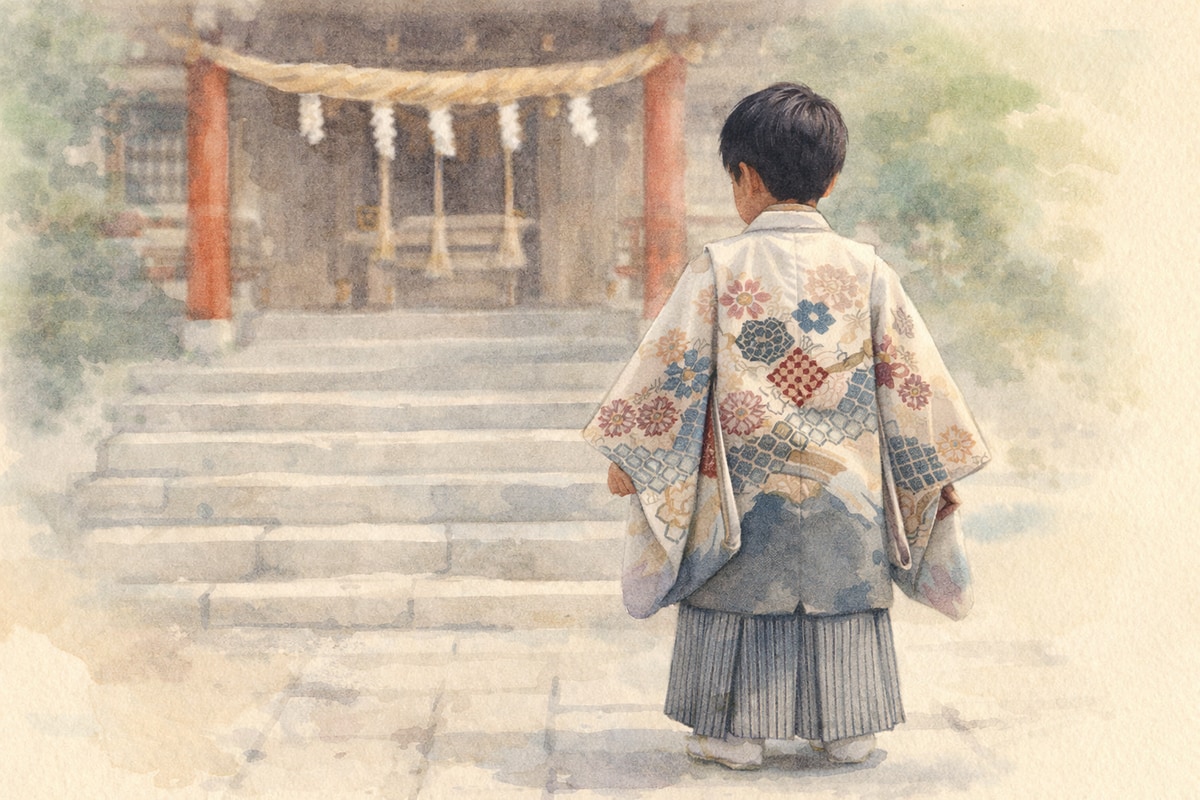
Looking back at Shichi-Go-San (a celebration for children aged 7, 5, and 3) photos, it’s often the feet that catch your eye before the kimono does. A child near tears because the unfamiliar thongs are pinching their toes, or one who’s kicked off a single zori (flat kimono sandals) entirely — many parents have probably smiled fondly at scenes like these. For parents of children celebrating Shichi-Go-San who are wondering if there’s anything they can do beforehand, here is a step-by-step guide to practicing so your child doesn’t trip in their zori.
To get straight to the point, the basic approach to zori practice is to start early and gradually extend the time, beginning with short sessions. Combine this with adjustments to the thongs (hanao) and sizing, plus a few small tricks on the day itself, and the risk of trips and falls can be greatly reduced. Rest assured, none of this requires any special equipment.
When to Start Practicing
Zori shift your weight completely differently from the shoes children wear every day. Because the structure relies on gripping the hanao between the toes to hold the sole in place, it naturally takes time to get used to. It’s best to start practicing little by little at least a few days before Shichi-Go-San, ideally starting around two weeks ahead. You’ll want to avoid taking the zori out of the box for the very first time right before the big day.
How quickly a child adjusts varies a great deal from one child to another, so there’s no harm in starting early.
How to Get Your Child Used to Zori at Home
So what exactly should this practice look like? Let’s go through it step by step.
- First, have your child wear the zori indoors for about five minutes. Jumping straight into long stretches places too much strain on them, so start with short sessions.
- If they can walk without complaint, gradually extend the time. Even just having them wear the zori while watching TV or having a snack counts as solid practice.
- Beyond just the living room floor, have them walk a little on slippery surfaces or areas with steps — like an entryway or the garden — to help reduce stumbles on the day at the shrine grounds or venue.
- Quite a few children simply dislike the feel of the hanao itself. Getting them used to wearing flip-flops regularly, which have a similar structure, can sometimes mean they accept the zori much more readily on the day.
- Showing them photos or the actual zori and kimono beforehand, and telling them “this is what you’ll wear on your special day,” can also help prepare them mentally.
Three- and five-year-olds generally have a shorter tolerance for wearing zori compared to seven-year-olds. Rather than practicing one long continuous walk, it works better to repeat short sessions many times.
Preparing with Tabi or Socks
Alongside practice, it’s worth adjusting the footwear itself. New zori tend to have stiff hanao, which can easily cause sore feet, so working the hanao with your hands to soften them before wearing helps prevent blisters.
Sizing is another important factor. Rather than a snug fit, choosing a slightly larger size — one where the heel sits securely on the sole — loosens the hanao and eases pressure on the toes. Choosing zori with thicker, softer hanao is another way to reduce strain on the feet. For three-year-olds, it’s reassuring to choose a lower, more stable pair of zori rather than taller, more formal ones.
During practice, it’s fine to keep tabi (split-toe socks) or regular socks on. They’re less slippery than bare feet and soften the contact with the hanao. This also lets your child get used to the feel of wearing tabi well ahead of the big day. Do flannel-lined tabi help with winter cold? may also be a useful read depending on the season.
What to Say While Walking on the Day
Even with plenty of practice, the day itself brings a different outfit and a different setting. Here are a few tricks that work specifically on the day.
- A widely used approach is to travel to the shrine and wait around in familiar, well-worn sneakers, changing into the zori only for photos and the shrine visit itself. The idea is simply to shorten the actual time spent wearing the zori.
- Specific, concrete phrases work well while walking — things like “let’s walk like a little doll, with small shuffling steps” or “try placing your toes down gently first, instead of your heel.” For young children, words that paint a picture of the motion land better than abstract warnings.
- When approaching steps or uneven stone paths, giving a heads-up like “there are some steps here, let’s go slowly” can prevent a sudden misstep from causing a fall.
Even so, your child may still say “it hurts” or “I don’t want to” partway through. For ways to handle that, as well as the option of zori-style shoes, see What to Do If Your Child Says ‘These Zori Hurt’ at Shichi-Go-San: Getting a 3-Year-Old Ready to Walk and Choosing Zori-Style Shoes for more detail.
In Summary
We’ve gone through this step by step, but there are three key points to remember: start practicing early, gradually extend the time starting from short sessions, and adjust the sizing and hanao in advance. Keep these three things in mind, and worries about a fall on the day will shrink considerably. It’s also a smart move to simply plan on sneakers for getting around and save the zori for just the photos and the shrine visit.
Having walked through all these steps, though, what matters most is that your child gets to enjoy the day with a smile. A little wobbling here and there is simply part of the record of their growing up. If you’re unsure about choosing zori, How to Choose Zori and Bags: Formal vs. Casual may also help you find the right pair for your child’s feet. Wishing you a wonderful day.