
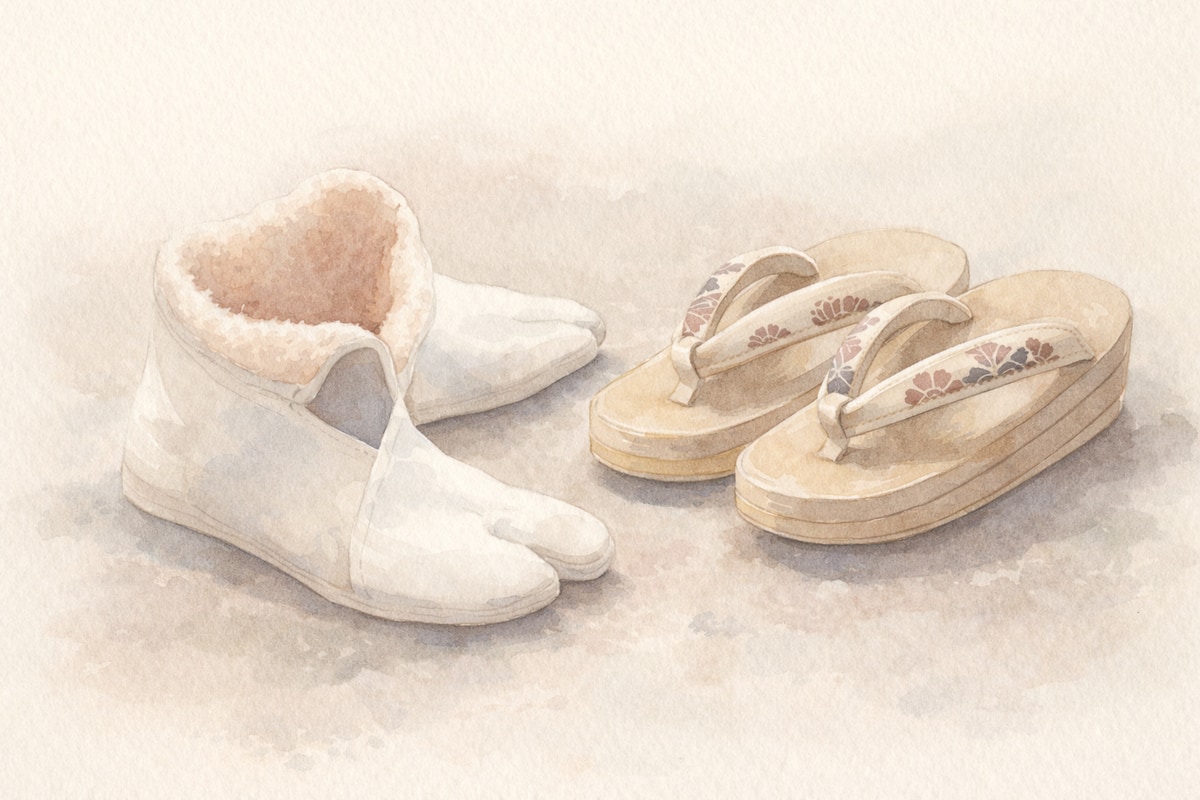
‘If I’m buying new tabi, should I go with flannel lining for winter?’ — this is a question that comes up often. Tabi are a small accessory most people barely think about, but quite a few people who head out in midwinter wearing thin tabi that feel almost like bare feet end up saying, ‘My toes were so cold I couldn’t concentrate on anything else.’ This article is written for anyone who wants to understand how the lining material affects warmth when choosing winter tabi. We’ll gently work through the difference between sarashi-lined and flannel-lined tabi, some tricks for when your feet still feel cold, and a few things to watch out for when washing them.
The short answer: flannel-lined tabi do help with winter cold
Let’s start with the conclusion: flannel-lined tabi do help keep your feet warm in winter. The fabric on the inside of a tabi, where it touches the top of your foot, broadly comes in two types: ‘sarashi-lined’ (sarashiura) and ‘flannel-lined’ (neru-ura). Sarashi lining is thin and smooth to the touch, while flannel lining is brushed and thick, giving a soft, fluffy feel underfoot. Brushed fabric traps air more easily, so even with the same cotton tabi, the warmth you actually feel can change quite dramatically depending on the lining.
In fact, tabi makers themselves explain that flannel-lined tabi use a brushed fabric for the lining at the top of the foot, making them warmer than tabi with standard sarashi lining. Several specialist shops likewise agree that the brushed texture of flannel lining feels warmer than the smooth texture of sarashi lining, making it a popular choice in the cooler months.
So what exactly is the difference between sarashi lining and flannel lining?
Let’s take a closer look at how these two linings actually differ. Don’t worry, there are only two to remember.
- Sarashi lining… Thin and smooth to wear. A year-round standard that works well across all seasons, especially in summer.
- Flannel lining… A thick, brushed fabric with a soft, warm feel underfoot. Well suited to times when your feet tend to get cold.
There’s no hard rule that says you absolutely must choose one or the other — it’s fine to switch between them depending on the season and how your own body feels. Interestingly, if you look back at history, sarashi lining is the mainstream choice today, but before World War II it’s said that the flannel-lined type for winter was actually the more common option. Perhaps because heating was so different back then, keeping the feet warm was considered even more important.
When is flannel lining the better choice?
Flannel lining really comes into its own in the period from late autumn into winter, when the air turns noticeably cold. When you’re out and about in kimono, your tabi and zori (flat kimono sandals) leave your feet fairly exposed to the outside air, and it’s easy for them to grow cold as you walk. Choosing flannel-lined tabi for these occasions means the brushed lining gently wraps around your foot, which is reassuring.
Interestingly, some people who are especially sensitive to cold choose flannel lining all year round. Some people find the coolness of sarashi lining pleasant, while others find the soft, fluffy feel of flannel lining just right no matter the season — a lot comes down to individual constitution and preference. Among male kimono enthusiasts, too, some prefer sarashi lining even in the depths of winter, while others — such as Noh performers — wear nothing but flannel-lined tabi year-round because of the softer silhouette it creates. It’s a fun detail that shows lining choice isn’t just about the season, but also about how you want to look and feel.
When it comes to staying warm in kimono during winter, thinking about the overall balance — not just your feet but also your neckline and sleeve openings — tends to make things more comfortable. It’s worth also reading Where should you start when it comes to winter kimono cold-weather measures?, which makes it much easier to see how to prioritize warmth beyond just your feet.
Still cold? A few extra tricks to try
Even after switching to flannel lining, there may be days when your toes still feel cold. On days like that, one option is to layer thin socks or leg warmers underneath your tabi. That said, it’s a good idea to check the fit once while wearing the extra layer, to make sure the kohaze (the metal clasps that fasten the top of the tabi) still close properly. Tabi are generally made to fit quite snugly, so if you plan to layer them with something underneath, choosing a size with a little extra room will help avoid things feeling too tight.
Another option is adding an insulating insole inside your zori. Looking beyond just the tabi lining itself, to what sits between your tabi and the ground, opens up even more ways to stay warm.
A few things to watch out for when washing flannel-lined tabi
If you choose flannel-lined tabi, it’s worth keeping their care in mind too. Flannel-lined tabi have a two-layer structure — a standard tabi fabric on the outside and brushed flannel fabric on the inside — so when washing them, it’s best to place them in a laundry net, wash on a gentle cycle, and dry them in the shade. Brushed fabric is more prone to pilling from friction or a strong water flow, so think of handling them more gently than you would sarashi-lined tabi.
For more on caring for white tabi in general, including how to deal with yellowing, see How to wash white tabi: care tips for removing yellowing and keeping them white, which is worth keeping on hand.
In summary: flannel lining is the easy answer for winter tabi
So, back to our opening question — do flannel-lined tabi help with winter cold? The answer is yes, they do. The thick, brushed fabric traps air and creates a warmer feel underfoot than sarashi lining. That said, there’s no absolute rule for choosing a lining: if you’re sensitive to cold, it’s perfectly fine to wear flannel lining all year round, and if you simply prefer the cool feel of sarashi lining, switching to flannel only in winter is just as natural a choice. Choosing according to how your body feels and the occasion you’re dressing for makes the decision much easier. Before your next outing this winter, it might be worth giving the lining of your tabi a little extra thought.