
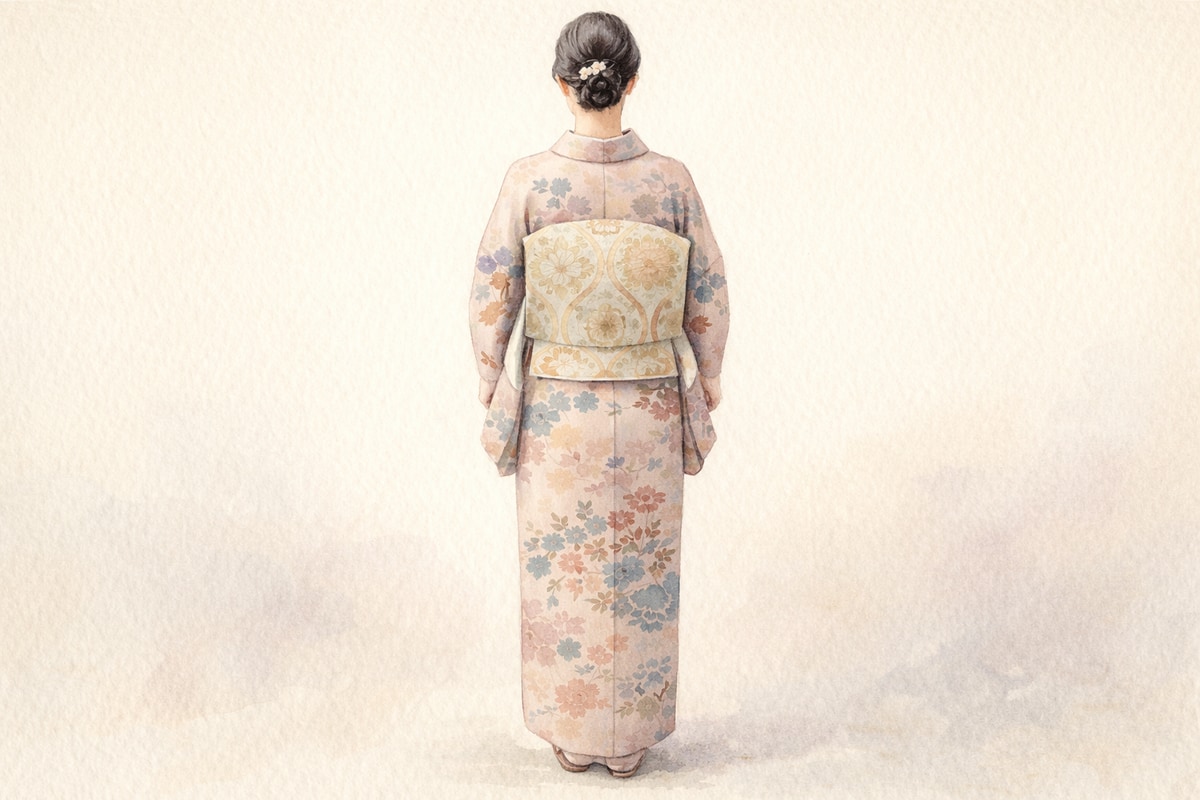
Once you’ve picked a shop for your houmongi (a semi-formal kimono) rental and you’re about to hit “book now,” it’s tempting to breathe a sigh of relief. But as you click through the screens, a few nagging questions tend to pop up: Are the accessories included? What happens if I need to cancel? To help you avoid any last-minute surprises, let’s walk through the things worth double-checking right at the booking stage, one by one.
When Is a Reservation Actually Confirmed? “Sent” and “Confirmed” Aren’t the Same Thing
One of the easiest things to overlook is what actually counts as a completed reservation. Some home-delivery rental services don’t take phone bookings at all and operate online-only. And at quite a few shops, simply selecting a date on the website and hitting submit doesn’t mean your booking is complete — the reservation is only finalized once you receive a confirmation email from the shop.
In other words, sending the request isn’t the finish line — receiving confirmation is. The booking page or email instructions should explain how that confirmation will arrive (and whether it’s separate from an automatic reply), so it’s worth reading that section carefully. Knowing this one detail can save you from the awkward situation of showing up only to be told, “We don’t have a reservation under your name.”
What Counts as a “Full Set” Differs From Shop to Shop
Next, take a close look at exactly what’s included in the rental set. The scope of what’s provided varies quite a bit between shops. Some sets include the houmongi, fukuro obi (a formal brocade sash), obiage (a fabric accent above the obi), obijime (a cord tied over the obi), and nagajuban (an under-kimono, worn beneath the kimono and visible slightly at the collar and sleeve openings) — but whether zori (flat kimono sandals), a bag, tabi socks, and kitsuke (dressing in kimono) accessories like the koshihimo cord, datejime sash, collar stiffener, Korin belt, obi board, and obi pillow are also included really depends on the shop’s own listing.
There are three things worth checking. First, exactly what you’re expected to bring yourself. Some shops only ask you to bring a towel for padding, while others expect you to supply your own tabi socks or hadagi (an innermost undergarment). Second, whether you’re allowed to bring your own obijime or zori if you already have ones you love — worth confirming in advance if you’d like to use your favorites. Third, whether the package comes with a checklist you can use to verify the contents against what’s actually in the box. If there is one, you can simply check off each item as soon as you open it.
Looking at it this way, it becomes clear that the term “full set” means something different at every shop. If you look over the set contents list at the booking stage, you won’t be caught off guard later wondering, “wait, why isn’t this included?” If you’re still deciding between renting or buying a houmongi, you might also enjoy reading Rent or Buy a Houmongi? How to Choose Based on When and How Often You’ll Wear It.
Cancellation and Extension Fees: Check the “When” and the “Percentage”
And among all the things people forget to check, the one most likely to trigger a “wait, I didn’t know that!” moment is the rules around cancellation and extensions. Policies really do vary from shop to shop here, so let’s break down exactly what to look for.
For cancellation fees, there are two things to check: the deadline for a free cancellation, and the percentage charged at each stage after that. Even the way the deadline is counted differs — some shops count backward from your usage date, others count forward from the day you made the booking. After that, the fee typically rises in stages as your date approaches — say, 30%, then 50% — with the full amount charged for last-minute or same-day cancellations. If your plans tend to change, it’s worth mapping your actual date onto these stages before you book.
For extension or late-return fees, many shops charge 10–20% of the rental fee per extra day, though this, too, varies by shop. Some shops also offer an official extension option — like a “next-day return” — which you can apply for if you’d like to wear the kimono a little longer. Returning it late without arranging this in advance can damage your standing with the shop and may affect your ability to rent from them again, so if you want more time, always apply ahead of time.
As you can see, the free-cancellation deadline, the percentage charged at each stage, and how late fees are calculated all differ completely from shop to shop. It’s worth reading through the cancellation policy page at the booking stage, just to be safe.
Just These Three Things Before You Hit “Book”
As we’ve seen, the things people most often forget to check with houmongi rentals tend to cluster around three areas: how a reservation is actually confirmed, what’s included in the set, and the rules for cancellation and extension. Before you hit the booking button, take a moment to check these three things: how the confirmation will be sent to you, whether there’s a set-contents list or checklist, and from when the cancellation or extension fees start to apply. Doing this once can make booking feel far more reassuring. If you’re also torn between renting online or at a physical shop, take a look at Online or In-Store Kimono Rental? A Simple Guide to the Differences in Fitting, Pricing, and Returns. Keep these points saved, and you can relax all the way up to the big day.