
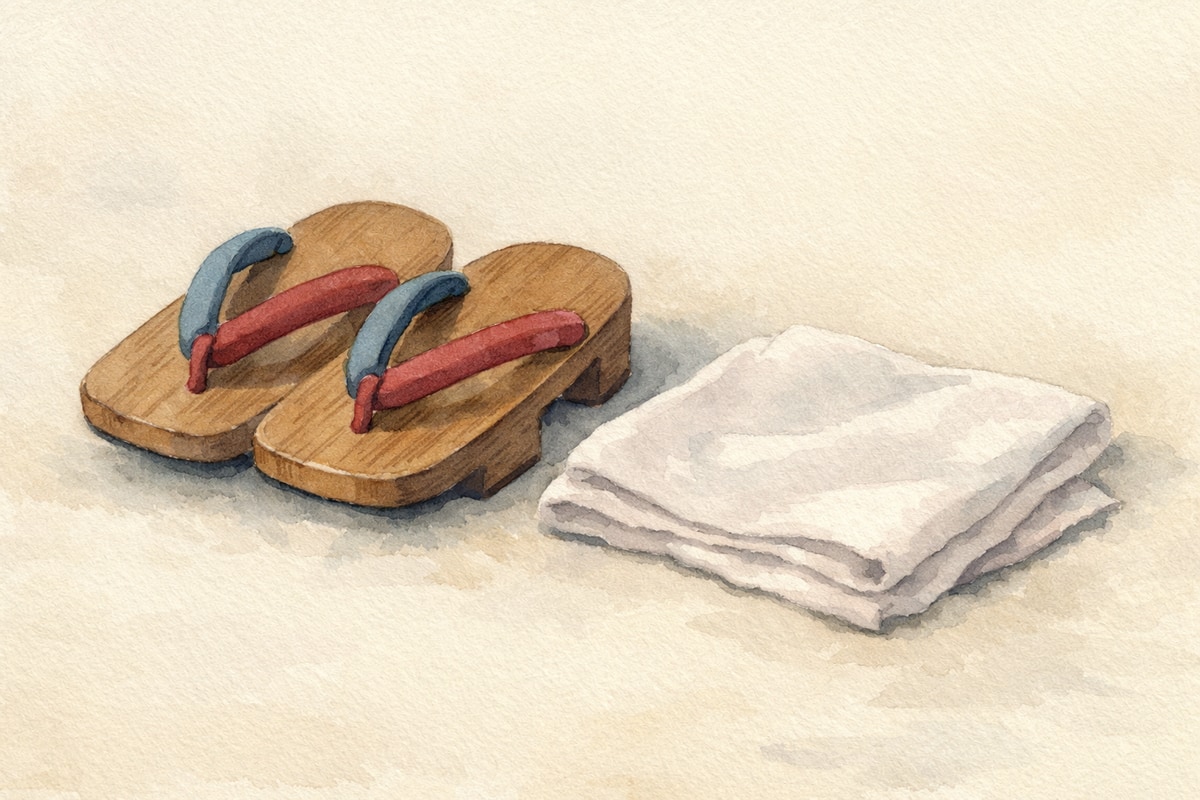
Walking home from a fireworks display with the soles of your geta (wooden sandals) caked in mud, have you ever paused and wondered, “Is it okay to just wash this off?” The short answer is that many geta and zori (flat kimono sandals) really don’t like being scrubbed with water. Depending on the material, even a little moisture can warp the shape permanently. Let’s start by figuring out which type your geta or zori is, since that’s the first step to caring for it properly.
Is It Okay to Wash Dirty Geta or Zori With Water?
When it comes to caring for kimono or yukata (a light cotton summer kimono), “washing” might seem like the go-to solution, but geta and zori are a different story. How well they tolerate water depends entirely on the material of the base and the material of the thongs (hanao). Washing them with water without understanding this can lead to stains, warping, or the shape being ruined. Let’s start by looking at the finish of the base.
First, Check the Finish of the Base
Unfinished Plain Wood (Shiraki) Dislikes Water the Most
Geta left in their natural, unpainted wood finish are meant to showcase the texture of the wood itself. Paulownia-wood geta fall into this category too, and they don’t get along well with moisture. Dirt on the hanao can leave stains or distort the shape, so as a rule, it’s best to keep these away from water as much as possible. If they do get wet, wipe them down with a tightly wrung cloth and then dry them somewhere with good airflow. Never dry them in direct sunlight, as this can cause discoloration, cracking, or warping of the wood — always dry them in the shade. Wiping them dry regularly also helps prevent footprints and dirt from settling in.
If footprints become noticeable after long use, lightly sanding the surface with around 240-grit sandpaper is an option. However, if the top surface has a thin veneer layer applied, sanding too much can cause the veneer itself to peel away, so proceed carefully and check your progress as you go.
Painted Geta (Clear Lacquer, Black Lacquer, Scorched Finish) Can Be Wiped Clean
Geta with a solid painted finish — clear lacquer, black lacquer, or a scorched finish — get along with water better than plain wood does. The basic approach is to wipe them with a cloth lightly dampened with lukewarm water; if dirt is hard to remove, a cloth dampened with diluted neutral detergent is said to work well. That said, rather than soaking them in water, it’s safest to treat this as simply an extension of wiping them down.
Scorched-Finish Geta Are Meant to Be Maintenance-Free
Geta with a scorched color applied directly to the bare wood are designed to be used without any special care. Wiping them can actually cause the scorched coloring to fade, so caution is needed. On the other hand, if a layer of paint has been applied over the scorched finish, wiping with a damp cloth is fine. Since these can look similar on the surface despite being different underneath, it helps to recall what you were told at the time of purchase.
Tatami-Surface and Woven-Grass Geta and Zori: The Rule Is “Never Let Them Get Wet”
Tatami-surface bases known by names like Nanbu-omote or Nozaki-omote, along with woven bases made from bamboo sheath, are most vulnerable to water. Because they’re shaped by weaving bamboo sheath or bamboo shoot husks and then steam-pressing, molding, and drying them, moisture causes the fibers to swell and warp the shape. Once a tatami-surface or woven-grass base has warped, repair usually cannot restore its original shape. The best prevention is simply not wearing them on rainy days; if they do get wet, all you can do is blot away the moisture and dry them slowly in the shade.
Wiping Tips by Hanao Material
If the hanao get wet, the basic approach is the same as for the base: dry them thoroughly in a shaded, well-ventilated spot. Remove dirt with a soft brush, then gently wipe with a cloth wrung out in lukewarm water. Since dye can bleed depending on the fabric, test on an inconspicuous spot first before wiping the whole thing.
For leather hanao, which have a glossy surface and resist staining even when wet, applying a thin layer of cleansing cream and wiping it off is one method. Leather responds better to care with cream than to wiping with water, so it’s worth remembering.
For Woven-Fabric Zori, Just Brush Away Dust
Zori made of woven fabric such as Saga brocade should not be wiped with water unless they have a protective coating treatment. Stick to gently brushing off dust with a small, soft-bristled brush. Many zori also have leather soles, and when these get wet, the moisture can cause the adhesive to weaken and peel. Like tatami-surface zori, these are best avoided on rainy days.
If They Do Get Wet Anyway
No matter how careful you are, sudden rain or puddles can catch you off guard. When that happens, blot away as much moisture as possible first, then stand them up to dry in the shade. The surface may look dry while the inside is still damp, so don’t judge by appearance alone — take the time to let them dry thoroughly. Putting them away while only partially dry can lead to mold or warping later on.
For everyday care after taking off your geta, as well as storage methods, we go into more detail in How to Care for Geta: From Small Daily Habits to Storage and Hanao Repair. And if you’re still deciding between geta and zori in the first place, What’s the Difference Between Geta and Zori? A Simple Guide to Choosing for Yukata and Kimono may also help.
In Summary: “Don’t Let Them Get Wet” Beats Washing, for Geta and Zori
How geta and zori get along with water depends entirely on the type. Plain wood should avoid water and be dried in the shade, painted versions can be wiped clean with lukewarm water or diluted neutral detergent, and tatami-surface, woven-grass, and woven-fabric types should generally be kept away from water altogether — that’s the key takeaway here. So, to answer that opening question of “is it okay to just wash this off”: identify the finish of the base first, and then treat it less as something to wash and more as something to keep dry — wiping it down and drying it in the shade right away if it does get wet. Just doing that will help your geta and zori last a lot longer.