You have booked a tea ceremony in Japan, and now a quieter question arrives: what should you actually wear? If you are renting a kimono for the day, the answer is not simply “the prettiest one on the rail.” A tea room has its own quiet grammar, and one rule surprises almost every visitor — the most expensive kimono in the shop may be exactly the wrong choice.
This is worth knowing before you arrive at the rental counter, because that is where the decision is made, often in a hurry, with a helpful assistant who may not ask where you are going afterwards.
The one rule that catches visitors out: tsumugi is everyday wear
Tsumugi is woven from spun silk. It has a soft, slightly textured surface, it can be beautifully made, and it can be genuinely expensive. And in the world of tea, it is still classed as everyday clothing, which means it is generally avoided for a tea gathering.
This catches people out because price and formality do not line up in Japanese dress the way they might elsewhere. A costly tsumugi sits below a modest plain-coloured kimono in the order of formality. If you take one thing from this article, take this: ask the rental shop whether the kimono you are holding is tsumugi, and if it is, choose something else for a tea ceremony.
What to choose instead
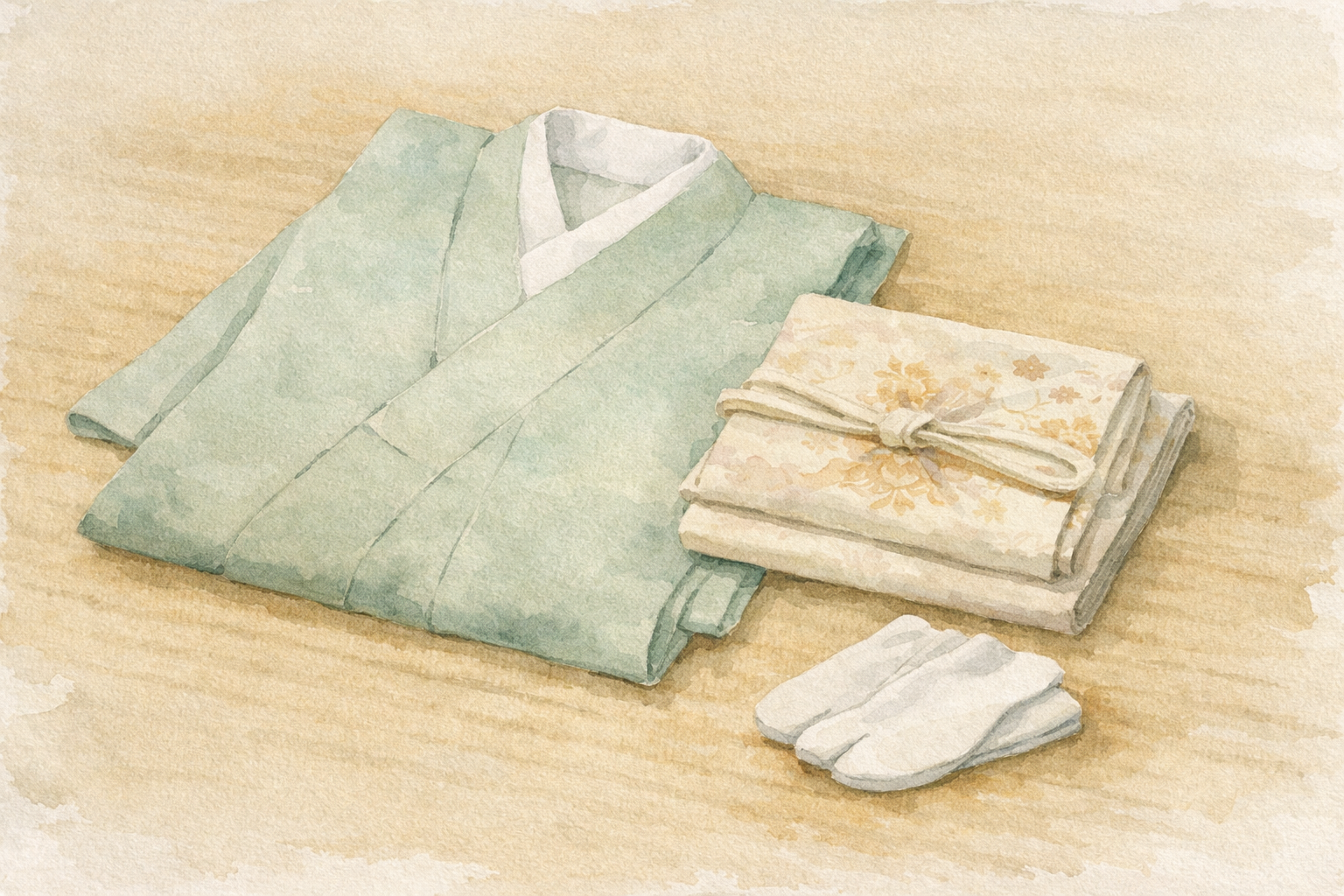
The safer choices for a visitor are a plain-coloured kimono (iromuji), a soft-patterned kimono (houmongi or tsukesage), or a fine-patterned edo-komon. These read as “dressed for an occasion” without being showy, which is the register a tea room asks for.
How formal you need to be depends on the kind of gathering. In Japanese practice these are broadly:
- A formal tea event — the most formal end. Houmongi or tsukesage; for an unmarried woman, furisode is also worn.
- A regular monthly gathering — houmongi, tsukesage, iromuji or edo-komon.
- A large, relaxed gathering — an iromuji without crests, or edo-komon, are commonly chosen.
- An informal outdoor gathering — komon is usual. Even here, tsumugi is the safer thing to avoid.
These are general guides rather than rules carved in stone. Schools of tea differ, and each host sets the tone of their own gathering.
The details that matter more than the kimono itself
Tea is spent kneeling, turning, lifting a bowl and setting it down. That makes a few practical things matter more than they would on a sightseeing day.
- Keep jewellery off. Rings and bracelets can knock against a tea bowl, and the bowl may be old and irreplaceable. Most visitors are asked to remove them before entering.
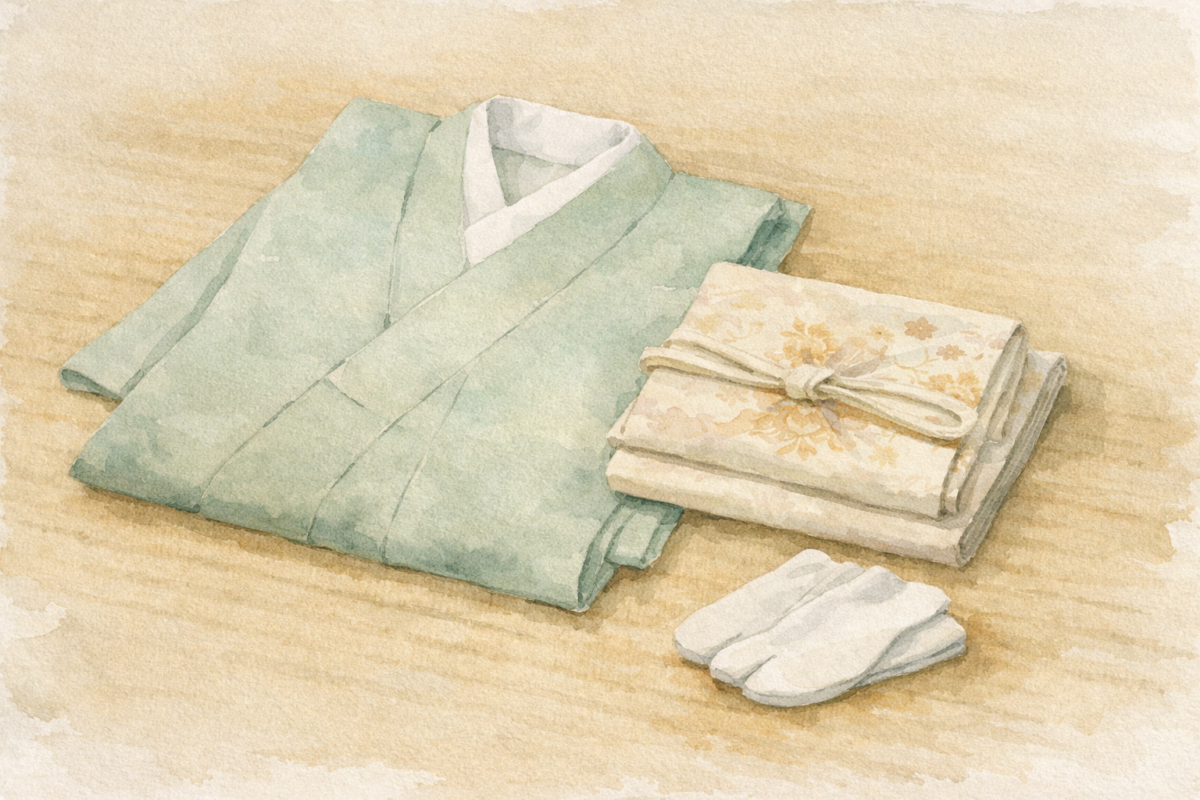
- Bring clean white tabi socks, or ask whether the rental includes them. You will be walking on tatami with your shoes left outside.
- Choose a subtle scent, or none. A tea gathering is partly about the smell of the room, the charcoal and the tea.
- Keep your hair simple. A very tall or wide style gets in the way in a small room.
If you are renting, tell the shop plainly: “I am going to a tea ceremony afterwards.” A good shop will steer you away from tsumugi and towards something suitable, and may suggest a quieter obi to match.
If you are not wearing a kimono at all
You do not need one. Plenty of visitors attend in ordinary clothes, and no one will mind. If you go that way, the same spirit applies: clothes you can kneel in comfortably, nothing that dangles over the bowl, and socks rather than bare feet, since you will be on tatami.
Before you book
Two questions are worth asking the venue in advance, because the answers change what you should wear:
- Is this a relaxed introductory session, or a formal gathering?
- Will guests be sitting on tatami, or on chairs?
An introductory session with chairs is very forgiving. A formal gathering on tatami is where the guidance above earns its keep.
In closing
The heart of it is small and easy to carry: avoid tsumugi, choose something plain or softly patterned, take off your rings, and bring clean white socks. If you are unsure at the rental counter, say where you are going and let the shop help — that single sentence solves most of it.
If you would like to read more about kimono for different occasions, our guide to kimono rental at tourist spots covers how the rental day itself works, from booking to returning the outfit.