
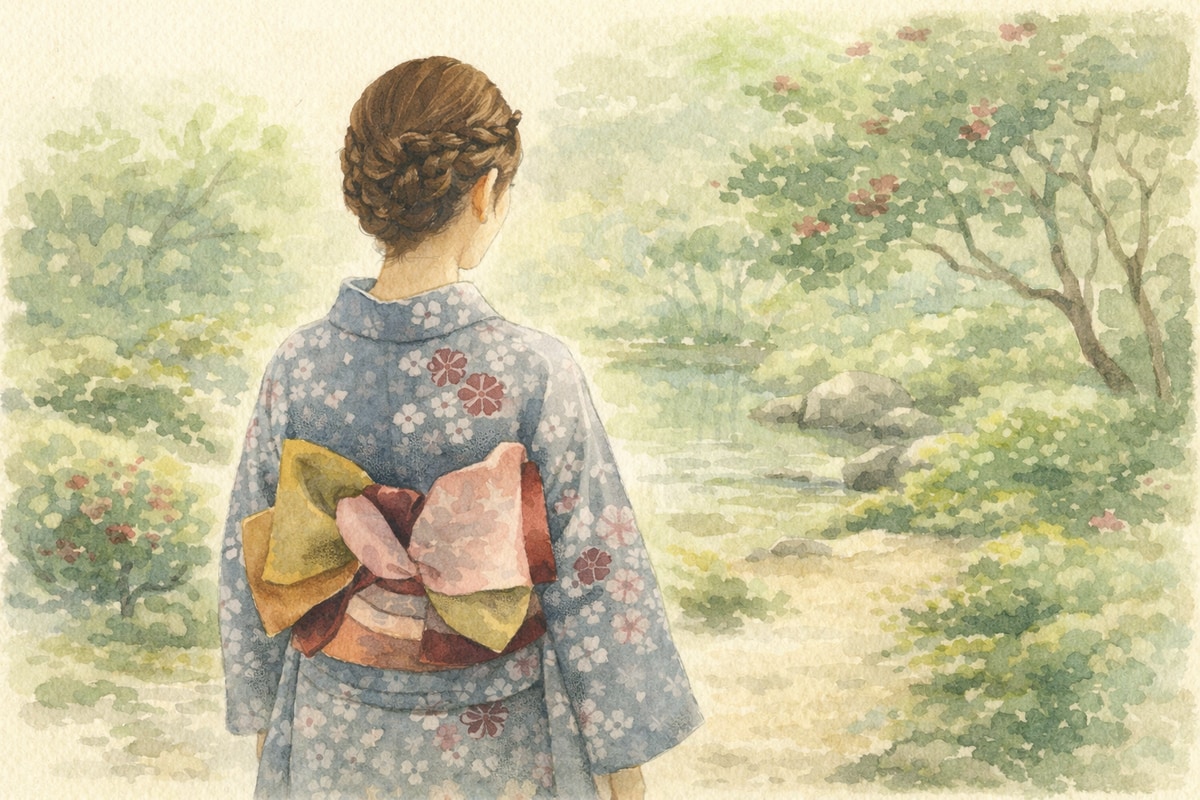
Head out to a fireworks festival in yukata, and by the time you get home, the obi (the wide sash tied around a kimono) has loosened, the hem has gone askew, and there’s a faint trace of sweat at the collar — many of you have probably experienced this. Crowds, food stalls, long stretches of standing and walking: a fireworks festival is quite a test for a yukata (a light cotton summer kimono). But if you know ahead of time where things tend to go wrong, you can stay calm and unhurried. Today, let’s walk through it step by step, from before you leave home to after you return.
What makes a fireworks festival different from other outings
A fireworks festival calls for a bit of a different approach than other outings. Long hours of standing and walking, combined with frequent chances to drink, mean the obi can shift out of place before you even notice. It helps to get into the habit of occasionally checking the height of the obi and whether the knot has slipped. At large-scale fireworks festivals that make use of rivers or harbors, such as those in the Kansai area, food stalls and local festivals are often held alongside the fireworks, so you tend to end up walking longer distances. Using a paid viewing area is one way to cut down on the burden of staking out a spot.
A little preparation before you leave pays off later
How you prepare before dressing makes a real difference to your comfort on the day. Around the neck and underarms, where you’re prone to sweating, it’s a good idea to use antiperspirant or a sweat-wiping sheet with powder beforehand. Wearing a yukata directly against bare skin lets sweat soak in and cling to your body, which is a common cause of kizukure (the kimono coming loose). Simply wearing a hadagi (an innermost undergarment), a waist wrap, or a yukata slip underneath — something that absorbs sweat — helps both with sweat absorption and preventing kizukure. Tying the koshihimo (waist cord) too tightly can actually invite kizukure, so keep it snug but not overly tight, and secure the obi firmly with a datejime (an underbelt) to help it hold its shape. For more on choosing small accessories suited to summer dress, see our article on sweat countermeasures for yukata and summer kimono.
Tips for preventing kizukure in crowded conditions
Around the festival venue, the flow of people surges just before and after the fireworks begin. On crowded paths, it’s reassuring to walk near the edges. Be careful on station stairs and steps, where it’s easy to step on your own hem. Lightly lifting the hem as you climb stairs can prevent it from getting stepped on and thrown out of shape. Standing up from a seat and going up or down stairs are, in fact, common moments when the hem tends to shift. It’s the accumulation of these small movements that leads to kizukure by the time night falls.
A posture tip for when you’re seated
Many people spend the waiting time before the fireworks begin sitting on a sheet. When you sit, angling your hips slightly to one side and sitting toward the front of the seat helps the obi’s knot and the tension of the hem hold their shape. Leaning back against a backrest can crush the obi, so keeping a slightly upright posture is the trick to keeping everything looking neat all the way home.
Enjoying food stalls without staining your yukata
Fireworks festivals and summer festivals — a summer festival (natsumatsuri) — are settings where a yukata is especially prone to getting dirty, thanks to the crowds and all the food. The eri (collar) and cuffs in particular tend to pick up body oils, sweat stains, and foundation makeup, while the hem can get splashed with mud as you walk. Finding a bit of shaved ice or takoyaki dropped near the collar is practically a fireworks-festival rite of passage. Simply holding the cuffs lightly out of the way while you eat can make a real difference in how much gets on your yukata. When you step away to use the restroom, tucking the hem up securely can prevent unexpected stains.
Quick fixes and things to bring for when you’ve worked up a sweat
If the obi has twisted around or the collar has loosened while you’ve been walking around the venue, it helps to know some simple fixes you can manage on the spot. We’ve put together the finer points of these quick fixes in our article on how to fix kizukure, so it’s worth checking that along with what to bring on the day.
Before you put the yukata away, once you’re home
Once you’re home, resist the urge to fold the yukata away the moment you take it off, and take a moment to check for food stains, rain spots, or sweat marks. Sweat stains are often invisible to the eye, but areas with wrinkles are frequently a sign of where you sweated, so checking those spots carefully can prevent trouble later on. When you think about it, caring for a yukata is really just an extension of how you move and behave while wearing it. A yukata that’s been handled with care can be worn again just as happily next year. It’s a small extra step to take before the afterglow of the fireworks fades.