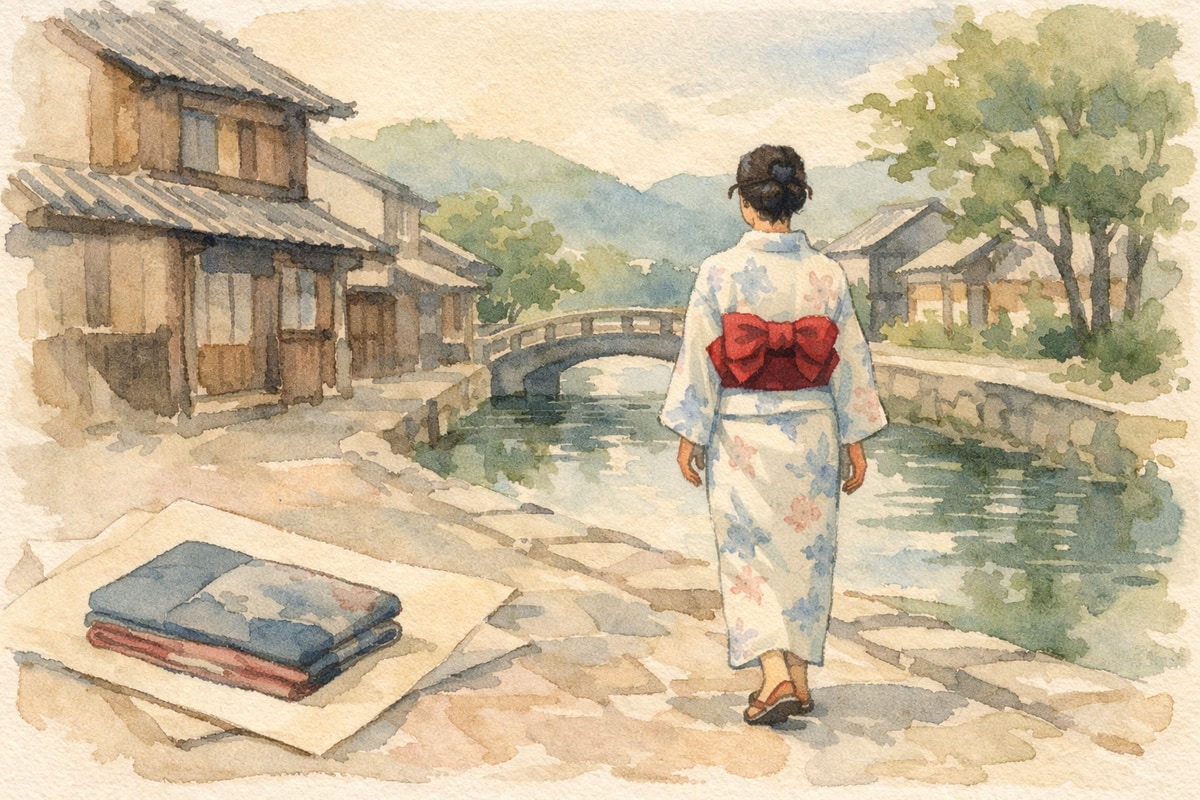
As the lanterns of the yamahoko floats begin to glow along the dusky streets, many people find themselves torn: yukata (a light cotton summer kimono), or kimono? Scroll through Yoiyama photos on social media and you’ll see both styles mixed together, so it’s no wonder the “right” choice feels unclear. To cut to the answer first: yukata are more than enough for enjoying Gion Matsuri. Let’s unpack why, starting with the festival’s origins.
What Kind of Festival Is Gion Matsuri?
Gion Matsuri is the annual festival of Yasaka Shrine in Kyoto’s Higashiyama Ward, a summer tradition that has continued since the Jogan era (859–877). Held over the entire month of July, it comprises a series of Shinto rites, beginning with the “Kippu-iri” on the 1st and closing with the “Ekijinja Nagoshi-sai” on the 31st. Counted among Japan’s three great festivals, its highlight is the Yamahoko Junko (float procession), often called a “moving museum.”
Yamahoko Junko: Viewing the Moving Museum
The sight of yamahoko floats as tall as five- to eight-story buildings moving through the streets is unforgettable once seen. For the Saki-matsuri (first half), Yoiyama runs from July 14 to 16, with the procession on the 17th; for the Ato-matsuri (second half), Yoiyama runs from the 21st to 23rd, with the procession on the 24th. During the Yoiyama evenings before each procession, the floats stand in their respective neighborhoods and can be viewed up close — simply strolling the lantern-lit streets at night is enough to soak up the festival atmosphere. What catches the eye are the rich weaves and dyework of the decorative textiles adorning the floats; it’s easy to understand why some people return year after year just to admire these details.
Yukata or Kimono: Which Suits Gion Matsuri?
This is where the question of formality comes in. Yukata are made from lightweight, breathable materials such as cotton, asa (linen/hemp), or polyester, and were originally worn as sleepwear after a bath; today they’re loved as stylish, casual attire for summer festivals and fireworks displays. They’re typically paired with a hanhaba obi (a narrow half-width sash), with no obijime (a cord tied over the obi) or obiage (a fabric accent above the obi) needed. Kimono, on the other hand, are formal wear for occasions such as weddings and tea ceremonies, and require a Nagoya obi or fukuro obi to complete the proper look. As explained in What’s the Difference Between Yukata and Kimono? A Gentle Guide to Their Origins, Formality, Tailoring, and Styling, the two are similar in appearance but quite different in kind. Yukata are said to suit the festival’s lively atmosphere and historic streetscapes especially well, and their photogenic charm against a backdrop of floats and lanterns is likely one more reason they’re so popular.
Attire Considerations for Festival-Watching
Once you’ve decided between yukata and kimono, footwear deserves attention next. The traditional pairing is bare feet with geta (wooden sandals) for yukata, and tabi socks with zori (flat kimono sandals) or setta for kimono. For the long hours of walking through crowds at Yoiyama or the procession, how comfortable your footwear feels can make a big difference to how tired you feel by the end of the day. Walking all day in unfamiliar geta under the summer sun is quite a test of stamina, so checking a map in advance for places to rest can help you enjoy the festival with more ease. If you’d like to stay cool in a sheer-fabric kimono, see Ro, Sha, and Asa: The Cool Elegance Hidden in Sheer Kimono for more.
Renting for a Hassle-Free Festival Outing
Even without your own yukata or kimono, tourist areas offer rental plans for summer-weight kimono and yukata. Many services provide sock-style tabi and zori, and some offer haori (a short coat) rentals for women — conveniently taking one preparation task after another off your plate while traveling. If you’re unsure about kitsuke (dressing in kimono) in an unfamiliar place, it’s reassuring to check what to look for when choosing a rental provider.
Yukata or kimono? When measured by formality, the answer turns out to be fairly clear-cut. As you stand in the evening breeze at Yoiyama gazing up at the floats, let your outfit for the day add its own small story to the moment.