Once the date is set for your child’s shape-awase (face-to-face meeting) meal or yuino (a formal betrothal exchange), the next worry is often what you, as the mother, should wear. Should you bring out a houmongi (a semi-formal kimono), or would a more understated iromuji (a solid-color kimono) be enough? Many mothers find themselves torn. To give you the conclusion up front: choosing either a houmongi or an iromuji will not lead you astray. Let’s go through the reasoning step by step.
What’s the difference between yuino and a shape-awase meal?
Before thinking about what to wear, it helps to understand what kind of occasion the day actually is. These days, the most common approach is to hold a shape-awase meal between the two families in place of a formal yuino. Even when a yuino is held, the fully formal version—where a go-between travels back and forth between the two households—has become rare. Most families now hold a simplified yuino, where both families gather together and exchange the betrothal gifts directly. The gifts themselves and how the exchange is conducted vary by region and family custom, so it’s worth checking in with both families beforehand.
A yuino carries a somewhat more ceremonial character, while a shape-awase meal is positioned as a relaxed, friendly meal shared together. Although the formality of the occasion shifts slightly, the basic approach to choosing an outfit doesn’t change much. For either occasion, the main options for the mother’s attire are houmongi, tsukesage (a semi-formal kimono with continuous patterning across seams), and iromuji.
The basics: houmongi or iromuji
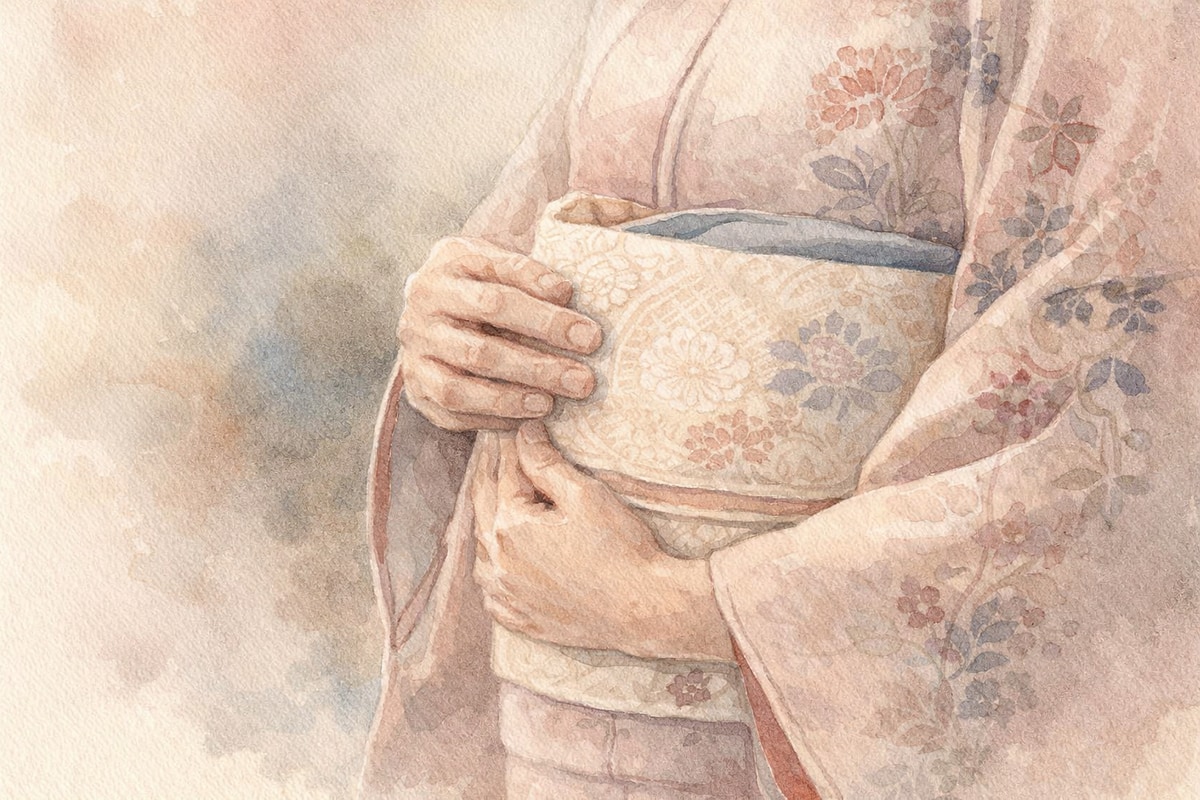
Several sources agree on the same guidance for the mother’s wasou (traditional Japanese dress): an iromuji or tsukesage that isn’t overly formal, or a houmongi with no crest or just a single crest. A houmongi looks elegant with its patterning, but if it’s too formal for the occasion, it can end up feeling out of place. Choosing one with a smaller, less prominent pattern gives a more composed impression.
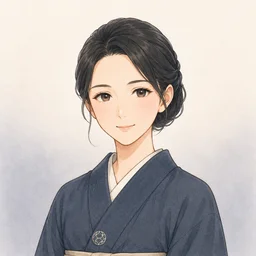
An iromuji, having no pattern at all, carries the nuance of deferring to the other family. Since the true guests of honor at a shape-awase meal are the couple themselves, it makes sense for the mother to choose a more restrained iromuji. As a simple rule of thumb: a houmongi is the standard choice, while an iromuji is the way to go if you want to keep things elegant and understated. A tsukesage can be worn at nearly the same formality level as a houmongi, so it’s worth keeping in mind as an option if you’re undecided.
Choosing iromuji: the number of crests changes the formality
Because an iromuji has no pattern, its formality is determined by whether it bears a crest, and how many. Adding a single crest raises it to semi-formal wear, equivalent to a houmongi with no crest. An iromuji with no crest at all is treated as casual, on the same level as a komon (a casual kimono with a small repeating pattern) or tsumugi (a textured, hand-woven silk), so for a formal occasion like a shape-awase meeting or yuino, the basic rule is to choose one crest or more.
An iromuji with three crests ranks even higher than a houmongi with no crest, and is treated as formal enough for occasions such as a New Year’s tea ceremony or for relatives and go-betweens attending a yuino. If you’ll be attending the yuino as a relative or go-between, an iromuji with three crests is worth considering as well. For a more detailed look at how the number of crests affects formality, see Iromuji: A Kimono Whose Formality Depends on Its Crests, and How to Choose One for School Entrance Ceremonies and Tea Gatherings.
Matching the formality between both families
Another important point is keeping the formality level balanced with the other mother’s attire. If there’s a big gap in formality between the two mothers’ kimono, it can look mismatched in photographs. Whether you choose an iro-tomesode (a formal colored kimono), houmongi, or iromuji, it’s best to discuss this with both families ahead of time so the formality levels align.
There’s also a traditional idea that the mother of the side sending off the bride should dress more modestly. How much weight this carries varies by family and region, so think of it less as an absolute rule and more as a helpful guideline when you’re unsure. Since this can vary depending on your family’s circumstances and region, it’s reassuring to check in with both families beforehand. If you’d like to review the formality differences between tomesode and houmongi in more detail, see The Differences Between Black Tomesode, Iro-Tomesode, and Houmongi.
Choosing colors and patterns
When it comes to color and pattern, it’s generally recommended to choose bright colors suited to the season. You’ll want to avoid an obvious seasonal mismatch, like choosing a cherry blossom pattern in the dead of winter, but there’s no need to overthink it. For a houmongi, aim for a smaller, less prominent pattern; for an iromuji, choose a calm color that matches the number of crests. That level of care is plenty.
In summary
For the mother’s kimono at a shape-awase meal or yuino, you won’t go far wrong if you build your choice around either a houmongi or an iromuji. Keep two things in mind: with an iromuji, the number of crests changes its formality, and it’s worth matching the formality level with the other mother. Bear these two points in mind, and you shouldn’t have any trouble deciding on the day. Having walked through all these steps, though, what matters most is greeting your child’s special day with a warm, gentle expression as their parent. Wishing you a wonderful day.